
BBL posts Bt9bn profits in Q2


Play
Bangkok Bank posted the quarterly net profit of Bt9 billion, pushing its first-half results to Bt17 billion which is 22.2 per cent higher than the same period last year.
Its net interest income rose by Bt 2.2 billion to Baht 27.2 billion. BBL however expressed that its net interest margin declined from 2.69 percentage points in the first six months of 2011 to 2.63 percentage points in this period. The decrease mostly resulted from higher cost of deposits and higher contributions to the Deposit Protection Agency (DPA) and the Financial Institutions Development Fund (FIDF). Other big banks, like Kasikornbank, Siam Commercial Bank and Krungthai Bank, reported higher NIM.
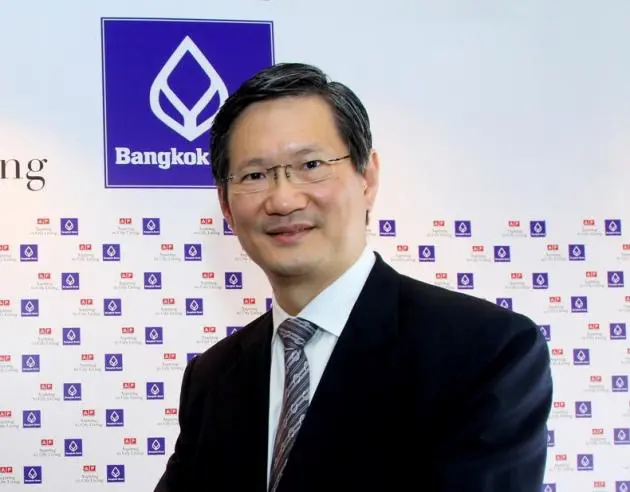
"Lending this year has grown strongly with higher demand in three key areas: long-term loans for private sector expansion, long-term loans for flood-related reconstruction, and working capital loans for normal operations and for inventory replenishment. Consequently, lending in the first half of 2012 increased by Bt71.1 billion, or 4.8 percent from the end of last year, and was 13.1 percent higher than at the end of June 2011. Loan growth was healthy for every customer segment: large corporates, SMEs, and retail,” said Chartsiri Sophonpanich, president of the largest Thai bank.
Despite the high loan growth of the past two years, the bank has been able to maintain loan quality within a comfortable range due to the high priority placed on credit-risk management.
The ratio of non-performing loans to total loans at the end of the second quarter of 2012 was maintained at the same level as at the end of 2011 at 2.7 percent, and was down from 3 percent at the end of 2010.
As of June, deposits rose by Bt85 billion or 5.4 percent from year-end.
BBL's non-interest income rose by Bt893 million or 6 per cent to Bt15.8 billion. The bank’s operating expenses were Bt18.4 billion, an increase of Bt1.5 billion or 8.7 percent from the same period last year, mainly due to higher personnel costs.
“Bangkok Bank continues to have a positive view on the expansion of theThai economy. Public investment in infrastructure projects and private investment – both domestic and
international – are the important drivers. However, we recognise that the fallout from the global financial crisis may still have a negative impact, so we have carefully prepared our
liquidity, capital, and loan-loss-reserve positions, and are closely monitoring the situation. We continue to stay close to our customers so we can help them respond to changes and grow with
them. These actions will also allow the bank to be well-placed to respond to the challenges ahead," Chartsiri added.
