
Year's export growth could be just 5.9%
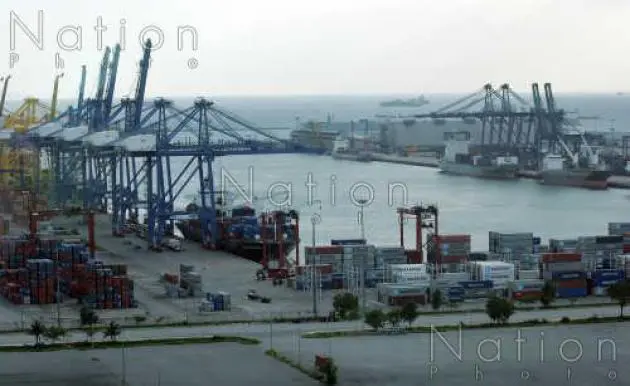


The value of Thai exports is predicted to grow by as little as 5.9 per cent this year, according to a joint study by the Thai National Shippers Council (TNSC) and Chulalongkorn University.
The study has come up with the lowest projection among a number of major agencies and institutions as the impact of the euro-zone crisis creates the spectre of a domino effect on all export markets.
It also showed Thailand would face a serious year-on-year export contraction of 2.7 per cent in the current quarter, following zero growth in the second quarter. Slower exports have a direct impact on the Kingdom’s economic growth, as overseas shipments account for more than 65 per cent of gross domestic product.
The export slowdown will also create problems for payments, as Thai exporters will be unable to open letters of credit easily when they trade with European Union importers because the latter will have lower financial liquidity, TNSC chairman Paiboon Ponsuwanna said yesterday.
The shipping council’s export growth forecast of just 5.9 per cent is by far the lowest among the latest projections by trade experts for this year.
The Commerce Ministry targets exports to grow by 15 per cent, while the Finance Ministry forecasts 12.5-per-cent growth, the World Bank estimates 10.2 per cent, the University of the Thai Chamber of Commerce predicts 8.9-per-cent expansion the Bank of Thailand expects to see 7-per-cent growth. Thai exports will be seriously affected by sluggishness in the EU and the indirect impact that will have on other markets. Paiboon said.
“Although Thai exporters are struggling to escape from the impact of the euro-zone crunch, shipments will inevitably be hit hard as other export destinations also rely on EU markets,” he said.
He said agricultural exports would face slower growth than those in the industrial sector, as there had been significant expansion in vehicles exports following the recovery in production after last year’s floods.
Moreover, due to the expected slowdown in export growth, the volume of container shipments has grown slowly from an annual average of 12 per cent in the past several years to just 5 per cent this year.
Phietoon Trivijitrakasem, the TNSC vice chairman, said demand for the import of empty containers had dropped continuously since the turn of the year, due to anticipated slower export growth in the remainder of the year.
Paitoon Kraipornsak, head of export-index projection of Chula-longkorn University, said Thai exports to major destinations would continue to slow in the current quarter.
Exports to Asean are forecast to grow by just 0.6 per cent in the period, against 7.2-per-cent expansion year on year in the second quarter, while shipments to the US will expand by 1.4 per cent (against 4.6 per cent in the second quarter), exports to Japan will decline by 3 per cent (against a contraction of 1.4 per cent), and sales to the EU will slump by 13.5 per cent (against a fall of 7.5 per cent).
Teerana Bhongmakapat, dean of Chulalongkorn’s Economics Faculty, said the EU impact would continue to be a drag on Thai exports and the global economy for many years.
The EU has serious sovereign-debt problems and the impact continues to affect other parts of Western Europe, he said.
He warned exporters to be alert to the potential of their loans becoming non-performing due to their having unpaid debt in the near future, as many EU importers would face liquidity problems.
“The world is entering the toughest economic crisis since the global contraction of the 1930s. The EU crunch and the slow recovery of the US economy will create another [deep] economic crisis, following the ‘Hamburger’ crisis. Thai shipments will be significantly affected both this year and next,” said Teerana. He said the European Central Bank would be crucial to resolving the crisis. The EU would soon have to resort to the nationalisation of many banks in order to solve the underlying problem.
TNSC vice president Vallop Vitanakorn said all industries would be affected by the EU’s financial crunch.
Exports of textiles and garments will decline more sharply than previously expected, falling by 12-15 per cent this year due mainly to the EU crisis, he said.
