
Risks grow amid likely Greece exit from euro zone
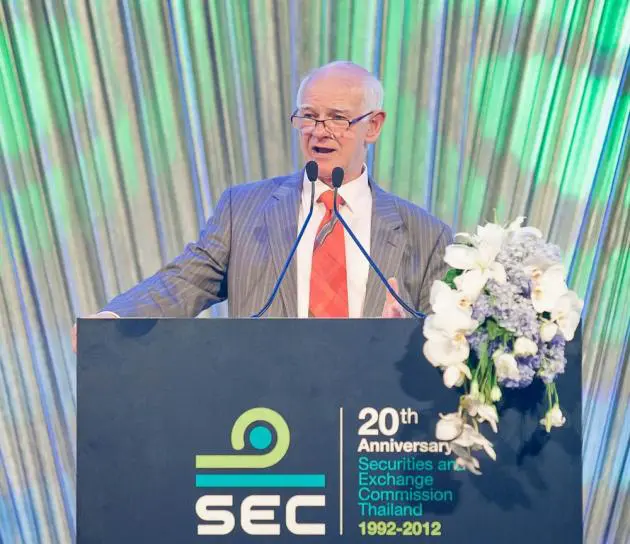


Sir Howard Davies, the first chairman of the Financial Services Authority - the single UK financial regulator created in 1997 from nine bodies - envisions a "hot summer" in Europe amid intensifying risks and what he sees as the likely exit of Greece fro
“Personally, I think Greece will finally leave. Adjustments cannot happen unless Greece leaves. This will force Germany to think it cannot do it without a guarantee [on euro-zone countries’ borrowing],” Davies, now a professor at the Political Science College of France, said at the Securities and Exchange Commission’s 20th anniversary gala dinner last Friday.
Citigroup last week predicted a 90-per-cent chance that Greece would leave the euro in the next 12 to 18 months, with prolonged economic weakness and spill-over for the currency bloc. It also said it would most likely happen in the next two to three quarters. Specifically, the bank assumes a Greek exit will occur at the beginning of next year.
A hot issue now is how Greece would tackle a ballooning trade deficit when its currency cannot be devalued. “In Thailand, if there is a trade deficit, the baht would weaken,” Davis said, adding that this would not in the current circumstances be the case for Greece, which in 2001 abolished the drachma in favour of the euro.
As investors fear the contagion effect on a big economy like Spain, European leaders are also scratching their heads over whether they should come up with a guarantee against the borrowings of these economies.
Having failed to convince investors of its creditworthiness, Spain is facing the hard fact that many are betting it will eventually default on its debt unless it receives a sovereign bail-out like those provided for Greece, Ireland and Portugal.
Davies acknowledged that Spain’s borrowing cost, at more than 7 per cent, put the economy’s ability to finance debt “seriously in question” and that the troika – the European Commission, the European Central Bank and the International Monetary Fund – would be unable to meet the conditions of this failure.
He said this kind of problem had been envisaged when the European Union kicked off the single currency under the Maastricht Treaty.
Under discussion at that time was whether a single currency could work well without a fiscal union, but the governments had to deal with 147 directives and hoped to plug any loopholes later, he said. The euro then materialised at a time when currency devaluation was increasingly being used as a weapon by weaker economies in order to maintain their competitiveness.
Now, leaders will have to scramble for short-term solutions, he said. There must be measures to lower borrowing costs, particularly for Italy and Spain, or they could plunge into a situation of deep recession and budget cuts.
In the long term, structural reforms are needed, he said, adding, “Even if they succeed, the measures will take time [given the size of the EU].”
To help the banking sector, which has been seriously affected by the sovereign-debt crisis, European leaders recently agreed to establish a banking union, whereby member states must surrender powers to run their banks, give up some control over national budgets and explore pooling the risk of underwriting deposits and raising debts.
However, Davies said this “will take too long to implement”. Much would depend on Germany and recognition of the fact that without this, “the break-up of the euro” would be an alternative.
“I hope the EU can resolve this. There will be much hard work until we can get back on track. Countries depending on exports to the EU should be prepared for the worst,” he said.
