
Looking behind capital inflow
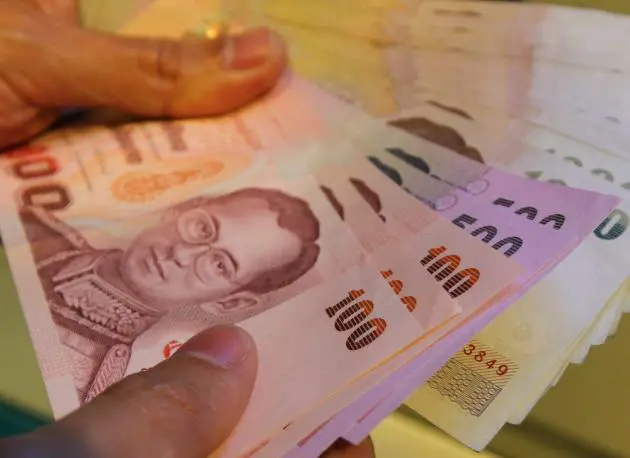


The baht continued its uptrend yesterday, spiralling by 0.42 per cent to 28.89 per US dollar at 9am, bringing its month-to-date gain to 1.38 per cent and year-to-date gain to nearly 6 per cent.
There seems to be no end in sight for the Thai currency’s appreciation, as long as the United States, the European Union and Japan are pumping out cheap money to boost their economies.
While the US has injected US$3 trillion (Bt87 trillion) into its economy after the 2008 financial crisis, the EU has been opening and closing its tap to dash liquidity into the banking system and arrange bailout packages for needy countries. These two economies alone are responsible for infusing a combined $7 trillion into their financial systems.
Joining them is Japan, under new Prime Minister Shinzo Abe’s promise to pull the economy out of deflation through a nudge of $2.7 trillion.
In confirming Japan’s “Aa3” rating and stable outlook on Tuesday, Moody’s Investors Service mentioned that Japan could afford an extraordinary level of government debt to maintain the rating. Japan has a large pool of domestic savings and low private-sector leverage, which imparts stability in the domestic financial market.
It has a very strong international investment position, which provides a cushion against global financial market shocks and also generates substantial income inflows in support of the current account surplus.
These features allow the Japanese government to benefit from the lowest global nominal bond yields despite having the world’s largest debt burden. The Japanese government bond market also has a high degree of immunity to volatility in the external financial climate.
“The Bank of Japan’s new ‘Quan-titative and Qualitative Monetary Easing’ policy likely ensures that the government will continue to have very low funding costs through 2014,” Moody’s said. It sees risks in the long term, but it seems Abe will turn a blind eye to caution for now.
Abe’s policy has worked well. The yen, which climbed as high as 78 per US dollar last year, has been weakening. At 99.41 yesterday, it has fallen 12 per cent this year to the weakest level since May 2009. Against the baht, it is down by 6.70 per cent so far this month, to 29.18.
Thai exporters will be affected the most under these circumstances, since more than 30 per cent of Thailand’s exports are destined for the US and Japan. Hedging contracts are a must, as the baht will rise further against the two currencies on continued inflows.
DBS Group Research foresees more investment flowing out of Japan in search of higher yields in the world, reportedly in the euro zone and Southeast Asia. For example, the weak yen has helped to underpin the euro at above 1.30 against the dollar. Government bond yields in Italy have eased back from their high towards early-February levels. Japan’s Government Pension Investment Fund, the world’s biggest public pension fund with a $1.2-trillion portfolio investment, will this month review its asset allocation.
“Japan has mentioned Southeast Asia as a potential investment destination,” it said. “The Thai baht and the Malaysian ringgit appear to be the most receptive in today’s markets. This has helped to anchor the Singapore dollar and offset some of the downside pressures from the Korean won and the Taiwan dollar.
“Exchange-rate movements also see yen carry trades starting to favour commodity currencies such as the New Zealand dollar, Australian dollar and Canadian dollar.”
Usara Wilaipich, senior economist at Standard Chartered Bank (Thai), said the baht could be the world’s best-performing currency this year. After a gain of 3 per cent last year, it has added 5.4 per cent so far this year, the biggest advance among the 11 most-traded currencies in the region. In the very near term, the upward momentum is confirmed.
Japan’s stimulus measures will drive flows into emerging markets, first to big economies – China, India, Indonesia and Southeast Asia as a whole, she said.
Seeing capital inflows and strong onshore demand for its currency, China yesterday raised the dollar/yuan fixing by 0.15 per cent, the biggest increase since February 8, to 6.2548 per dollar. However, the People’s Bank of China still holds a firm grip on the currency, not letting it ride fully under market demand. The International Monetary Fund last July repeated an assessment that the yuan was “moderately” undervalued.
“Unable to find its way to China, the liquidity is flowing to other economies that could produce higher returns. Still, India and Indonesia are suffering from high inflation and current-account deficits. As North-east Asia – South Korea in particular – is caught up in the tensions on the Korean Peninsula, the inflows will flock to Southeast Asia,” Usara said.
Regionally, on the back of net $1.6-billion foreign-capital inflows to stocks last month, the Malaysian ringgit – which moved up 3.6 per cent last year – yesterday rallied to an 11-month high at 3.03 per dollar. Yet the economic outlook will depend largely on the result of the May 5 election.
The Philippine peso is expected to rise to 39.3 per dollar after it won an investment-grade rating. Yet the gain could be limited given the 7-per-cent appreciation last year.
Indonesia’s trouble is unique. While consumption has been high, foreign direct investment in recent years has spurred imports, leading to huge current-account deficits. Its foreign reserves have dwindled to about $100 billion, compared with $200 billion in Thailand, whose economy is a third the size.
“Thailand is now the most promising destination. Given the 10-year bond yield of 2.9 per cent in the Philippines, against 3.5 per cent in Thailand, this indicates the cross-country inflows,” Usara said.
More funds will flow from Japan to the Thai bond market in search of higher yields. Though Japanese interest rates will be rising on the new policy, they are still lower than regional rates. Thailand is a promising destination with a higher return and the possibility of currency appreciation.
According to the Thai Bond Market Association, global funds have bought a net $10 billion of Thai government bonds this year.
“Inflows could lead to spikes in asset prices. Likewise, if inflows continue at this speed, the Thai baht could also be inflated – rising above underlying fundamentals,” Usara warned.
