
Dramatic changes create rush to set up offices in Myanmar


Play
As senior decision-makers from around the globe descend on Myanmar's capital city Nay Pyi Taw for the World Economic Forum on East Asia this week, multinational companies are lining up to explore the huge commercial opportunities in the country.
At Standard Chartered, we’re seeing strong, and growing, interest in Myanmar – from clients across the globe and across all business sectors. With the EU lifting the last of its non-military sanctions in April, this has been led strongly by European corporates, hungry for growth as demand at home slumps.
Cautiously, multinationals are starting to put money to work in the country. Many have already opened rep offices or branches in Myanmar, recognising that the pace of reform is now so rapid you have to have people on the ground to seize the opportunity as it unfolds.
Multinationals have long since recognised the economic potential of this vast country with its young population – at more than 60 million, nearly the size of Thailand’s. Myanmar, once the world’s largest rice exporter, is not only rich in natural resources, such as oil, gas and timber, it is also strategically located between India and China and member of the fast-growing Asean trading bloc, chaired next year by Myanmar.
Often regarded as Asia’s last, large frontier market, Myanmar has opened up much faster than expected in the past year, as the government has set its sights on economic reform to create jobs and lift incomes. The passing of a new foreign investment law at the end of 2012 marked one important milestone in creating a more investor-friendly climate.
This spring, Myanmar took another major step by inviting global telecom companies to bid for nationwide telephony licences. With fewer than 10 per cent of its citizens currently on mobile, Myanmar is the world’s largest untapped mobile telephone market, and liberalisation of this sector could accelerate the country’s economic development significantly, as we have seen in many of Standard Chartered’s markets.
Three large special economic zones (SEZs) are now being set up in Myanmar, including Dawei, with plans for a major deep-sea port, and Thilawa, with a large-scale industrial zone near Yangon. Supported by Thailand and Japan, the SEZs promise to transform the country’s economic future – capturing fast-growing trade and investment in the Asia region.
Some changes are evident already to anyone visiting Myanmar. Just over a year ago, there were very few ATMs in the country. Now, following agreements with the global payments companies, you can withdraw Myanmar kyat from dozens of ATMs in major cities, using your Visa or MasterCard.
All this underscores the governments’ willingness to draw upon skills and resources from the outside in order to open up Myanmar’s economy. Another very good example is the work underway to build a modern financial system, where Myanmar is seeking the help and advice of institutions such as the World Bank and the IMF, as well as commercial banks, such as Standard Chartered. The speed and relative ease with which we were able to open our own rep office in Yangon in February, after a decade’s absence, is testament to the great pace of change now seen in the country.
Clearly, doing business in Myanmar is still very difficult, as our clients are telling us. The financial system is at an early stage of development. Very few people have bank accounts and facilities for wire transfers are poor. The speed of legal and regulatory change adds uncertainty to the challenges, as do skill shortages. Moreover, targeted US sanctions against Myanmar remain in place, including in key areas such as financial services. Given that the bulk of global trade is denominated in dollars, until the US removes uncertainty by discontinuing sanctions, as the EU has, potential US and other investors and trading entities will continue to hesitate in making commitments.
Addressing the long list of political, economic and social challenges will take time after Myanmar’s five decades of isolation, but it’s neither reasonable nor desirable to expect everything to happen overnight. The democratic process needs time to work and it’s crucial that the country gets its reform process right.
One thing seems certain, though – Myanmar is not turning back. And no one should be in doubt about the huge potential upside for the country, as it seeks to catch up with its Asean neighbours.
Myanmar’s GDP grew 6.5 per cent in the latest fiscal year and may reach 6.75 per cent in 2013, according to the IMF. Official Myanmar figures suggest foreign direct investment was up by five times in the same period, to more than US$1.4 billion. We believe this momentum will pick up further, as multinationals vote with their feet on Myanmar’s future prospects.
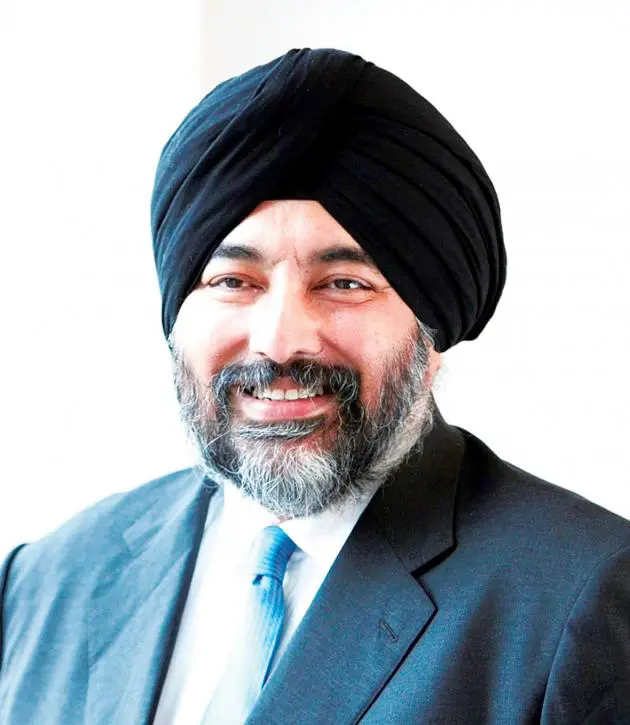
_ Jaspal Bindra is group executive director and CEO Asia at Standard Chartered Bank
