
Universities unite in bid for TV channel


Play
Network of 33 govt, private institutions to enter 'beauty contest'
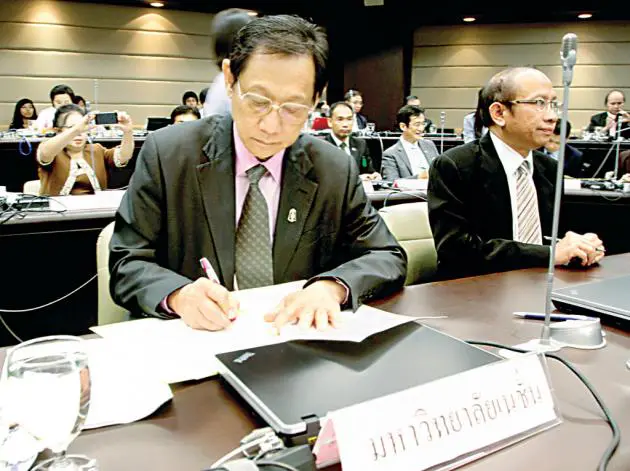
Yesterday 33 public and private universities joined forces to enter the “beauty contest” to operate an educational digital TV channel.
“The application for this public TV licence might be made by the University Network for Public Service or the Council of University Presidents of Thailand,” said Sitthichai Tudsri, vice president of Chulalongkorn University, which is the centre of the network.
The transition to digital television is overseen by the National Broadcasting and Telecommunications Commission (NBTC).
The network consists of 27 leading public universities such as Chulalongkorn, Thammasat and Kasetsart and six private universities such as Bangkok, Rangsit, Nation and Dhurakij Pundit.
Sitthichai Tudsri, vice president of Chulalongkorn, who also oversees this joint project, said a committee from the network would work on production, financial support and general management.
The 24-hour TV station will broadcast eight hours of live programmes daily. The remaining airtime will be allocated to reruns and recorded formats.
All content will be produced by the network. The initial investment of about Bt200 million comes mainly from Chulalongkorn.
The head office and main studios will also be located on its property.
Somkit Lertpaithoon, president of the council, said the strong network of 33 universities was considered a high-potential bidder in the beauty contest for a Type 1 public digital terrestrial TV channel for educational programmes.
Thanthakarn Duangratana, dean of Communication Arts at Dhurakij Pundit, said on behalf of the six private universities that not only would the universities get direct benefits, but also the broadcasting industry.
The broadcasting committee under the NBTC expects to issue the first public digital terrestrial TV licence within a couple months.
However, Somkit questioned the transparency of the beauty contest as the qualifications and terms of reference in the planned information memorandum remained unclear.
Civil groups and academics have also expressed their fear of failed media reform if the NBTC reserves all public TV licences for only state agencies, ministries as well as the Army.
