
TUF makes strong case to comply with global standards


Play
AT THAI UNION Frozen Products (TUF), resources and socio-political context are the greatest challenges to its sustainability, particularly with the possibility that the United States may downgrade the Kingdom's ranking on the human trafficking watch list
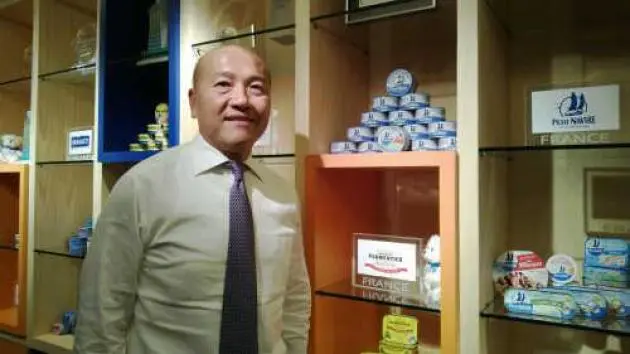
Thiraphong Chansiri, president and CEO of the largest Thai seafood exporter, said the possibility highlights the great need for Thai companies to strictly comply with local and international standards, for long-term viability at both the corporate and national level. The principles of sustainable development must be honoured. Doing business today concerns a wide range of stakeholders, particularly consumers whose voice for products from ethical companies is louder and forcing changes in trade policies, he said.
“Doing business today is not about how to sell products. But it’s how we can assure global trade partners of our corporate governance and transparency of our companies and the industry we are in,” Thiraphong said in an exclusive interview. “We [TUF] are doing business with global companies like Tesco and WalMart. None of them would want to do business with companies that could cause them problems, as that could cause them great damage. We must comply with rules if we want to sustain our business.”
TUF’s sustainable development model focuses on four areas – economic system, socio-political context, resources and culture/tradition. While the first leg is strong with the maintained target to achieve annualised revenue of US$5 billion in 2015 from $3.8 billion this year, the company focuses more on the resources and socio-political context driven by the fast-changing environment of global business.
TUF recently adopted the 10 principles of the UN Global Compact and the International Labour Organisation (ILO)’s Good Labour Practices (GLP), to show the world that throughout its supply chain, there is no child labour or forced labour. For Thiraphong, the third-party reference is crucial to win global recognition for the company’s commitment. Sustainable fishing and shrimp-farming practices have been in place to assure global consumers that the company’s operations would not deplete resources. TUF is Asia’s biggest canned tuna exporter. The practices will also be shared with suppliers throughout the supply chain as nearly all of the company’s raw materials are supplied by outsiders.
Annual audits
Annual supply chain audits will be introduced. The “Child Care Centre” was introduced this year, at two schools in Samut Sakhon where its factories are located, to take care of workers’ pre-schooling children. Corporate activities are not about handing out money, but to promote participation of employees and stakeholders.
Thiraphong said that the best practices will attract good suppliers, knowing that their mutual benefits will grow on the partnership.
“We have to respond to consumers’ concerns. Our aim is to sustain in all areas, not just growth. Sustainability is not about money, but attitude,” he said. Yes, money must come first, but TUF is against excessive growth through excessive investment. Under this cause, the debt-to-equity ratio will be maintained at 1:1. Meanwhile, the company is committed not to diversify into unfamiliar business areas.
He admitted that this year TUF has been hit by “the perfect storm”, ranging from baht volatility, the minimum wage hike, oil prices, continued increases in raw material prices particularly tuna, as well as shrimp disease that killed half of supplies.
“This reminds us of the more challenging times ahead. Challenges would just make us tougher and there should be no long-term problems,” he noted.
A lower ranking by the US Department of State could be a big problem next year. Thiraphong admitted that what the company could do is to adopt international standards, to ensure stakeholders, including employees and consumers, that the company operates with good governance. However, compliance by a company may not be sufficient. A collective action at the national level is necessary, as no company would survive if any bad incidents affect the nation.
Thailand has been in Tier 2 on the US ranking during 2005-2009. In 2010, it was on the Tier 2 Watch List, indicating the possibility that the ranking could be lowered to Tier 3, which could lead to a ban on products from Thailand. Global media are running stories on trafficking victims within Thailand - Myanmar, Cambodian and Thais – who were mainly forced to work in Thai fishing boats for free, aside from seafood processing, low-end garment production and domestic work. Improvement in law enforcement in the following months would be a key to convince the US Department of State not to downgrade Thailand.
Thiraphong noted that profitable companies should adopt best practices into operations, as the long-term benefits are huge. As the company is geared towards “doing the right things”, employees’ engagement will be boosted and it will attract new generation workers.
“We compete in the international arena. We need new talent as our size expands, amid fiercer competition and emerging challenges.”
