
Greying market forces retailers to adjust changes in Japan


Play
Thailand is following the trend seen in Japan of an ageing society, and this challenge has forced local retail operators, particularly convenience stores, to adjust their product line-ups to fit in with the changing marketplace.
Katsuhiko Ikeda, a Japanese retail specialist, said Japanese society was greying, with people age 65 years and up representing about 22 per cent of the total population. Japanese households are getting smaller, too, with only two to three family members per household on average.
Ikeda has 45-odd years of experience in the Japanese retail market, especially convenience stores and supermarkets.
“We have seen an increasing number of elderly people in Japan, with the number of new-born babies declining each year, as well as a growing number of people not getting married,” Ikeda said.
He said retail operators, especially convenience stores, need to adjust themselves to fit in with the demographic change and shifting lifestyles of Japanese people.
Ikeda gave the examples of ready-to-eat chilled or frozen food products, as well as salads and snacks, which have been reduced in size so that they are sufficient for only one person.
This fits in with the ageing of society in Japan, where 30 per cent of elderly people stay alone at home.
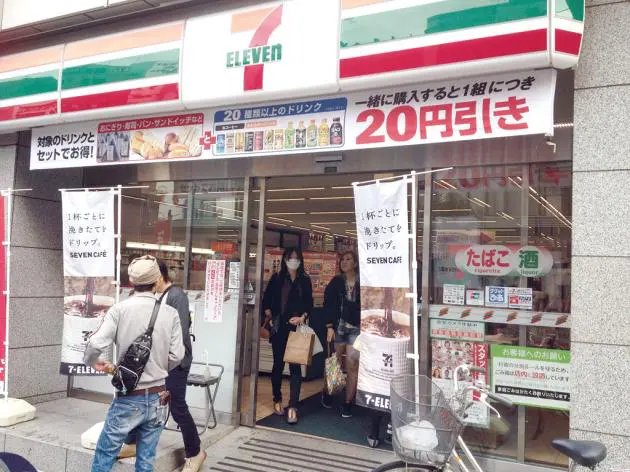
He said that the operator of 7-Eleven stores in Japan has also created its own brand, 7 Premium, for a variety of products, including daily goods and ready-to-eat products.
Those private-label products will be different from location to location to fit in with different customers and lifestyles in particular areas.
Of the total products available at 7-Eleven convenience stores in Japan, between 8 per cent and 10 per cent are under the 7 Premium brand. Some comic books and ready-to-eat foods are available only at 7-Eleven stores.
Ikeda said that the convenience store market in Japan is worth about 9 trillion yen (Bt2.8 trillion) in total.
There are currently about eight major convenience store chains in Japan with the total number of convenience stores in the country reaching about 50,000.
7-Eleven has about 16,000 stores in Japan. Other major convenience store players in Japan are Lawson and Family Mart, which operate about 11,000 and 10,000 convenience stores, respectively.
Ikeda said that 7-Eleven had survived through many challenges and different economic situations in Japan because the stores were able to adjust themselves to the economic changes along the way.
“In times of economic difficulty in Japan, retail players who failed to adjust themselves to the changes died.”
He said that Japan’s economy started to improve in November last year, with the government’s efforts to end deflation bearing fruit.
The first industry to move into a normal business situation was automobiles, followed by electronic goods.
Suwit Kingkaew, senior vice president of CP All, operator of 7-Eleven convenience stores in Thailand, said the company has followed the retail and social trends in Japan, including the increasing number of elderly consumers in the market place, as well as smaller family sizes.
The company currently operates about 7,300 7-Eleven stores in the Kingdom.
“The new merchandising concept, the so-called ‘Item by Item Management’ – known in Japanese as ‘Tanpin Kanri’ – has been applied to all of our convenience stores so that they can adjust their product assortment to fit in with particular consumers and lifestyles, which are different from location to location,” Suwit said.
Suwit said that CP All has given a high priority to energy saving and environment-friendly initiatives at all stores.
We have also adopted an energy conservation campaign entitled 7 Go Green, which allows all staff and customers to show their concern about the environment.
The campaign includes a reduction of the use of plastic bags at 7-Eleven stores, introduction of energy-saving initiatives at stores, green logistics, and the launch of an array of green products.
The company has promoted its 7-Eleven convenience store branch at Tara Square on Chang Wattana Road as a pilot store in adopting those energy-saving and environment-friendly initiatives.
