
Sorajak plans bold restructuring
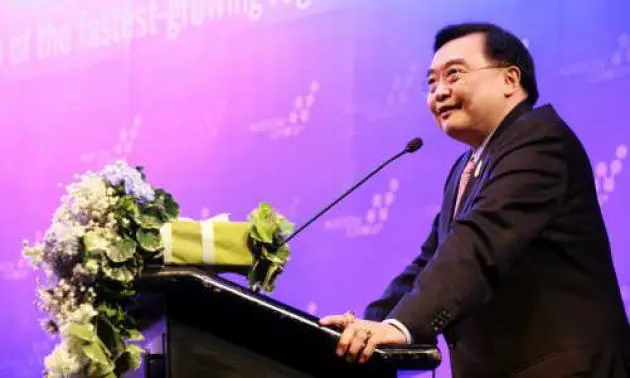


Thai Airways International is in desperate need of a "transformation", as the current corporate structure limits flexibility to cope with intense competition and could lead to further losses in years to come, its chief says.
In an interview with The Nation, THAI president Sorajak Kasemsuvan said that the airline’s corporate structure was complex due to its combination of aviation and non-aviation businesses. Spinning non-aviation businesses off into business units and leaving THAI to deal solely with its aviation business, would allow for more flexibility to cope with rapid changes in the industry, he said.
"THAI’s focus should be on products and services, to ensure that passengers get the best treatment. They should be assured that by flying THAI, they will get something more than just Thai hospitality."
He said that the new structure would allow THAI to be more flexible in adjusting services and planning new routes.
At present, THAI’s president has to deal with both aviation and non-aviation businesses, which includes catering and maintenance units.
Sorajak said all non-aviation businesses should be spun-off and given responsibility for their own revenue and costs. However, the existing benefits of employees would still be maintained, he said.
Several former presidents have failed to separate THAI’s aviation business from its other business responsibilities due to resistance from employees, who fear losing benefits guaranteed to all state-enterprise employees.
"I shall need to talk with the labour unions to convey my idea that this spin-off will not deprive employees of their benefits. This move is for the survival of all. Without changes, THAI’s corporate structure will remain idle and will not be able to compete against fiercer competition. THAI is now living on its ‘good old assets’, but this cannot last forever. We need cooperation from all sides," he said.
In the last decade, government-owned airlines have struggled to adapt outmoded management practices to meet the emerging, more efficiently run private airlines. In Southeast Asia, Singapore Airlines and Malaysian Airlines have also faced major restructuring, to halt declining profit margins.
Sorajak noted that THAI needed to work harder to streamline services and boost revenue – given that its profit margin of Bt3 billion, or 1.5 per cent, was only a fraction of the national carrier’s total annual revenue of Bt200 billion.
"With that thin profit margin, any incident – like the floods or a change in the foreign exchange rate – could wipe out our profit margins. More initiatives are necessary if we want to make THAI profitable in a way that is sustainable," he said.
Sorajak, who joined THAI in October 2012, has been under pressure to turn the national airline around, following its recently reported losses.
THAI reported a net loss of Bt6.35 billion in the first nine months of this year, due to foreign exchange rates and a depreciation in costs. In 2012, it posted a net profit of Bt6.22 billion, after a big net loss of Bt10 billion in 2011.
Sorajak will submit his restructuring plans to the THAI board of directors on December 20, when the board convenes for its last meeting of the year.
