
Outlook for 2014 economy varies
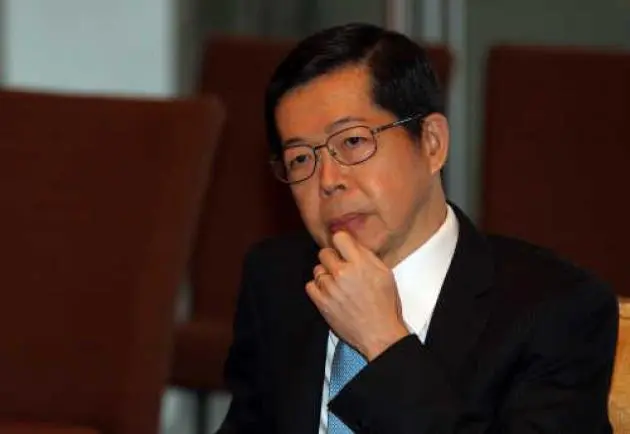


Bank of Thailand Governor Prasarn Trairatvorakul acknowledged yesterday that if a new government is not formed next year, economic expansion could be affected to a certain degree, as the government remains a key driver of the economy through spending and
"There is concern over a possible delay in disbursement [of the fiscal budget]. However, there is more concern over whether there will be a government in place, as the government is a key mechanism. If there is a government and the mechanism is functioning, the economy will grow," he said.
The extent of the political impact on the economy next year was subject to various interpretations.
Moody’s Investors Service said the dissolution of the House of Representatives and the snap election were negative for Thailand’s credit rating.
Kasikorn Research Centre also said the political situation and particularly exports would largely dictate the growth rate of next year’s gross domestic product and gave a range of 0.5-4.5 per cent.
UBS forecasts consumer-spending growth from 2014-15 to fall below its 10-year average.
However, Bangkok Bank believes the economy is still capable of growing by 4-5 per cent next year.
Moody’s Singapore office said in a statement that the early election would not resolve Thailand’s political crisis.
The Democrat Party might decide to boycott the election. And, given the strong constituent support that Yingluck Shinawatra’s Pheu Thai Party enjoys, the general election is unlikely to change its majority in the House.
Thailand will continue to face anti-government demonstrations because protesters do not accept a democratic system based on majority rule by its opponents, Moody’s said.
The leader of the anti-government movement, Suthep Thaugsuban, has said the dissolution of Parliament and early election call are insufficient measures. His stated goal is to topple the "Thaksin regime" and replace it with a royally appointed council, an outcome that holds no promise of resolving the deep political divide and turbulent political developments that have played out in Thailand between the royalist Democrat Party and the various manifestations of the populist Pheu Thai Party over the past six years, it said.
If the opposition Democrat Party does not participate in the February election, it could lead the Constitutional Court to declare the election outcome invalid, similar to what transpired in 2006.
As Moody’s pointed out last week, the key credit-negative feature for the sovereign rating is that prolonged protests will weigh on an already fragile growth outlook for 2014. The heightened political tensions have marred investor confidence, as reflected in the accelerated decline in Thailand’s official foreign-exchange position since late October.
Since the underlying polarisation of polity erupted with a military coup in September 2006, the recent weakening in the external payments position has been one of the most sustained the country has experienced, it added.
Bangkok Bank still upbeat
The country’s largest bank has maintained its rosy outlook because the Kingdom’s main economic engine is the export sector, and it expects shipments next year to be buoyed by a global economic recovery.
"Even though public investment is likely to be delayed by the political situation, the bank did not put this investment into GDP growth in 2014," BBL president Chartsiri Sophonpanich said.
Public investment takes much time and the first stage of this investment plan only needs a small budget. BBL is the big player in corporate lending, and it does not see any significant suspension of private investment.
The factor that will impede Thailand’s GDP growth is the global economy, including tapering of the US quantitative easing programme, but the bank is confident in this country’s fundamentals as it is still attractive to investors.
When the Western market starts rebounding, demand for Thai products will also pick up, and domestic consumption is not doing so badly either, Chartsiri noted.
Based on GDP growth of 4-5 per cent, lending by the banking industry should increase about 6-8 per cent next year.
BBL is drafting its 2014 business plan and its loan-growth target should be about 5-7 per cent. It achieved its target of 5-6 per cent for this year.
Domestic factors to dominate
KResearch warned that although the economic recoveries in the United States, the European Union, China and Japan would boost exports next year, if the domestic political strife is prolonged and becomes violent, the economy would take a big blow from all the negative consequences that might come along with it.
"The world’s economy is getting better but it is the internal struggle in Thailand and the political situation that increase the negative risk factor in the economy," said Pimonwan Mahujchariyawong, deputy managing director.
For the most optimistic outlook, if there is a government that is acceptable to all sides, either via election or appointment, and the regime can regain investors’ confidence while realising the need to stimulate the economy, GDP growth might reach 3 per cent in the first half of next year and might accelerate to 6 per cent by the second half, he said.
In the second case, if the new government does not stimulate the economy or if the effect of the stimulus is sluggish, GDP would grow by 3.7 per cent next year.
In the third scenario, if there is no new government by the first half but the export sector is doing well as expected, GDP growth would be 2.5 per cent next year.
In the fourth and worst case, if there is no new government by the first half and the performance of the export sector is poor, GDP growth would be only 0.5 per cent next year.
UBS reported that domestic demand stayed weak in the third quarter of this year and then anti-government protestors had hit the streets of Bangkok. Seasonally adjusted, real third-quarter GDP rose by 1.3 per cent from the second quarter and by 2.7 per cent year on year.
Data quality aside, the fall in surveyed consumer confidence could be related to job concerns and appears to be correlated with the decline in consumption. It is also likely the protests in Bangkok and the low level of consumer confidence are related, the financial-services company said.
The protests, having been sparked by a low level of confidence in the government and the economy, could in turn result in still lower confidence, it said.
