
Star confident of mainstream airlines' health


Play
Alliance banks on the advantage of long-haul service
Despite the pressure from low-cost carriers that are flying away with a substantial slice of the short-haul passenger market and threatening legacy airlines, Mark Schwab, chief executive of Star Alliance, is confident that mainstream airlines will continue to be a major means of transport especially for passengers “turning left” – first class – and business-class flyers.
“I have been in the industry for four decades and I believe conventional airlines will continue to be the main mode of transport of the rich and famous,” he said last Tuesday.
Although low-cost carriers are penetrating deeper into the more lucrative long-haul market while aggressively pursuing short-haul strategies, they are helping to drive the aviation industry, he said.
However, they have yet to prove they can offer comfortable and luxurious long-haul services as orthodox airlines do.
“Talk about a 16-hour flight, for instance. Besides, they operate mostly on short trips and may not have access to cover the rest of the world. Conventional airlines, however, offer a global reach. We connect the world,” he said.
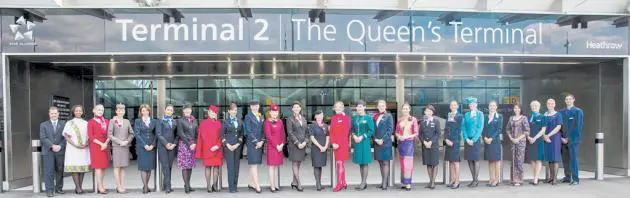
As the long-haul sector is the last stronghold of traditional airlines, Star Alliance embarked on a global project in June, starting with the brand-new Terminal 2 of London’s Heathrow Airport.
It offers “seamless travel” with quick baggage collection, fast boarding, “priority” for passengers on a waiting list, well-stocked lounges and fast transfers with a standard maximum connection time of 60 minutes – the next goal is 45 minutes – and self-service check-in facilities.
This is possible as the 23 Star carriers are under one roof, which leads to better handling of service disruptions.
To be part of Star, members must comply with industry quality standards for customer service, safety and technical infrastructure.
Mark Davies, director of marketing and loyalty, said the airlines benefited from Star membership by utilising the group’s services.
“It is like you pay for a gym membership. You gain if you use the gym,” he said.
Thai Airways International, for instance, complained it was not getting a fair share of transfer traffic despite Thailand being an attractive business and tourism destination. Star said it could help by exploiting Suvarnabhumi Airport and its modern, convenient infrastructure. It consulted THAI in rescheduling flights to and from Bangkok and reduced connection times to less than two hours.
New connections have increased from four to 22, bringing in millions of baht in additional revenue from 33,000 incremental passengers.
Star said it also helped members increase profitability under its “Star Missed Connect Alert” programme, in which the group’s headquarters helps passengers who have missed connecting flights to make a new connection quickly. This has helped at least half of passengers grab new connections.
Despite losing some members to corporate restructuring and bankruptcy over the past years, Star continues to be the biggest alliance with 27 carriers. The group holds the biggest share at 24.3 per cent of revenue passenger kilometres – the number of flyers multiplied by the distance they travel – followed by SkyTeam with 20.6 per cent and Oneworld with 19.8 per cent.
Cost synergies
The most successful purchase by Star is jet fuel. By grouping 27 carriers, Star can bargain for a “package” deal, helping its members save as much as US$15 million to $30 million (Bt490 million to Bt970 million) on fuel annually.
“This is because all carriers use jet A1 … which makes it possible to leverage volumes,” said Jeffrey Goh, chief operating officer and general counsel for Star Alliance.
Discussions on cost synergy range from purchasing supplies and building hotels to air-traffic-control charges.
“They are grand ideas that are not easy to execute. The obstacle to joint sourcing is the uniformity of brands that may affect the product and marketing philosophy of airlines,” he said.
In countries where fuel supply is monopolised, Star encourages new fuel suppliers to break the monopoly by committing to a large volume of fuel, so that the new firms feel comfortable launching their business.
This happened in Hong Kong and Sydney, where Star supported the entrance of new suppliers. However, it not easy to break the monopoly in such countries as Russia and India or in Africa.
And with high-volume items such as blankets, Star said it helped its members save 2 million euros (Bt82 million) annually. With some items such as baggage tags, a carrier could save 90 per cent under Star’s joint procurement programme.
In 2012, Star began to outsource economy-class seats on 70 Air China, Austrian and Lufthansa aircraft, which committed to the seat programme for long-haul trips. The scheme works because Star bargains for a single “non-recurring cost” advantage, which means members together share the initial cost of development instead of each member having to pay the non-recurring cost.
Shipping costs and logistics are factors affecting decisions on the joint purchase of supplies. For instance, THAI may be able to buy things cheaper at home without forking out any shipping cost. Also, anti-competition laws are a restriction faced by Star when huge volumes of purchases lead to dominant market power.
