
Nations reveal plans to rake in more tourism revenue in 2015


Play
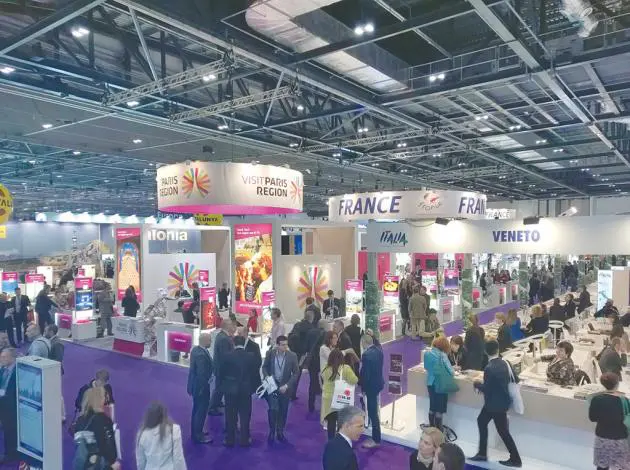
At the World Travel Market in the British capital last week, countries including Thailand unveiled plans to deal with challenges in the years ahead as revenue from inbound tourists is expected to see healthy growth, with Asian middle-class and affluent tr
Malaysia, which was hit by the mysterious disappearance of a flight in March, has listed the tourism industry as a key player in its drive to join the ranks of developed countries by 2020. Malaysia aims for 36 million visitors in 2020, up from 25 million last year and 29 million expected next year.
After “Visit Malaysia Year 2014”, the next national campaign will be called “Malaysia Year of Festivals”, with many events lined up around the country throughout next year including a rainforest festival, shopping festival, major sales fairs, and sports events, including motor racing under the new Formula E.
In May, British Airways will resume daily flights to Kuala Lumpur.
Pham Ha, founder and chief executive officer of Luxury Travel Vietnam, said next year would be a good time for Southeast Asia and Vietnam as Britain is still a strong market, Latin America is emerging, the English- and German-speaking markets continue increasing, and France is recovering.
“Vietnam is now offering world-class products – hotels, golf courses, helicopter tours, exclusive cruises and great air links. These are what tourists should visit in Vietnam,” he said.
Experience North Korea, a Shanghai-based travel agency, said North Korea was now opening up more and recently promoted specialised travel such as surfing and skiing tours. However, with its poor international image, North Korea will likely find it hard to boost arrivals. The country welcomed fewer than 5,000 visitors last year.
Simon Press, senior exhibition director of World Travel Market 2014, said the industry could benefit from the opening of North Korea.
Andrew Phua, director for exhibitions and conferences at the Singapore Tourism Board, has said it is targeting business travellers and meeting, incentive, convention and exhibition (MICE) participants from overseas. The STB’s tourism demographic shows that business and MICE travellers are 30 per cent of the 14 million arrivals last year. It is targeting 15 million international visitors this year.
Thailand is one of the targeted countries as it contributes a higher proportion of business visitors than leisure tourists. Last year, Thai business travellers to Singapore spent about Bt39,000 per trip, while leisure travellers spent Bt26,000.
The Philippines is also stepping up efforts directed at the regional market to boost international arrivals from other Asean states through confirmed musical, sports and world conferences.
“The Philippines aims to achieve 10 million arrivals next year with the launch of ‘Visit the Philippines Year’,” said Domingo Enerio, president of that country’s Tourism Promotion Board.
South Korea is the biggest market, followed by North America, he said.
In the United Arab Emirates, the city of Sharjah, capital of the emirate of the same name, is hoping to boost arrivals through its campaign focusing on culture as well as awareness of the east coast, which overlooks the Gulf of Oman.The city is also focusing on business, general and leisure travellers. Arrivals to Sharjah usually grow by 12 per cent a year, and are expected to jump by 18 per cent over the next five years after the promotion of culture as a new attraction.
In the wider Middle East, tourism in the Arab Gulf states has been proved many times to be immune to war and political tensions in other parts of the region – Iraq and Syria. Issam Kazim, chief executive of the Dubai Corporation for Tourism and Commerce Marketing, said it was set to increase visitors from 11 million last year to 20 million in 2020.
To beat the tough competition, the Tourism Ministry of Thailand is ready to roll out a campaign called “Discover Thainess”. The ministry also plans to invite famous celebrities from around the world to participate in a “selfie” campaign to promote attractions in the country via online and social media.
Online drives growth worldwide
The world travel event also confirmed that mobile technology would continue transforming the tourism landscape and consumer behaviour.
Destination services, personalisation, mobile bookings and peer-to-peer networks are expected to be the main disruptive forces in the travel industry over the next five years.
Travel and tourism continue to prosper, with arrivals rising 5.1 per cent to a record 1.1 billion last year. This and next year are forecast to see further increases of an estimated 4.7 and 5.7 per cent.
Hotel sales are rising, driven by strong performances in North America and the Asia-Pacific region.
Low-cost carriers continue to be the most successful segment in air travel with the business model in association with “braggies” embraced by many airlines.
The trends as identified by Euromonitor’s travel experts include travellers connecting with brands across multiple devices including mobile phones and wearables. Instant messaging is set to overtake social media for customer service, bookings and payments. Operators are responding to lifestyle shifts to niche markets like cycling, golf, wellness and female travel while emerging concepts such as “poshtels” challenge the status quo.
Event destinations are not afraid of a makeover with the Middle East rebranding as a design hub, while Africa is the latest surfing paradise.
The International Monetary Fund predicts growth of the global gross domestic product of 3.4 per cent for this year, up from 3 per cent last year, with China, India and Asean nations the key drivers.
Brazil, Russia, India and China have lost their shine, with China seeing an expected slowdown, but it is still poised to overtake the US as the world’s largest economy in terms of purchasing power parity this year.
