
Thailand not ready for AEC, finance minister tells seminar
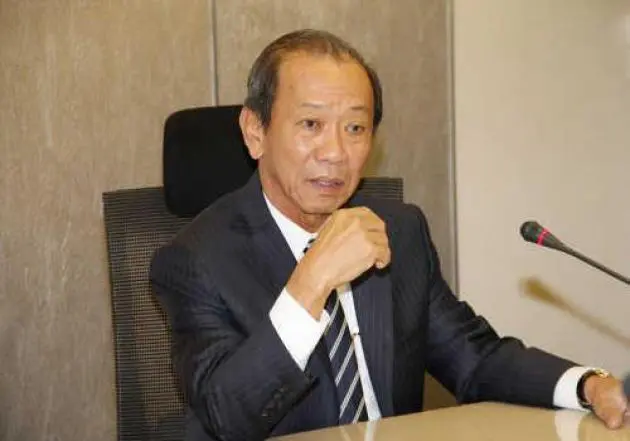


Finance Minister Sommai Phasee and key private-sector voices have warned that the Kingdom has a long way to go before it is ready for the full implementation of the Asean Economic Community at the end of 2015.
He said this was especially the case for regulations that were acting as a barrier against the free movement of goods, labour, services and investment.
"The officials at the Finance Ministry have written it down on my speech here that they are ready for the AEC. I said you are not ready," Sommai said yesterday.
Speaking at a seminar on "Is Thailand Ready for the AEC?", Sommai said many regulations still had to be
introduced before the AEC’s full launch.
He said he had worked at the ministry for three months and in that time there had been "eight or nine" regulation changes but many more "still need to be upgraded, amended and covered if we are to be ready for the AEC".
Sommai said the country had to amend regulations that acted as barriers against the idea of a single Asean market and production base.
He said having a single Asean window to facilitate logistics and investment meant Thailand needed to improve its transport infrastructure to increase regional connectivity and fully embrace the digital economy to connect government agencies.
Another important issue was inducing regional confidence in the country.
"The government and the prime minister have to create confidence in terms of the country’s political situation and our stance in the region," he said.
"Do we know what our position in the AEC is or where we are now in the political situation?
"The government has to provide this clarity to maintain confidence at a regional and international level."
Sommai said the Finance Ministry would next week propose to the Cabinet the setting up of a Bt25-billion venture-capital fund to be spent on joint investment projects with small and medium-sized enterprises.
Yu Jienyoenyongpong, chairman of the Land Transportation Federation of Thailand, said only large companies in Thailand had readied themselves for the AEC because they had the capital and know-how to do so. But he said 90 per cent of the country’s businesses were SMEs and they were not ready because they did not have the capital or knowledge.
He said the readiness of SMEs for the AEC would determine the country’s readiness, including their competitiveness against regional rivals, and he was glad the minister had acknowledged the true picture.
Yu said other countries in the region were ahead of the Kingdom in terms of regulation that facilitated investment while Thailand had rules that made it harder for SMEs to operate across borders.
The government’s Nong Khai-Map Ta Phut dual-track railway project would be ineffectual because it would not connect with the high-speed railways that Malaysia and Singapore were developing.
He said the project’s East-West Corridor route would lessen the benefit to Thailand as it would not pass major landmarks or manufacturing centres.
Sanan Augubolkul, chairman of Srithai Superware, said Thailand had to think about its energy consumption before the full implementation of the AEC because its reserves of natural gas were due to run out in seven years.
Sanan said the nation had to invest in energy now before becoming more dependent on neighbours for energy while amendments to regulations and tax incentives were needed to facilitate foreign investors.
