
German business warns ruble plunge will 'affect us all'


Play
BERLIN (AFP) - A German business group Wednesday cautioned against "Schadenfreude" over Russia's currency woes, predicting a 20-per cent drop in German exports to the country this year and the risk of worse to come.
The ruble's sharp drop would further damage trade, already hurt by Western sanctions amid the Ukraine crisis, and slash revenues of foreign companies operating in Russia, said Eckhard Cordes, head of industry group the Committee on Eastern European Economic Relations.
"I generally cautioned against Schadenfreude", or the pleasure at another's misfortune, Cordes told business daily the Handelsblatt.
"A destabilisation of Russia in the end isn't in anyone's interest, we would all be affected.
"At the moment we expect a 20-per cent fall of German exports to Russia in 2014. But if the current situation continues, we could experience a bigger fall."
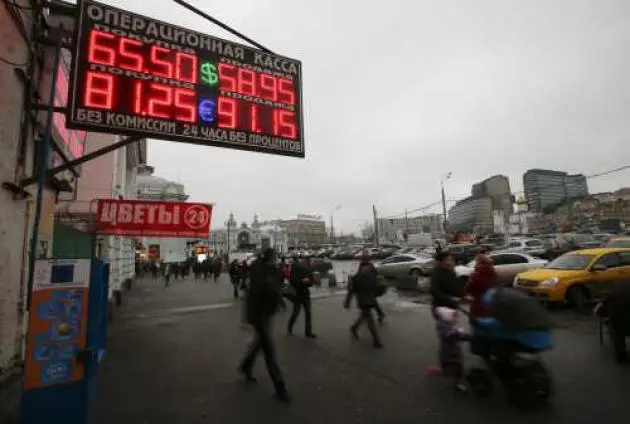
The ruble this week slumped to record lows against the dollar and the euro, losing around 60 per cent of its value since the beginning of the year, due to plunging oil prices and Western sanctions over Ukraine.
It has recovered somewhat as the finance ministry has sold foreign currency to prop up the ruble.
Meanwhile, Russian Prime Minister Dmitry Medvedev on Wednesday assured ministers and industry leaders that the country had enough monetary resources to overcome the economic crisis despite the ruble's plunge in value.
"All the economic and production goals that you have set yourselves, the country has the currency resources to achieve them," Medvedev said in a televised meeting.
"We act on the basis that our future actions must be based on market mechanisms," he said, ruling out the use of capital controls to restrict currency transactions.
"There is no point in bringing in the extremely harsh regulation in this sphere that there was at one time. It doesn't lead to anything useful," Medvedev said.
The prime minister acknowledged that the ruble had plunged below the "comfort" level for the economy and the public alike.
He said that while objective economic reasons were behind the collapse, "emotions here have done their work too", warning against panic.
Medvedev said the central bank and the government had worked out a package of measures to stabilise the situation.
"It's in our joint interests to bring order to the currency market as quickly as possible," Medvedev said. "No one - neither our citizens nor banks nor the real economy - needs such instability."
