
Irish official offers advice on SME policy, FDI incentives
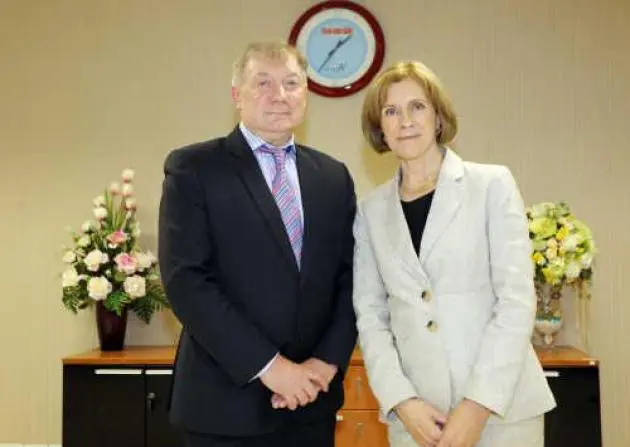


FRANCES RUANE, director of Ireland's Economic and Social Research Institute, spoke in Bangkok recently about the future of the euro as well as what Thailand could learn from Irish policies on small and medium-sized enterprises and foreign investment.
She was in the city on the occasion of the opening of the Ireland Embassy in Bangkok.
As a member country of the 28-nation European Union and one of the 18 states using the single currency, which is facing formidable challenges, Ruane said: “Europe has come though an extraordinary period over the past many years. It has done two things at the same time, which I think was very challenging.
“Europe [the EU] has both extended the number of members from nine to now 28 countries while trying to intensify the integration among member countries with more labour mobility and a shared currency in the case of the euro area.
“That’s very ambitious, and probably with hindsight doing both so quickly, it might have been better doing it more slowly. Some of the difficulties we’re experiencing with the euro are related to the absence of defining governance as carefully as it needs to be.
“The latest quantitative easing [of 1.1 trillion euros in bond purchases] will be another test whether or not the governance which has been established will allow this process to succeed in giving confidence back to the market. People will be looking to see if there is commitment and solidarity across the euro area or it’s going to be each country going on its own.”
On the future of SMEs, where Thailand may learn from Ireland’s experience, Ruane said: “We see a lot of growth in the next few decades coming from SMEs, and for them to sell into the global marketplace, it very often means going into the global value chain” to achieve the standards in best practice in order to be successful.
“That takes quite a bit of time to build up. It needs funding to take those steps. Our SMEs have faced difficulties after the financial crisis and Asean SMEs might have found it somewhat easier.”
On foreign direct investment, which is one of Thailand’s drivers of economic growth, she said: “Ireland has used tax incentives [to promote FDI for the past 40 years]. One thing is clear: Tax incentives on their own [are] not enough, and countries that try to attract FDI with just such incentives do not succeed.
“Other factors that are important are the cost of doing business in the country, the ease of setting up a business, how quickly you can have that business in operation. Is it possible to develop that business without going back for more permission.
“The other issue is around education and skill availability for the type of foreign investment projects, so tax incentives have to be combined with other factors to be effective. We have a one-stop service for a lot of decision-making, so if you come to Ireland to do business, you don’t have to spend days in the bureaucracy.
“We’re also doing very well in terms of the cost of doing business.”
