
Intel Compute Stick responds to convergence trend


Play
INTEL is plugging into the convergence of computing platforms with a slew of new intelligent products, including a "plug and play" computer.
Sontiya Nujeenseng, manager of Intel Microelectronics (Thailand), said yesterday that the new Intel Compute Stick was a mini-computing paradigm that comes with an Intel Atom quad-core processor, Windows 8.1 with Bing, Bluetooth and wireless technology.
The stick comes in two versions – one with 32 gigabytes of storage and 2GB memory, and one with 8GB storage and 1GB memory.
They are priced at about Bt4,000 and will be available via the company’s distributors such as Ingram and Synnex (Thailand).
The Intel Compute Stick can be plugged into a smart device such as a smart TV and turn it into an instant personal computer.
“We expect that the new device will be available by the end of April, focusing on home entertainment, digital signage, on-the-go productivity and thin-client solutions. We expect to have more than 10,000 units available by the end of this year,” he said.
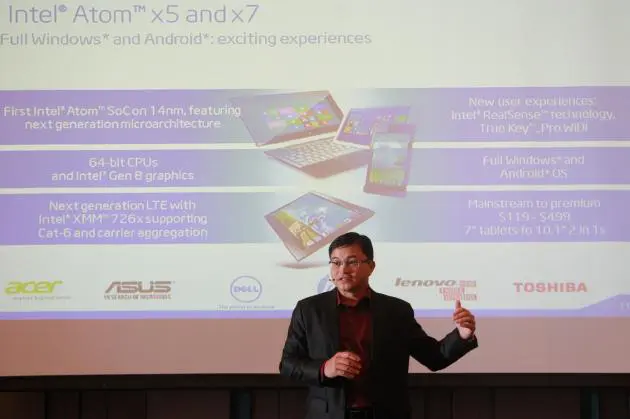
The other new products, which support the market from entry-level to high-end, include Atom processors X3, X5 and X7.
The X series is Intel’s first integrated communications platform for tablets, phablets and smartphones. The prices of products based on the Atom X series will start at US$75 (Bt2,454) and go to $350. The new products will enter the market next quarter.
The Core processor line also gets an upgrade with the i5 and i7 models now in their fifth generation based on 14-nanometre architecture. They are designed for notebooks, all-in-one devices and desktop computers. Prices range from Bt20,000-Bt60,000.
The Intel XMM 7360 modem and wireless platform supports wireless technology, NFC (near field communication) and Bluetooth technology. It will appear in the market in the second half of this year.
The new products will support users wanting to refresh existing devices including notebooks, desktop computers and tablets.
The PC market has stayed flat since the fourth quarter of last year because of politics, the government’s push for a “digital economy” and other issues.
However, for the rest of this year, the PC market will continue growing, since the government, education, business and consumer segments will consume much more information-technology products, Sontiya said.
