
Slow growth for life insurance


Play
THAILAND’S life-insurance market will grow slightly less dynamically than the region’s, at an average of 8.3 per cent until 2026 compared with 11.5 per cent in the past, according to Allianz Group Economic Research.
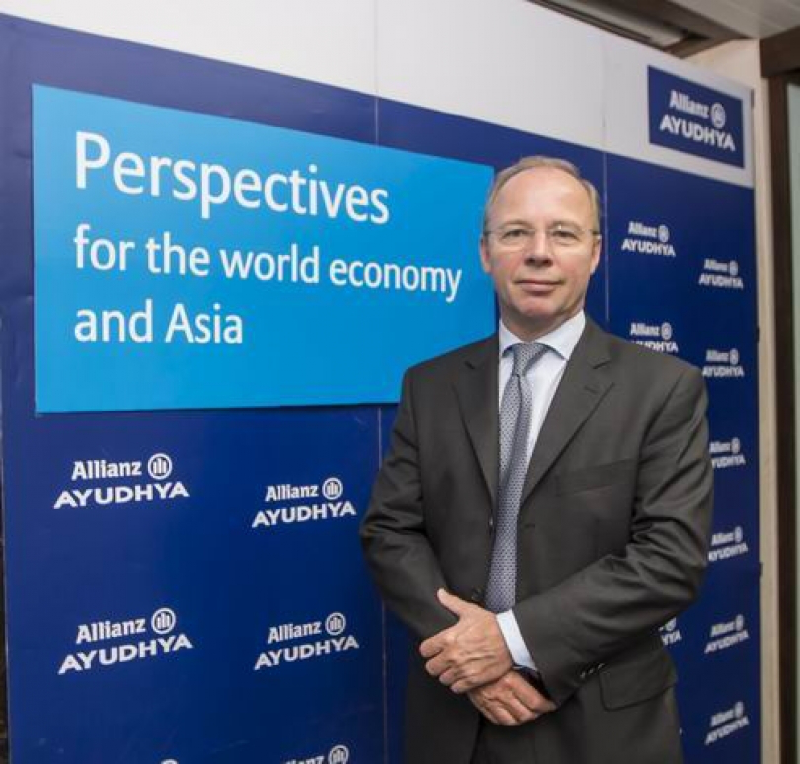
“Due to the still rather weak economic development, gross premium income in both segments, life and non-life excluded health, has grown markedly below the 10-year average in 2015, adding up to a plus of 4.7 per cent,” Michael Heise, chief economist of Allianz, said during a visit to Thailand yesterday.
“With average per capita spending of Bt9,730 and life and non-life insurance premiums amounting to 4.9 per cent of GDP, Thailand is already one of the more developed insurance markets in Asia,” he said.
Germany-based Allianz forecasts the Thai economy expanding slightly more strongly this year than last year – 3.0 per cent versus 2.8 per cent – thanks to public investment and the buoyant tourism industry.
Against the background of already high penetration and increasing competition in the life-insurance market, Allianz expects future premium-income growth to be slightly weaker than in the past 10 years. Amid the low-interest-rate environment, life insurers should consider asset mix and explore investment in alternative assets, such as real estate, infrastructure, renewable energy and private equity.
Possible measures to tackle the situation are redesigning long-term savings products, increasing flexibility, moving to less capital-intensive products such as the unit-linked product, and selling protection with riders for added value.
In Asia, growth in emerging economies is likely to moderate further to slightly below 6 per cent this year, the slowest rate in 15 years. However, emerging Asia will still account for almost 60 per cent of this year’s global economic growth.
“A wide-ranging policy agenda is needed to harness emerging Asia’s huge potential,” Heise said.
“Priorities should include structural reforms to increase productivity and growth potential, but also policies to manage risks associated with high leverage and financial volatility.”
