
BOT warns of greater Brexit risks
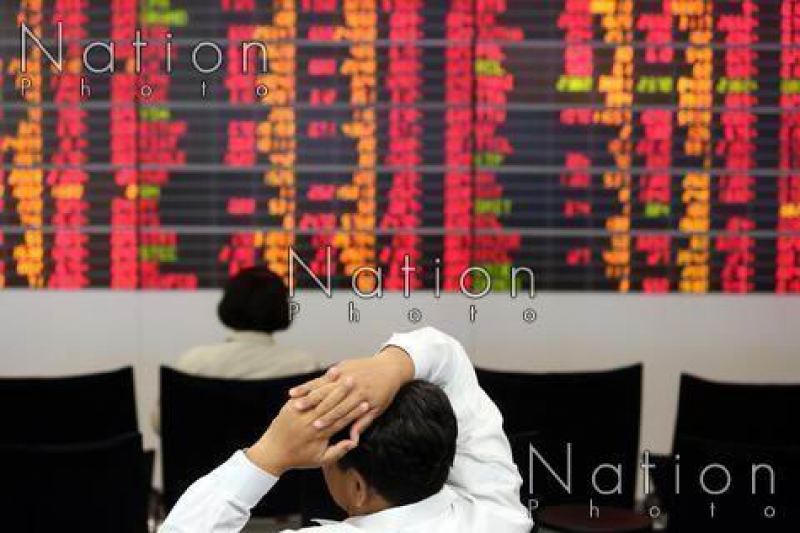


THAILAND will face only a limited direct impact from the United Kingdom’s decision to exit the European Union, but would face greater risks from global financial market volatility in the short-term and uncertainties from possible moves by other EU members
In its initial report, the central bank said the Brexit would not significantly affect Thailand’s trade and financial sector. Only 1.8 per cent of Thailand’s total exports go to the UK, while Thai banks’ direct exposure in the UK and Europe-wide financial sector is only 1.31 per cent of total assets.
The central bank noted that the baht’s depreciation yesterday was in line with regional movements. It acknowledged that the capital market would be volatile in the short-term, with possible outflows, though small, from the equity and bond markets.
However, in the long run a change in strategies by private companies and other EU trade partners could cause uncertainties in trade and investment, which could stall global economic recovery.
“The central bank would closely monitor the situation and stand ready to maintain economic and financial stability, if necessary. Private companies are urged to hedge against currency risks as financial volatility would stay for some time,” it said.
Anusorn Tammajai, dean of Rangsit University’s Faculty of Economics, foresees significant consequences to the global and Thai economy in the short and long-term.
The UK’s status as the biggest financial centre would be weakened as some financial institutions may move to other EU countries. The pound could fall by as much as 20-30 per cent, while the euro could weaken by 15-20 per cent.
“Economic nationalism” would gain momentum, leading to more protectionism and a slower growth in global trade and investment.
Former World Trade Organisation director-general Supachai Panitchpakdi is among those who believes the UK will be fine outside the EU. In his speech on Thursday, he was confident that the UK would maintain its role as a key financial centre for Europe due to Frankfurt’s limited capacity and the relatively weaker positions of non-UK financial institutions.
“Britain has been an EU member that has not used the single currency, but it has prospered well. The EU now is like putting together patches of people, not a true federation,” he said.
He expected Brexit to encourage other EU members to consider leaving, particularly Greece and the Baltic states.
He also expected greater ease for Asean in striking a free-trade agreement with the UK. A deal with the EU is complex, given the bloc’s reluctance to reduce its huge agricultural subsidies, he said.
Ittirit Kinglake, president of the Tourism Council of Thailand (TCT) said the separation of UK from the EU would not have any great negative impact on Thailand’s economy and tourism in the short term. Both Britain and EU would take time to reform and restructure their economy system.
After separation, some tourists in EU and Britain may consider pausing planned overseas trips for a short period.
However, Thailand’s tourism is expected to still enjoy inbound travel as it is one of the top destinations for European tourists.
“In the long term, Britain’s trading is likely to benefit more as its regulations are not as tough as that of the EU,” Ittirit added.
Isara Vongkusolkit, chairman to the Board of Trade of Thailand, said that despite the challenges for trading and the fluctuating exchange rate, Britain’s exit should make free-trade negotiations easier, in particular if Thailand would like to negotiate an FTA with Britain.
Vallop Vitanakorn, vice chairman to the Federation of the Thai Industries, said traders are closely monitoring other countries, in particular Spain, wanting to leave the EU as it could shake global economic growth.
