
Somkid looks to foreign investments
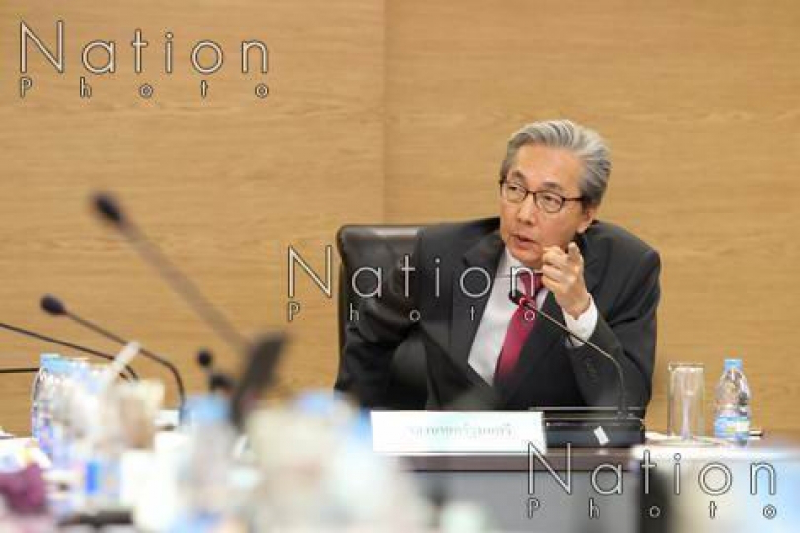


DEPUTY PRIME Minister Somkid Jatusripitak has instructed officials to devise attractive investment packages in an attempt to get foreign investors to set up operations in new industrial estates, including those planned for U-tapao and the Eastern Economic
Speaking yesterday while visiting the pilot Shanghai Free Trade Zone in China, Somkid said he had ordered his economic team to create appropriate investment solutions and benefit packages to attract more foreign direct investment.
He said several areas needed to be improved urgently, including industrial management, financial services and investment law.
The deputy premier escorted Thai businessmen on a visit to the special economic zone in Shanghai to learn how China was seeking to drive its economy through the special project.
An economist said the Thai government was determined to boost foreign investment at some of the Kingdom’s new industrial estates, including the planned U-tapao Industrial Estate and in the East Economic Corridor.
Somkid intends proposing attractive investment packages to the Cabinet soon, in order to boost foreign investment.
Shanghai Free Trade Zone was established in 2013 as a pilot industrial-estate area with the aim of becoming a major driver of China’s economy.
The 120-square-kilometre area comprises a free-trade zone, trading port, logistics park and airport free-trade zone.
Wang Xinling, deputy director-general of the board of Shanghai Free Trade Zone, said China’s central government offered benefits and had relaxed major investment conditions in order to draw investment from overseas in sectors on both the country’s negative and non-negative lists.
Shanghai is an experimental project that Beijing wants to be a model for long-term investment throughout mainland China, he said, adding that the major sectors continuing to be promoted under the project are trading, investment and finance.
Since 2013, more than 5,000 companies have invested and established businesses in more than 60 sectors in the zone.
An efficient foreign-trade investment process and well-developed facilities are the keys to successfully attracting investment, even for negative-list sectors, he stressed.
“The central government plans to use a similar investment model nationwide if this model achieves what was planned for it,” the official said.
Moreover, in the pilot Shanghai Free Trade Zone, outbound investment from China will also be more convenient for those businesses that want to use the area for overseas expansion, he added.
Meanwhile, the Cabinet yesterday approved the planned development of the Eastern Economic Corridor, which covers Chon Buri, Rayong and Chachoengsao provinces.
The government has assigned Somkid, the Transport Ministry and the Royal Navy, together with related state agencies, to jointly draw up details for the corridor’s development, which will feature investment in land, track, water and aviation transport infrastructure.
The infrastructure will promote connectivity both within Thailand and with its neighbours.
Details will be finalised within the next three months.
