
Prayut calls for ‘inclusive growth’ for Asian region


Play
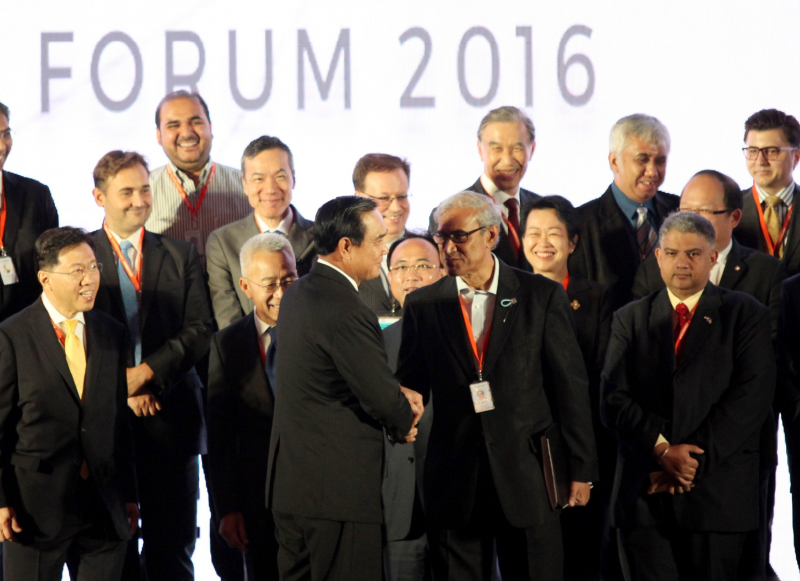
Prime minister Prayut Chan-o-cha was joined by other speakers - from both the public and private sectors - at an Asia Cooperation Dialogue session in Bangkok yesterday when he stressed “inclusive growth” as a way forward for the regional grouping.
They called for the public and private sector to tighten their partnerships and draw people to their plans and the execution of the plans.
Prayut said that while the ACD leveraged its “diverse strengths”, nobody should be “left behind” – whether they are a member country, citizens, or small enterprises.
He said: “Both the private and public sectors must be aware of the people, since people are also their consumers – how lower-income earners can take part in the products that you have created; how they can afford to use the high-speed trains.”
Prayut made the comments during his keynote address to the ACD Connect Business Forum before today’s convening of the ACD Summit in Bangkok. The summit will be attended by the leaders of the cooperation pact’s 34 nation members.
Prayut said that at the summit he would encourage ACD members to come up with action plans to prioritise things they could achieve, in an effort to achieve their respective goals, rather than merely devise hundreds of memorandum of understandings that did not get executed.
“We might have an ACD brand where everyone takes parts in the production, processing, and distribution,” he said.
Shamshad Akhtar, under-secretary-general of the United Nations and executive secretary of the Economic and Social Commission for Asia and the Pacific, said public-private partnerships (PPP), “plus another ‘P’” for people, were key for economic development.
Roy Teo, director and head of FinTech & Innovation Group at the Monetary Authority of Singapore, said the PPP approach was recommended because while the private sector was good at understanding consumers, the public sector needed to play a role such as in creating a KYC (know your customer) registry, a national database of citizens and other standards.
Benedicte Nolens, senior director and head of risk and strategy at Hong Kong’s Securities and Futures Commission, said financial technology presented great opportunities for emerging economies in terms of improving their financial inclusiveness.
Yasushi Negishi, country director for Thailand for the Asian Development Bank, said Asia required US$1 trillion (Bt35 trillion) annually for financing its infrastructure development, of which 70 per cent was financed by government budgets, 20 per cent by the private sector, and the rest by multilateral development banks such as ADB and World Bank.
“The challenge is how we can support the development of domestic financial markets so each country can finance infrastructure developments by themselves,” he said.
