
10 communities get lift via CSR tourism
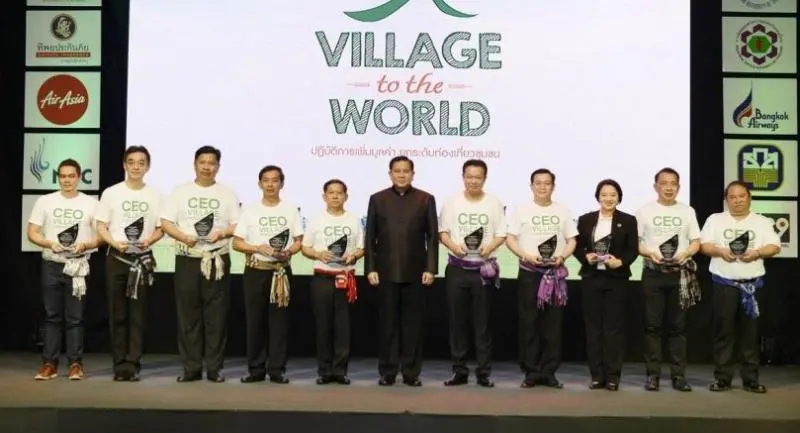


THE TOURISM AUTHORITY of Thailand (TAT) has teamed with nine business partners to give 10 small communities a boost through a corporate social responsibility tourism-outing initiative that aims to generate annual income of Bt1 million for each community in 2017.
The “Village to the World” project was established in line with a strategy to empower local people to strengthen their communities.
The goal is to create innovative tourism programmes to suit the potential and identity of each community and to increase marketing opportunities for these communities so they generate revenue from tourism on a sustainable basis, said Yuthasak Supasorn, governor of TAT.
The project was launched in 2016 under the title “Meet in the Village # Best CSR Outing Ever”. It offers CSR outing tourism packages for corporate customers to explore and develop the traditional identities and unique traits of the communities.
In addition, the corporates are assured that they will have unique experiences and enjoy the unique identities and diversity of the communities. Most importantly, participants feel the joy of giving and engaging in CSR activities that benefit the communities.
In 2016, the project selected 10 communities with an annual income of less than Bt1 million. They are small communities not well known to tourists. They also do not have tourist attractions but have potential in arts and culture and ways of life which can be developed into activity-based tourism.
Since the beginning of this year, the project has surveyed and worked with the 10 communities to develop community tourism models for CSR outings suitable for corporate customers.
Of the 10, three communities are from the Northern region, two are from the northeastern region, three are from the Central region and two are from the Southern region.
The include are Baan Rai Kong Khing in Chiang Mai province, Mueang Kao, Sukhothai province, Baan Ku Ka Sing, Roi Et province, Baan Dong Yen, Suphan Buri province, Baan Rimklong Homestayy, and Lee Led Community, Surat Thani province.
The “Village to The World” project has invited organisations in both the government and private sectors and listed companies to the communities.
They include PTT, Thai Beverage, Muang Thai Life Assurance, Tipco Foods, CAT Telecom Public Company, and Safari World.
The project also received support from the Industrial Estate Authority of Thailand, which brought companies from its industrial estates to visit the communities.
The project’s CEO Village Ambassadors initiative involves well-known chief executives inviting organisations to stage outing to the communities.
Commenting in the for Baan Phra Bat Huai Tom community in Lamphun province, Verapong Chaiperm, governor of Industrial Estate of Thailand, said: “Lamphun, although only a small province, is home to ancient Lanna history.
“As part of a Buddhist kingdom that prospered for over six hundred years, Lamphun is culturally diverse and is home to attractive lifestyles for many people.
Commenting on Mueang Kao, Puttipong Prasarttong-Osoth, CEO for Bangkok Airways, said Sukhothai had an ancient history and culture.
He said there were many fascinating stories related to province, great places to visit and great food.
Tassapon Bijleveld, CEO for Thai Air Asia, is promoting Ban Rai Kong Khing in Chiang Mia. He said the project would help improve the English skills to the community and subsequently boost their confidence.
Apirom Sukprasert, senior executive vice-president of the Bank for Agriculture and Agricultural Cooperatives, invited tourists to visit Koh Lone Rawai in Phuket to experience the fishermen’s lifestyle, eat freshly caught seafood and help the community construct much-needed dams.
The project expects that this CSR outing tourism model will be able to generate annual income of Bt1 million for each community in 2017.
The ultimate goal of the project is to create value and add value to new tourism models for the communities and increase the opportunity for them to generate income because tourism is a tool to strengthen the communities and allow them to be self-sustainable.
