
Banks offer relief to flood-hit clients in South


WIDE RANGE OF AID MEASURES FROM INTEREST RATE CUTS TO FIXED-RATE LOANS
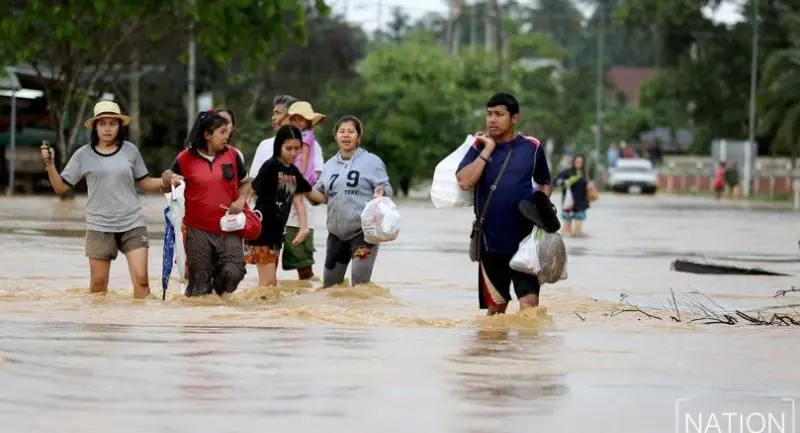
STATE-OWNED and commercial banks have provided emergency assistance for customers affected by the massive floods in the southern provinces.
Government Housing Bank has set aside Bt500 million for its emergency package, under which it will offer an interest reduction to its housing-loan customers, said GH Bank president Chatchai Sirilai.
The package charges zero interest for the first three months of the scheme, and from the fourth to 12th months, the charge will be minimum retail rate minus 2.50 percentage points per annum. The interest rate for the second year will be MRR minus 2 percentage points, and MRR minus 1.0 point for the third year. The MRR currently is 6.75 per cent per annum.
To new borrowers or existing customers who require new lending for repairs to their homes, the bank will offer a fixed interest rate of 3 per cent per annum for three years.
After the first three years, customers will be charged MRR minus 0.50 percentage point per year.
The bank will limit these loans to Bt1 million per borrower, Chatchai said.
The Government Savings Bank is offering a credit line of up to Bt50,000 per family without charging interest for one year, and the interest will be 1 per cent per month for the second year to the fifth year, said GSB president and chief executive officer Chatchai Payuhanaveechai.
Customers wanting this package must apply for it by December 31 this year.
GSB also is offering a principal waiver to customers affected by the flooding. These customers can request a waiver for two to three years or choose to pay some principal for not more than two years. During the principal waiver, customers will pay only the interest on their loans, he said,
After the flooding, GSB has prepared housing fixing technicians to help repair the residential and electric appliances.
Krungthai Bank will waive interest for its existing housing-loan customers for three months, and from the fourth to 12th months of the package, the interest rate will be reduced by 25 percentage points from the normal rate, said Chainarong Eursithichai, executive vice president.
Cherdchai Chomphonukulrut, senior executive vice president and managing director of the retail banking sales and distribution group at KTB, said the inventories of some small and medium-sized enterprises that are part of the supply chains of the rubber and palm industries had been damage by the flooding. The bank plans to provide new loans with special interest rates to help them recover quickly.
He said the amount of funding required for these special SME loans would be evaluated after the floods recede.
Most borrowers at Thanachart Bank are in automobile instalment plans.
For them, TBank will extend the repayment period and waive the fine expense to customers, said Sanong Khumnuch, executive vice president.
Anuwat Luengtaweekul, TBank’s chief financial officer, added that the bank was ready to reduce interest on loans to flood-affected customers. Moreover, the bank’s insurance arm Thanachart Insurance would provide forklifts to assist its motor-insurance customers whose cars have been inundated.
TBank yesterday reopened its 11 branches in five southern provinces after closing them for four days because of the floods.
As of 11am yesterday, nine branches of three commercial banks were still closed in the southernmost provinces.
KTB reported the most closures during the flood period at 26, followed by 14 branches of Kasikornbank and one branch of Siam Commercial Bank, according to the Bank of Thailand.
KTB’s Cherdchai said the bank had been able to reopen all 26 branches in the southernmost provinces but had closed one in Krabi.
The BOT reported that 110 bank branches had been damaged by the flooding in the South.
