
AI glasses could shape global wearable market, but hurdles remain
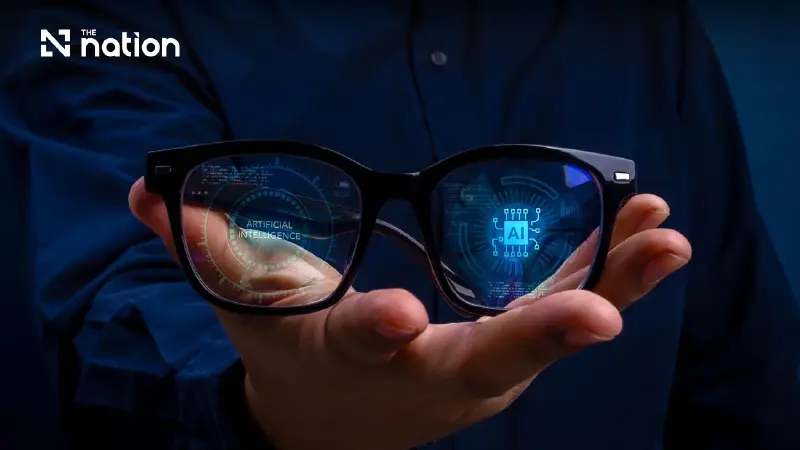


AI glasses could shape global wearables, Wong Ming Yin argued at Hong Kong's Optical Fair, but battery life, comfort, privacy and practical uses remain hurdles.
- AI glasses could reshape the wearable tech market by offering hands-free functions like real-time translation and navigation, reducing reliance on smartphones.
- Significant hurdles to mainstream adoption remain, including practical concerns over comfort, battery life, durability, and the aesthetic appeal of the devices.
- For the technology to succeed, manufacturers must also address public privacy concerns about integrated cameras and ensure the glasses are more convenient to use than a smartphone.
- Despite these challenges, the industry is experiencing rapid growth, with reports indicating that global shipments of smart eyewear have increased substantially year-on-year.
AI glasses could shape the global wearable technology market, but concerns over comfort, battery life, privacy and practical usefulness must be addressed before they become widely adopted everyday products, according to Wong Ming Yin, general manager of OBE (H.K.) Ltd.
He made the assessment during the “AI Eyewear Sharpening the Vision” session at the 34th Hong Kong International Optical Fair, held at the Hong Kong Convention and Exhibition Centre (HKCEC) on Wednesday (November 4). Wong described the shift towards intelligent eyewear as irreversible, despite the challenges facing manufacturers.
“I believe smart glasses will continue to define tomorrow’s eyewear. But success depends on four things: understanding what people need, conducting the research, finding manufacturers who can produce specialised components such as hinges, and identifying the right market,” Wong explained.

Industry figures point to rapid expansion. International Data Corporation (IDC) reported that global smart eyewear shipments reached 3.566 million units in the first quarter of 2026, up 130.1% year-on-year.
Separately, Omdia estimated that worldwide AI glasses shipments totalled 8.7 million units in 2025, an increase of 322% from the previous year.
Despite this growth, the industry's challenge is whether rising interest in smart glasses can translate into sustained everyday use, particularly as manufacturers seek to balance increasingly sophisticated functions with comfort and convenience.
Why AI glasses are attracting interest
By combining digital functions with conventional eyewear, developers hope to make information more accessible without requiring users to repeatedly reach for their smartphones. This potential for hands-free computing is central to the industry's vision of AI glasses becoming a more important part of the wearable market.
Jasper Wu, assistant to the president at INMO, the smart eyewear brand developed by Sichuan Yingmu Technology, highlighted real-time translation and navigation as practical uses for the lightweight Go series.
She described the Air range as wearable computers capable of running applications, while the newly introduced INMO Future extends the concept to spatial computing, including interactive, life-sized 3D models that could support training and education.
Dillion Ho, product designer and co-founder of NIMO, described a similar aim: presenting digital information without disrupting a person's awareness of the physical world.
“The fundamental idea behind smart glasses is to seamlessly present digital information in front of our eyes while keeping us connected to the world around us,” Ho explained.

What stands in the way of everyday use
Ho identified three persistent barriers to daily adoption: physical comfort, appearance and fit, and the ease of retrieving information. Weight and pressure on the nose and neck can make extended use uncomfortable, while differences in face shape and personal style complicate design.
“After decades of development, three primary challenges remain: how the glasses feel, how easy they are to use, and how people find the right fit,” he noted.
He argued that information must be easier and quicker to access through the glasses than by taking out a smartphone. Otherwise, new technology could offer too little advantage to change established habits.
Wong also stressed the practical demands of everyday wear. Hinges must withstand repeated use, batteries must last long enough and frames must appeal to consumers who may prefer ordinary-looking spectacles. He questioned the industry's pursuit of ever-lighter designs if it left too little room for durable components.
Beyond engineering, Wong raised public acceptance and privacy concerns surrounding cameras built into glasses. He also questioned whether specialist uses, such as fishing or golf, could reach large enough markets to justify development costs.
Wu framed the challenge more simply: “As we add more technology to glasses, one question stays with us: will people still want to wear them every day?”
How manufacturers hope to overcome the barriers
Wu proposed an all-in-one approach that incorporates the display, processing chip and controls into the glasses, reducing the need for cables or separate computing devices.
“We aim to bring the display, computing, and controls directly into the glasses, reducing the extra equipment we have to carry with us,” she explained.
She described a magnetic battery design for INMO Go3 intended to make all-day use more convenient, as well as plans for additional frame styles. Her broader point was that technical capability must be weighed against comfort, battery performance and appearance.
For Wong, the solution also requires manufacturers to know which consumers they are serving. A product aimed at a specialist activity may need different functions, styling and price positioning from one designed for everyday use.
Their views suggest that manufacturers must look beyond adding advanced features and focus on whether smart glasses offer enough practical benefits to justify wearing them throughout the day.

AI also changes conventional optical lenses
While the other speakers focused mainly on smart eyewear and its everyday applications, Chris Toh, professional affairs manager for Asia-Pacific at Rodenstock Asia Distributor Partners, described a different use of AI, focused on lens design rather than electronic functions built into frames.
Rodenstock's Biometric Intelligent Glasses (B.I.G.) approach uses AI to help tailor prescription lenses to the characteristics of each eye. Toh cited the company's finding that standard eye models match only about 2% of eyes.
“Standard eye models only match two per cent of the population, but by leveraging AI technology, we fuse your prescription with biometric data to make your vision even sharper,” he explained.
The system draws on relationships identified in a database of more than 500,000 biometric eye scans to estimate individual eye parameters from prescription information, with the aim of improving central and peripheral vision.
“Instead of merely smart, we call them Biometric Intelligent Glasses, where our lenses are optimised based on the unique biometric parameters of your eyes,” Toh added.
These are not connected devices that run AI functions while worn. They illustrate how AI can also influence the design and manufacture of conventional prescription lenses.
Taken together, the presentations suggest that AI could reshape the global eyewear and wearable markets through both hands-free computing and advances in vision correction.
However, the ability of AI glasses to secure a lasting place in everyday life will depend on whether manufacturers can overcome the practical barriers of comfort, durability, battery life, privacy and usability.
