
Thailand-China EV partnership set to power smart mobility
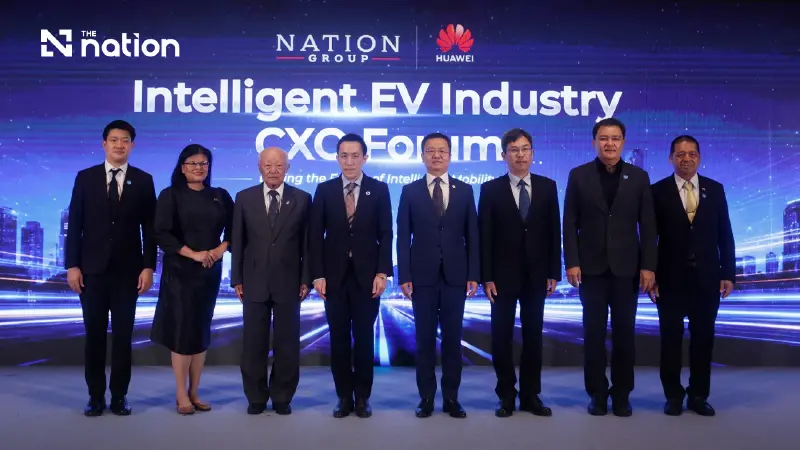


Thailand and China can combine manufacturing, technology, supply chains, charging networks and skills to build a competitive smart EV ecosystem, experts say.
- The partnership combines Thailand's established automotive manufacturing base with China's expertise in EV technology, digital infrastructure, and integrated supply chains.
- The collaboration aims to advance beyond vehicle assembly into "smart mobility," focusing on areas like autonomous driving, in-car AI, connected-car services, and expanding charging networks.
- A key goal is to address current gaps in Thailand's EV ecosystem, including insufficient charging infrastructure, limited autonomous driving systems, and the underutilization of 5G for connected-car services.
- The cooperation supports Thailand's ambition to become a regional EV production and export hub, leveraging investment and technology from Chinese manufacturers to build a world-class, intelligent EV industry.
Thailand and China have an opportunity to build a more advanced electric vehicle ecosystem by combining Thailand’s manufacturing base with China’s expertise in EV technology, digital infrastructure and integrated supply chains.
Speakers at the Intelligent EV Industry CXO Forum, held under the theme “Driving the Future of Intelligent Mobility”, outlined how the partnership could move beyond vehicle assembly towards deeper cooperation in smart driving, artificial intelligence, charging networks, connected-car services, local component production and workforce development.
Cross-industry cooperation needed to close EV gaps
David Li, chief executive officer of Huawei Technologies (Thailand), described intelligent technologies as the next major phase of the EV industry following the shift from internal combustion engines to electric vehicles. He argued that the industry was entering “a new era” of intelligent transformation.
Autonomous driving, smart cockpits, in-car AI and entertainment services are fundamentally reshaping the driving experience, he noted. These innovations are stimulating demand and creating opportunities across the wider automotive value chain.

Thailand already has a strong manufacturing base and supportive policies that have helped EV sales grow rapidly. However, Li identified several gaps that could slow the country’s progress towards a fully connected and intelligent EV market.
The availability of autonomous-driving systems remains limited, while the adoption of AI-powered voice technology inside vehicles is still low. Charging coverage also remains insufficient in some areas, particularly along highways and on routes outside major cities, leaving motorists uncertain about access during longer journeys.
Connected-car services have yet to make full use of Thailand’s 5G infrastructure. Li noted that many drivers still rely on mobile-phone hotspots, while popular entertainment and streaming services are not fully integrated into vehicle systems.
Closing these gaps will require cross-industry cooperation rather than action by carmakers alone. Li called for closer coordination on policy frameworks and technical standards, autonomous-driving regulations, high-precision mapping, in-vehicle AI, digital content, charging infrastructure and high-speed network connectivity.
He urged stakeholders to “join hands” and work together to build a world-class, intelligent and environmentally sustainable EV industry in Thailand.

Integrated supply chains can deepen bilateral EV ties
Jiang Wei, minister-counsellor at the Chinese Embassy in Thailand, identified electrification and intelligent technology as the two defining directions of the global automotive industry.
Thailand’s ambition to become a regional EV production and export hub provides a strong foundation for bilateral cooperation. Its 30@30 policy aims for zero-emission vehicles to account for 30% of total domestic vehicle production by 2030.
Jiang noted that Thailand’s EV production had risen from only a few thousand units in 2023 and was projected to reach 70,000 units in 2025. Localisation has also progressed, with key components such as batteries and motors increasingly being produced domestically.
The country has trained thousands of EV engineers and technical workers, creating a talent base that could support further growth and help Thailand maintain a leading position within ASEAN.
Policy support will remain central to the industry’s next stage of development, particularly through the expansion of charging infrastructure, investment in the research and development of intelligent technologies, and measures to support exports.
Jiang also pointed to the memorandum of understanding signed by Thailand and China to strengthen economic cooperation in industrial supply chains. He expected future cooperation in the intelligent EV sector to place greater emphasis on supply-chain integration and technology exchange.

Thailand lays foundations for smart EV production hub
Thailand is stepping up efforts to transform its fast-growing electric vehicle market into a sustainable production and intelligent-mobility hub, backed by investment incentives, supplier development, infrastructure expansion and stronger safety standards.
Nearly 500,000 electric vehicles are now registered in the country, including about 100,000 electric motorcycles. EVs also account for around 40% of bookings at major motor shows, reflecting growing acceptance among Thai consumers.
Sudthasinee Smitra, deputy secretary-general of the Thailand Board of Investment, explained that the government had set a clear direction through its green and digital economic policies, including the development of intelligent mobility.
The BOI has introduced measures addressing both supply and demand to create an environment conducive to private investment. It is also helping established automotive suppliers and companies in related industries adopt automation and digital technologies as they move towards smart manufacturing.
Joint ventures between Thai and foreign companies are another key part of the strategy. BOI incentives are designed to encourage technology transfer, knowledge sharing and closer links between overseas manufacturers and Thailand’s industrial base.
“Thailand’s strengths lie in its infrastructure and a supply chain developed over many years,” Sudthasinee noted.
The BOI also organises business-matching activities, including Subcon Thailand. The previous edition generated almost 10,000 business matches with an estimated value of more than 20 billion baht, helping connect Thai parts manufacturers with the emerging EV supply chain.
Strong domestic supply chain remains essential
Suroj Sangsanit, president of the Electric Vehicle Association of Thailand, attributed the sharp rise in electric two-wheelers and passenger cars to government incentives and consumers’ increasing willingness to adopt the technology.
Concerns over access to charging facilities have eased as networks have expanded, although further investment will be required to accommodate the growing number of EVs.
Eight Chinese EV manufacturers have already committed to production in Thailand, bringing the country closer to its ambition of becoming a regional manufacturing hub.
Suroj argued that Thailand’s main advantage over regional competitors was its established automotive ecosystem, built around experienced suppliers, manufacturing capabilities and access to export markets.
“We do not want Thailand to be merely an EV market; we want it to be a production base,” he stressed, adding that Thailand currently has the potential to export up to 80% of its production.
Suroj also confirmed that the strength of its supply chain and ecosystem will ensure it remains a leader in the region.

Suppliers race to meet faster technology cycles
Kriengsak Wongpromrat, president of the Thailand Automotive Institute, described the shift from internal combustion engines to electrified and intelligent vehicles as the automotive industry’s most significant technological transformation in a century.
Thailand remains ASEAN’s leading vehicle producer and ranks among the world’s major automotive manufacturing bases. Its network of more than 2,000 Tier 1, Tier 2 and Tier 3 suppliers has been central to attracting foreign investment.
However, Thai companies must now adapt to shorter product-development cycles. Parts that previously took up to 60 months to develop may now need to reach the market within 24 months.
Manufacturers must also prepare for a wider range of technologies, including battery electric, hybrid and plug-in hybrid vehicles, alongside software, connected systems and advanced driver-assistance technology.
The Thailand Automotive Institute is developing internationally recognised testing capabilities and promoting research tailored to local conditions.
Safety standards aim to strengthen public confidence
Titipat Thaijongrak, director of the Automotive Engineering Bureau at the Department of Land Transport, outlined measures to ensure that EVs remain safe and environmentally sustainable throughout their working lives.
The department is applying international standards to electrical systems, batteries, and advanced driver-assistance functions. It is also studying the use of on-board diagnostic systems to assess battery health, along with second-life applications and end-of-life battery management.
In the field of public transport, the Ministry of Transport plans to convert all buses in Bangkok to electric vehicles. Electric buses have already begun to be introduced, with plans to expand their numbers by several thousand in the future.
This includes a project to replace old taxis with EV taxis through a loan programme worth over 200 billion baht, aimed at improving service standards by offering vehicles of various sizes and reducing pollution in urban areas.
In addition, the government has a policy to reduce the annual tax on EVs by up to 80% for three years to encourage adoption. In the future, it is also considering introducing blue licence plates and designating city centre zones where only EVs would be permitted, in order to address pollution in a sustainable manner.
Together, these initiatives are intended to move Thailand beyond rapid EV adoption towards a cleaner transport system and a locally rooted industry capable of supporting production, technological development, and exports.
