
Thailand plans air cargo security upgrades to improve efficiency
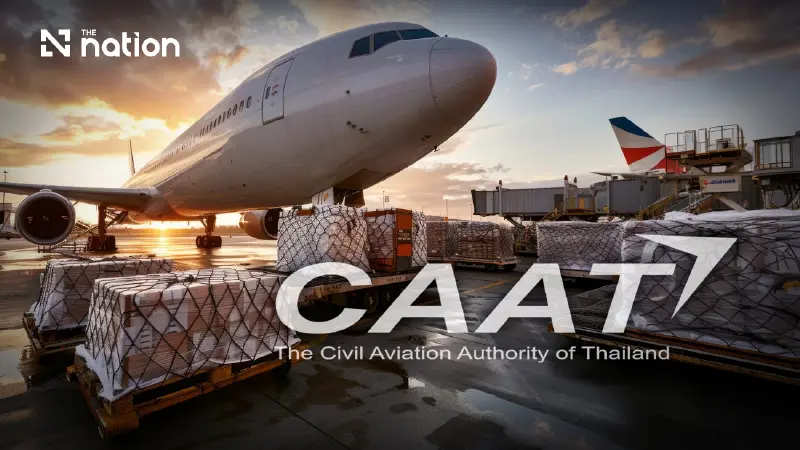


In some cases, moving imported raw materials from Suvarnabhumi cargo warehouses to factories takes about seven working days, affecting export production.
- Tighter security checks implemented to meet international standards have caused significant cargo congestion and shipment delays at Suvarnabhumi Airport.
- As an immediate solution, authorities plan to use explosive detection dogs (EDD) to supplement cargo screening and increase handling capacity.
- Long-term plans involve developing a security system aligned with international standards by promoting Known Consignor (KC) and Regulated Agent (RA) programs.
- A joint working group of public and private sector agencies will be formed to oversee the implementation of these measures to improve efficiency and reduce costs.
Cargo volumes have grown over the past several years, and in late 2025 the Civil Aviation Authority of Thailand (CAAT) tightened checks on consignments before loading to ensure compliance with the safety standards of the International Civil Aviation Organization (ICAO).
This has led to persistent congestion in cargo warehouses at Suvarnabhumi Airport, putting outbound shipments at risk of missing their flights.
In some cases, moving imported raw materials from the cargo area to factories can take about seven working days, affecting the continuity of production for export.
The air cargo subcommittee of the Thai Chamber of Commerce and the Board of Trade of Thailand met Deputy Prime Minister and Transport Minister Phiphat Ratchakitprakarn on Monday (October 5, 2026).
CAAT, the Office of Transport and Traffic Policy and Planning (OTP), and Airports of Thailand Public Company Limited (AOT) also joined the discussions, which focused on proposals to improve air cargo management as continued growth in Thailand’s cargo volumes caused congestion at some stages of the transport process.
The meeting considered both immediate and long-term solutions.
As an immediate measure, the Board of Trade of Thailand proposed using explosive detection dogs (EDD) to supplement cargo screening.
The aim is to increase capacity to handle growing volumes while maintaining aviation security standards.
Longer-term proposals included developing an air cargo security system aligned with international standards by promoting Known Consignor (KC) and Regulated Agent (RA) systems.
The aim is to make screening and security procedures more effective from the point of origin.
A joint working group of the relevant agencies was also proposed to monitor progress and drive implementation of the measures.
CAAT and AOT explained that preparations were under way to introduce explosive detection dogs to support cargo screening.
In the initial phase, support might be requested from AOT.
Discussions were also taking place on coordination with the relevant agencies to increase the number of dogs to meet future demand.
AOT was developing an air cargo management system and would continue to work closely with the Thai Chamber of Commerce.
The meeting also assigned the Transport Ministry’s permanent secretary to chair the working group and monitor and drive continued joint implementation.
The aim is to address immediate constraints while establishing systems for the longer term, supporting air cargo growth and delivering tangible improvements in the efficiency of Thailand’s air cargo system.
Participants also discussed proposals to improve Thailand’s air cargo system, exchanging views and recommendations on advancing urgent measures and mechanisms for cooperation between the public and private sectors to implement proposals and resolve problems.
These efforts are intended to make air cargo warehouse services more efficient, shorten processing times, reduce logistics costs and facilitate imports and exports.
They also aim to strengthen Thailand’s competitiveness and help it become a regional air cargo hub.
