
Anutin links food security and biofuels to Thailand’s resilience
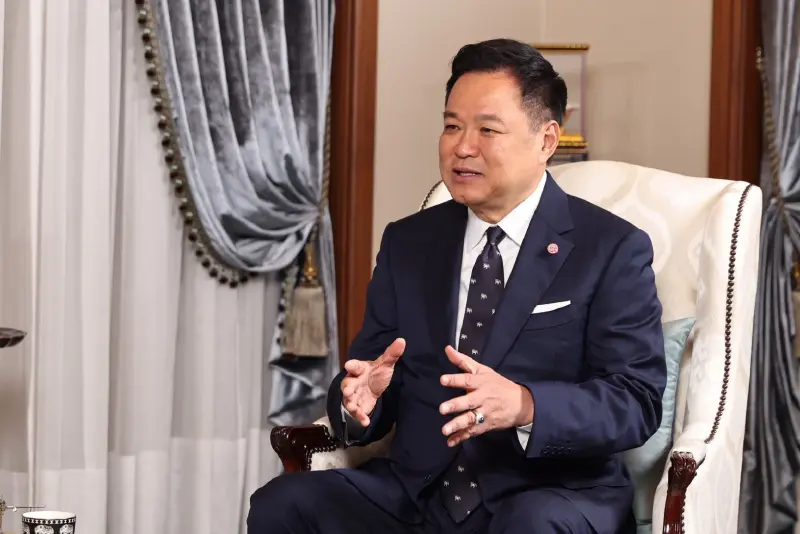


Anutin reassures Thais on food security, promotes B20 to reduce oil imports and outlines efforts to attract investment and protect jobs.
- Anutin argues that Thailand's distributed food production system, not reliant on imports, is a strategic asset that provides resilience against global supply chain disruptions.
- He highlights the promotion of biofuels, like B20 diesel, as a key strategy to increase the country's energy resilience by reducing dependence on imported oil and its price volatility.
- The increased use of palm-derived biofuels is linked to economic resilience by redirecting funds from foreign oil imports to domestic farmers, strengthening the internal economy.
Prime Minister and Interior Minister Anutin Charnvirakul has reassured the public that calls to prepare 72 hours of emergency supplies do not mean Thailand is heading towards war or food shortages.
Speaking on the programme “Talk with the Anutin's Cabinet” on Saturday (November 7, 2026), he argued that the country’s food production, energy sourcing and investment prospects provided a strong foundation for managing global volatility and turning international risks into economic opportunities.
Emergency readiness and food security
Anutin said people could continue their daily lives normally without fearing unusual shortages of food or household essentials. The government’s priorities were effective warning systems, emergency assistance and reaching vulnerable groups quickly when an incident occurred.
“The government will never allow any family to face food shortages without assistance reaching them,” he said.
Cyberattacks overseas that had disrupted food supply chains demonstrated the strengths of Thailand’s own production system, Anutin argued. The country had food production and markets distributed across its territory, rather than depending solely on imports or a centralised storage and distribution system.
Anutin described food security as a strategic asset extending beyond the ability to feed the domestic population. With trading partners looking for dependable food suppliers amid geopolitical uncertainty, Thailand could strengthen food security both at home and in overseas markets.
B20 consumption rises to 9 million litres a day
Anutin maintained that Thailand faced no problem with oil supply volumes or access to imports because it sourced energy from several regions. The immediate pressure came from oil and gas prices fluctuating in response to developments in the Middle East.
The government was therefore using tax measures and seeking cooperation from refineries to ease the burden on consumers, he said.
Anutin pointed to an excise tax reduction on B20, a diesel blend containing 20% palm-derived biodiesel. He said the measure had helped make B20 almost THB10 a litre cheaper than conventional diesel, encouraging daily consumption to rise from about 5–6 million litres to around 9 million litres.
“As biofuel use increases, the country will reduce its dependence on imported oil, while demand for farmers’ oil-palm output will rise,” he said.
Anutin outlined a scenario in which consumption of biodiesel-blended fuel reached approximately 20 million litres a day, against total diesel consumption of about 50 million litres a day. He estimated that this could reduce reliance on imported crude oil by several million litres daily and generate annual import savings approaching THB100 billion.
Money previously spent on imported energy could instead circulate within Thailand through payments to oil-palm farmers, he argued. Future bioenergy policies involving sugar cane and cassava could create further agricultural markets and provide more consistent income.
Anutin described Thai farmers as the country’s “heroes” at a time when food security was regaining global importance. The government needed to give them reliable markets and sustained income, allowing them to withstand price fluctuations without repeatedly depending on temporary assistance.
OECD membership and faster investment procedures
Anutin said Thailand was accelerating efforts to meet the standards required for membership of the Organisation for Economic Co-operation and Development (OECD). The process would bring business rules, transparency and governance closer to international benchmarks, he argued.
The government was also advancing an investment facilitation approach described in his remarks as “Thailand Fast Track”. Under the approach, investors would use the Board of Investment (BOI) as a single point of contact, reducing the need to coordinate separately with multiple agencies.
Anutin said the policy was intended to remove delays that had previously frustrated investors and provide confidence that businesses investing in Thailand would receive fair treatment.
Google discussions and opportunities for Thai workers
Anutin said discussions with Google executives indicated that the company was ready to invest further in Thailand. He argued that the country’s appeal increasingly rested on the quality of its workforce and its capacity to develop skills for an economy shaped by artificial intelligence (AI), alongside its location, infrastructure and logistics.
Cheap labour was no longer Thailand’s principal advantage, he said.
“We must not let AI control us. We must control AI. That is our policy,” Anutin said, adding that the government did not want the technology to leave Thai people unemployed.
“Investors coming here must create jobs and bring opportunities to Thai workers, rather than simply bringing in capital.”
Anutin said some investors whose Thai operations were still in their first or second phase had shown the government plans extending to a seventh or eighth phase. He viewed these plans as evidence of their intention to use Thailand as a long-term base, supported by political stability, infrastructure, distribution systems and regional networks.
Anutin cautioned against Thailand undermining the investor confidence it had already built. As food, energy, technology and geopolitics became increasingly interconnected, he argued, countries with established production bases, resources and dependable rules would be better placed to benefit.
