
Cheaper Cambodian rice puts pressure on Thai jasmine rice exports
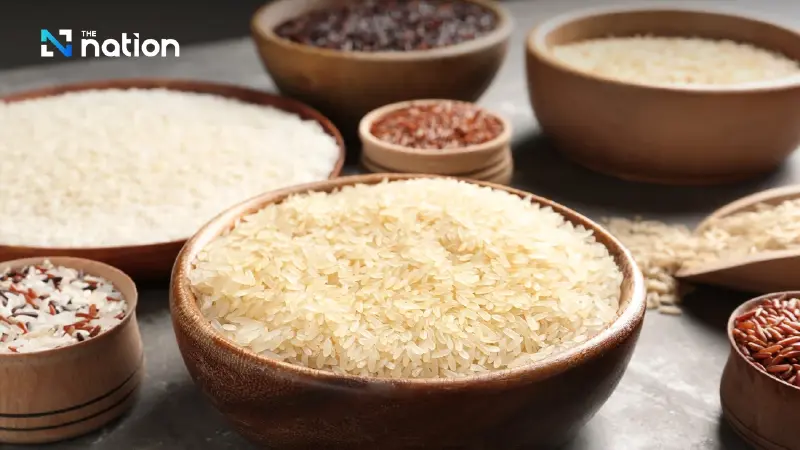


Cambodia exported 792,212 tonnes of milled rice in the first eight months of 2026, up from 472,803 tonnes a year earlier. The value of shipments rose 33.3%.
- Thai jasmine rice exports fell by 7.4% in the first nine months of 2026, while Cambodia's milled rice exports surged by 67.5% in a comparable period.
- The main driver of this pressure is a significant price gap, with Cambodian rice being $200 to $400 cheaper per tonne than Thai rice.
- Cambodia's Phka Rumduol rice, a variety similar to Thai jasmine, is now considered equal in quality due to improved milling, making its lower price more appealing to buyers.
- As a result, Cambodia is rapidly gaining market share in key regions, with exports to ASEAN countries increasing by 406% and shipments to China growing by 52%.
Thailand exported a total of 956,492 tonnes of rice from January to September 2026, down 7.4% from the 1,033,478 tonnes it shipped in the same period a year earlier.
That was a fall of about 76,986 tonnes.
By contrast, Cambodia’s milled rice exports rose 67.5% to 792,212 tonnes in the first eight months of 2026, from 472,803 tonnes in the same period a year earlier, according to the Thai Rice Exporters Association.
The value of shipments rose 33.3%, from $348.18 million to $464.17 million.
Wanniwat Kitireanglarp, deputy secretary-general of the association, said jasmine rice accounted for the largest share of Cambodia’s rice exports.
Shipments rose from 411,339 tonnes in 2025 to 459,166 tonnes in 2026, an increase of about 11.6%.
The figures for Thai jasmine rice show a fall from 1,033,478 tonnes to 956,492 tonnes, a drop of 7.4%, or about 76,986 tonnes.
Both figures are dated to the first nine months of 2026 in the Thai report.
“Cambodia has stepped up its milled rice exports sharply, both in volume and in value. One reason is that Cambodian rice is about $200 to $400 a tonne cheaper than Thai rice.”

ASEAN becomes Cambodia’s largest rice market as sales to China surge and Europe holds steady
ASEAN was Cambodia’s fastest-growing market for rice.
Shipments rose 406%, from 62,158 tonnes to 315,088 tonnes, making the bloc Cambodia’s largest market.
Exports to China rose 52%, from 116,320 tonnes to 177,783 tonnes.
Shipments to Europe were broadly steady at 232,319 tonnes in 2026, against 226,910 tonnes in 2025.
Although volumes rose, their value edged down from $176 million to $175 million.
The Thai report also cites a price gap of $200 to $400 a tonne, without identifying the two prices compared.
“A crisis builds slowly. By the time it becomes apparent, it may be too late. Buyers get used to the taste and price of rival suppliers’ rice and may be unwilling to pay a premium for Thai rice again. It takes just one to two years to lose a market, but five to ten years to win back buyers’ confidence.”
Wanniwat also linked domestic supply and demand to a fall in rice prices at home that would hurt farmers.
Wanniwat identified five major competitors making inroads into markets for Thai rice.
He attributed average growth of 66–70% in Cambodia’s rice exports to prices that were $200 to $400 a tonne below Thailand’s.
Rice that once went through neighbouring countries for export was now being shipped directly to the US and China, he said.

Vietnam makes inroads in China as rice exports there jump 81%
Vietnam continues to develop new varieties, including ST25 and DT8. They offer the soft texture that consumers now favour and sell at a lower price.
Vietnam exported 6.03 million tonnes of rice in the first eight months of 2026, down 5.4%.
Its exports to China reached 1.02 million tonnes over the same period, a jump of 81.6%.
Myanmar is following Vietnam’s lead by focusing on low-priced fragrant rice and using the Everything but Arms (EBA) scheme to break into the European market.
India has record stocks of about 58 million tonnes ready for release, which could put downward pressure on world prices for white and parboiled rice at any time.
The US is producing its own fragrant rice to reduce imports and has imposed a 15% tariff that is putting pressure on Thai rice.
“Looking ahead to 2027, if the border crossings with Cambodia reopen, about 500,000 tonnes of paddy rice will come back in. As for chemical fertilisers and the war, fertiliser prices are expected to fall and production to recover.”
Wanniwat also discussed Philippine rice imports and the possibility that the country would buy from Vietnam again.
Its latest imports from Thailand totalled 634,000 tonnes, up 263%.
“These factors would increase domestic supply and affect paddy prices. El Niño is the exception.”
He expected losses in global output and mentioned the US and India in particular.
The resulting drop in supply would lift prices, he said.
World Bank sees El Niño driving rice prices sharply higher
The World Bank Group published its Commodity Markets Outlook, October 2026.
In its section on rice, the report said prices had risen 10% in 2026 and forecast a further 12% rise in 2027, followed by a 6% fall in 2028.
“This increase reflects expectations that global production will fall by 2% in 2026–27, the first annual decline in a decade, as El Niño weighs on output in Asia’s major exporting countries.”
The forecast assumes that no major exporter will restrict exports in response to lower production.
During the 2023–24 El Niño, such measures helped drive rice prices up rapidly.
The report also examined the outlook and risks for urea fertiliser prices.
Despite a recent decline, it expected the average price in 2026 to be 21% higher than a year earlier, reflecting the surge in the first half of the year.
It forecast falls of 16% in 2027 and 14% in 2028, assuming exports from the Middle East recover and natural gas prices ease.
How Cambodia’s Phka Rumduol compares with Thai jasmine rice
Chookiat Ophaswongse, honorary president of the Thai Rice Exporters Association, said the current export price of Thai jasmine rice averaged $1,100 a tonne free on board (FOB).
Citing information from buyers, he said Cambodia was offering new-season jasmine rice at $750 a tonne, with the Cambodian and Thai crops due to reach the market at about the same time.
The Thai report identifies Cambodia’s Phka Rumduol as the same variety as Thai jasmine rice and describes the two as very close in grade.
Cambodia’s milling quality may once have lagged behind Thailand’s.
Foreign investors have since backed more upgrades at Cambodian mills, bringing the overall quality of the rice on the market up to Thailand’s level.
“With a price gap this wide, buyers are bound to turn to Cambodia for more of their rice. If this continues and the border stays closed, Cambodia will be under pressure to speed up its own rice exports by pricing its rice competitively.”
Alongside jasmine rice, Cambodia exported 193,000 tonnes of white rice in the first eight months of 2026, up 320%, and 15,131 tonnes of parboiled rice, up 220%.
Cambodia’s rice production is forecast to fall 1.2% to 8 million tonnes in 2027.
Thailand’s output is forecast to fall 1.9% to 20.3 million tonnes.
The 2026/27 rice crop continues to reach the market as prices rise.
Thailand may not always benefit as new rivals play the “low prices” card in the battle for rice markets.
Thailand’s only way out of a contest in which others set the terms is to cut production costs and raise yields per hectare so that it can remain among the world’s leading rice producers and traders.
