
Thai Cabinet backs duty-free milk and coffee imports under EFTA deal
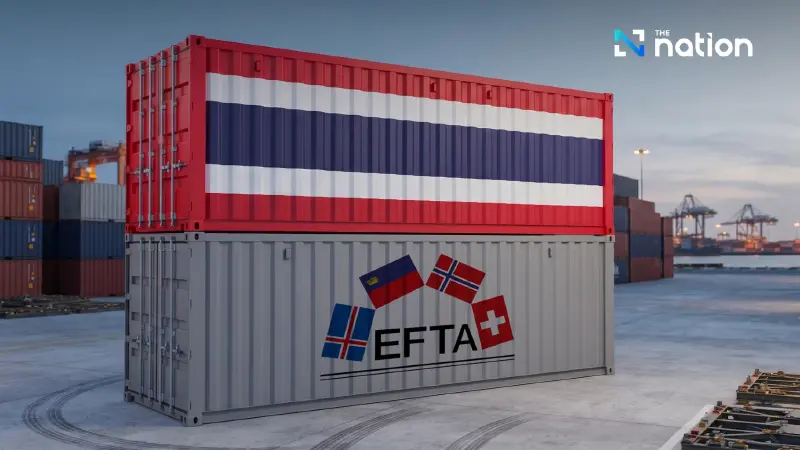


Thailand’s Cabinet backs draft rules for duty-free milk, cream, skimmed milk powder and instant coffee imports under the Thailand–EFTA FTA, which is targeted to take effect on January 1, 2027.
- Thailand's Cabinet has approved draft regulations to allow duty-free imports of selected milk, cream, and instant coffee products.
- This move is part of the free trade agreement (FTA) between Thailand and the European Free Trade Association (EFTA) countries.
- The exemptions apply to milk and skimmed milk powder from Iceland, Liechtenstein, Norway, and Switzerland, and instant coffee from only Switzerland and Liechtenstein.
- The new import rules are being prepared for the FTA's planned implementation, which is targeted for January 1, 2027.
Thailand’s Cabinet has approved in principle draft regulations granting import duty exemptions and waiving import licensing requirements for selected dairy products and instant coffee under the Thailand–European Free Trade Association (EFTA) free trade agreement (FTA).
Deputy Government Spokesperson Lalida Persvivatana announced on Tuesday (November 24) that the Cabinet had endorsed a draft Commerce Ministry notification governing imports of agricultural products subject to Thailand’s commitments under the World Trade Organization (WTO) Agreement on Agriculture.
The move is part of preparations for the Thailand–EFTA FTA, which the government aims to bring into force on January 1, 2027.
Thailand’s first free trade agreement with a European trading bloc is expected to expand export opportunities in markets with strong purchasing power.
Three agricultural product groups eligible for duty exemptions
The draft notification establishes import procedures for three agricultural product groups eligible for exemptions from import duties and licensing requirements:
- Milk and cream, including flavoured milk beverages, originating in and shipped directly from Iceland, Liechtenstein, Norway or Switzerland.
- Skimmed milk powder originating in and shipped directly from any of the four EFTA member countries.
- Instant coffee originating in and shipped directly from Switzerland or Liechtenstein only.
Eligibility will be subject to the tariff classifications and conditions stipulated in the FTA.
Importers must provide a declaration of origin in the prescribed format, which may be included on an invoice or another commercial document.
They must also present a certificate confirming eligibility for full or partial duty exemptions, issued by the Department of Foreign Trade or an authorised agency, to the Customs Department when claiming preferential tariff treatment.
Thai exporters set to gain access to high-value European markets
EFTA comprises Iceland, Liechtenstein, Norway and Switzerland, four economies with strong purchasing power and advanced technological and innovation capabilities.
Thailand and EFTA signed the agreement on January 23, 2025, on the sidelines of the World Economic Forum in Davos, Switzerland.
The deal covers trade in goods and services, investment, intellectual property, economic cooperation, and trade and sustainable development.
Under the agreement:
- EFTA member countries will eliminate customs duties on approximately 90% of tariff lines on average covering Thai goods.
- Thailand will eliminate customs duties on an average of 83.59% of tariff lines covering EFTA goods.
- Tariff reductions and eliminations will be phased in where applicable over a maximum of 15 years, in line with agreed commitments.
Which Thai products stand to benefit?
Lalida highlighted several Thai agricultural, food and industrial products with significant export potential under the agreement.
Agricultural and food products expected to benefit include rice, cereal flour, noodles, processed foods, seasonings, pet food, fresh and processed seafood, and canned fish.
Industrial products with strong export potential include gems and jewellery, clothing, medical products, plastics, chemicals, rubber, electrical appliances and motor vehicles.
Preferential tariffs are expected to strengthen the price competitiveness of Thai products and give businesses greater access to affluent European consumers.
January 1, 2027 set as target date for FTA launch
Thailand’s Cabinet endorsed the FTA on June 2, 2026, followed by parliamentary approval on June 17.
The agreement will enter into force on the first day of the third month after Thailand and at least one EFTA member country notify each other that they have completed the necessary domestic procedures.
The draft Commerce Ministry notification is intended to take effect on January 1, 2027, in line with Thailand’s target date for implementing the agreement.
Following the Cabinet’s approval in principle, the draft will undergo an urgent legal review before proceeding through the remaining regulatory procedures.
Lalida explained that the new import rules would ensure businesses could access tariff preferences through clear, transparent and verifiable procedures, helping to reduce production costs and expand trade opportunities.
The government under Prime Minister Anutin Charnvirakul is prioritising access to new export markets, particularly economies with strong purchasing power.
The Thailand–EFTA FTA is expected to enhance the competitiveness of Thai agricultural, food and industrial businesses while supporting long-term growth in trade and investment.
