
Why AWC's Electric Tram Could Deepen Its Hold on Chiang Mai Hospitality
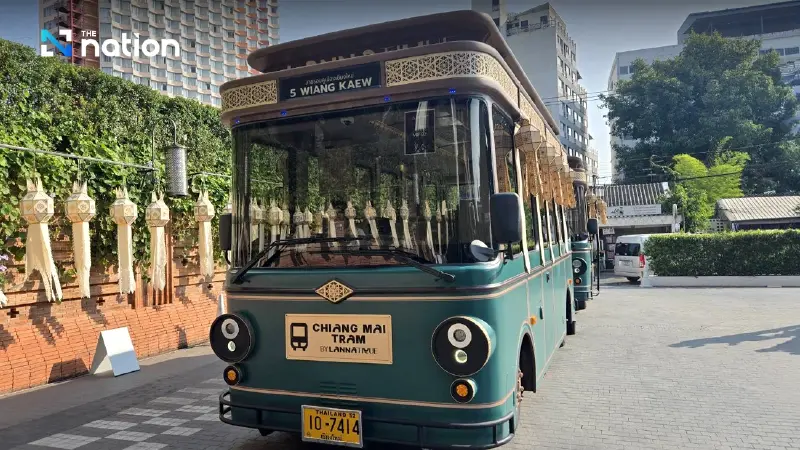


Eight electric trams link AWC's hotels and Lannatique project to heritage sites, as Chiang Mai chases higher-value visitors
- The electric tram service connects AWC's cluster of hotels and its large Lannatique mixed-use project directly to key heritage sites in Chiang Mai's old city, overcoming a key geographical weakness.
- The project's goal is to increase occupancy, guest spending, and length of stay across AWC's assets by creating a seamless link between its accommodation, retail spaces, and the city's main attractions.
- It provides AWC with a unique competitive advantage that rivals cannot easily copy, offering a purpose-built transport network with stops at its own properties.
- The tram positions AWC as a key player in shaping the destination's future, aligning with Chiang Mai's goals for sustainable, high-value tourism and attracting "Quality Volume" visitors.
Eight electric trams link AWC's hotels and Lannatique project to heritage sites, as Chiang Mai chases higher-value visitors.
For several years, Asset World Corporation (AWC) has been assembling a cluster of hotels and a large mixed-use development in Chiang Mai's Chang Klan district.
The Chiang Mai Tram by Lannatique, officially opened on Wednesday, 18 November 2026 after a trial period, is the piece that connects that cluster to the old city.
The investment case rests less on fare revenue than on whether easier movement lifts occupancy, spending and length of stay across AWC's assets.
A portfolio that needs a link AWC's Chiang Mai hotel base now spans three operating hotels. They are the 260-key Meliá Chiang Mai, the 240-key InterContinental Chiang Mai Mae Ping and the 383-key Chiang Mai Marriott Hotel, with an Okura hotel due in 2028.

AWC has positioned the InterContinental's large convention space and Meliá's lifestyle MICE offering as event venues, tied to Lannatique and the tram. Lannatique's overall investment is expected to exceed THB25 billion.
That includes the THB0.6 billion Pantip Lifestyle Hub shopping centre and a further THB12 billion planned over ten years. The retail and cultural phases are Kalare, Bazaar and Market.
Kalare is built around craft, cultural and contemporary art "villages". A Meliá-managed family hotel brand is also planned, alongside the Okura's ryokan-style rooms.

The weakness in this strategy is geography. The InterContinental sits in the Chang Khlan area, close to the Pantip hub and several Lanna temples, about 20 minutes from the airport.
The visitor attractions that sell Chiang Mai, however, lie mostly inside and around the old city. A guest's decision to stay at an AWC hotel depends partly on how easily they can reach those sights.
Connecting stay, shop and sightsee
The tram addresses that directly. The 15.8-kilometre route has 15 stations. They include the Zheng He Heritage House, Lannatique, Wat Chedi Luang, Wat Phra Singh, Yan Chang Moi, Warorot Market and Tha Phae Gate.
Three AWC hospitality properties are also stops: InterContinental Chiang Mai The Mae Ping, Chiang Mai Ancient House and Meliá Chiang Mai. A single fare is THB20, and a one-day pass is THB99.
Monthly and annual passes, which require ID, start at THB450 for long-stay visitors and residents. The service runs daily from 9am to 9pm.

AWC has said visitors can park at the periphery or in AWC project car parks and ride in, which would cut urban traffic and energy use. That also helps AWC's own sites. A route that links its hotels and retail space can move footfall between them.
The tram also gives the group something that rivals cannot easily copy.
A competing hotel can match an AWC room rate or brand, but not a purpose-built transport link with stops at its own properties. The service is also a vehicle for the group's cultural positioning.
AWC says it will run as a social enterprise, reinvesting net revenue in community projects. It also supports "The Gallery", a platform for local artisans and community enterprises.

A market that rewards differentiation
The timing reflects a more selective tourism market. The Tourism Authority of Thailand (TAT) Chiang Mai office reports that the province received more than 7.8 million visitors between January and August 2026, of whom 2.2 million were international and 5.6 million domestic.
They generated THB73.99 billion in revenue, with occupancy at 65.22%. The office expects annual arrivals to exceed 10 million. The national picture is softer.
The Ministry of Tourism and Sports recorded 20.94 million foreign arrivals in the first eight months of 2026, down 3.08% year on year. The ministry expects full-year visitor numbers and revenue to stay close to 2025 levels.
TAT has said it is pursuing "Quality Volume" visitors, aiming to raise revenue and tourism value rather than numbers alone. That shift favours operators with premium and experience-led products.
According to TAT 2025 data, Chiang Mai is among the five provinces that earn the most tourism revenue. It is estimated that a foreign visitor generates far more revenue than a Thai one.
Domestic visitors still account for most arrivals in the province, so the tram's low fares and cultural focus are designed to serve both groups.

Official backing and what it signals
Local authorities have framed the tram as public policy as well as a commercial product. Chiang Mai governor Thosaphon Phuean-udom said public transport had been absent for almost 20 years.
He said any returning service had to suit the city's World Heritage setting and environmental goals, and that a community-enterprise model suited that. He called the project a long-held personal ambition.
Pichai Lertpongadisorn, Chief Executive of the Chiang Mai Provincial Administrative Organisation (PAO), said the PAO would extend connecting routes. Two further public transport routes have been awarded, taking the fleet to 34 vehicles by December.
It has also applied for four more concessions, on condition that all vehicles are electric. He said wider public transport should help reduce pollution and PM2.5 levels.
Keng Chaivarin, Director of the TAT Chiang Mai Office, said the tram adds convenience, affordability and links to local communities. TAT regards it as a new tourism product.
It is promoting it first to domestic travellers and has run product briefings and trial rides for overseas trade representatives. He said he believes it will mark the start of a new tourism experience for Chiang Mai.
AWC Chief Executive Wallapa Traisorat said the tram responds to travellers who want participation and cultural immersion rather than passive sightseeing. She described it as a connector for the city's culture, crafts and people.
AWC's release calls it a "first-of-its-kind experience in Thailand", and she tied it to Chiang Mai's aim of becoming a world-class destination for arts, culture and sustainable tourism.

What to watch
The commercial test is whether connectivity turns into measurable gains. AWC has not published ridership targets, and a fleet of eight vehicles on a 15.8-kilometre loop will set limits on frequency and capacity.
Three markers will show progress: occupancy at AWC's Chiang Mai hotels as the peak season of Yi Peng and Loy Krathong begins, the development of Lannatique and the opening of the Okura hotel in 2028, and whether the PAO's electric routes join up with the tram or compete with it.
The tram does not by itself make AWC's Chiang Mai portfolio more profitable. What it does is raise the value of assets the group has already built by making them easier to reach and easier to combine. It also positions AWC as an operator that helps shape the destination rather than only housing its visitors.
