
AI reshapes rankings of the world's five largest data centres
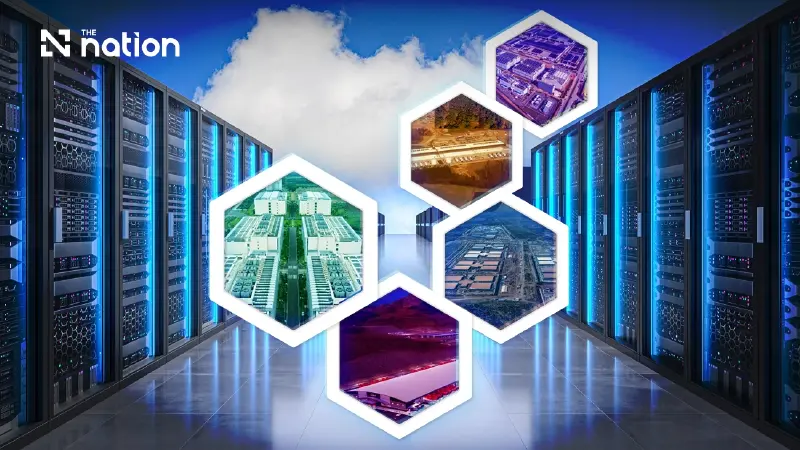


Using information technology load instead of floor area alone, a 2026 list places China's Inner Mongolia cluster first, ahead of major United States and Southeast Asian sites.
- The rise of AI has shifted the metric for ranking the largest data centres from physical building area to IT load capacity, which is the power supplied directly to computing equipment.
- Based on this new power-based ranking, China’s Inner Mongolia data centre cluster is now considered the world's largest, with a combined IT capacity exceeding 3,000 megawatts (MW).
- The United States holds the next three positions with single-campus and cluster sites, including The Citadel Campus in Nevada (~650 MW), the Stargate project in Texas (~400-500 MW), and the Maiden NC Cluster (~400-500 MW).
- The Singapore/Johor cluster in Southeast Asia ranks fifth and is noted as the world’s fastest-growing data centre corridor, driven by investment from major tech companies.
Over the past few years, the global data centre industry has entered a period of unprecedented transformation.
A key driving force is no longer limited to cloud storage or conventional multimedia streaming.
Instead, the change is being driven by fierce competition among leading global cloud providers and technology companies to develop generative artificial intelligence (AI) and train large frontier AI models.
Today’s data centres are being transformed into “computing factories” that must accommodate vast numbers of graphics processing units (GPUs) and AI chips.
In only a few years, the scale of their power capacity has risen from “hundreds of megawatts” (MW) to “gigawatts” (GW), or several thousand megawatts.
This surge in demand for power and computing space is forcing wholesale changes in the scale and design of hyperscale data centres.
Determining which data centre is the “largest” in the AI era can therefore no longer rely on building area alone, since buildings of equal size may support markedly different server densities.
A measure increasingly used is information technology (IT) load, the power supplied directly to computing equipment and expressed in megawatts or gigawatts.
Data from gbc engineers, updated for 2026 and ranked by IT load capacity, show that the “world champion” is not in the United States but in China’s Inner Mongolia data centre cluster, with combined capacity exceeding 3,000 MW.
The United States, meanwhile, holds prominent positions among large single-campus data centres.
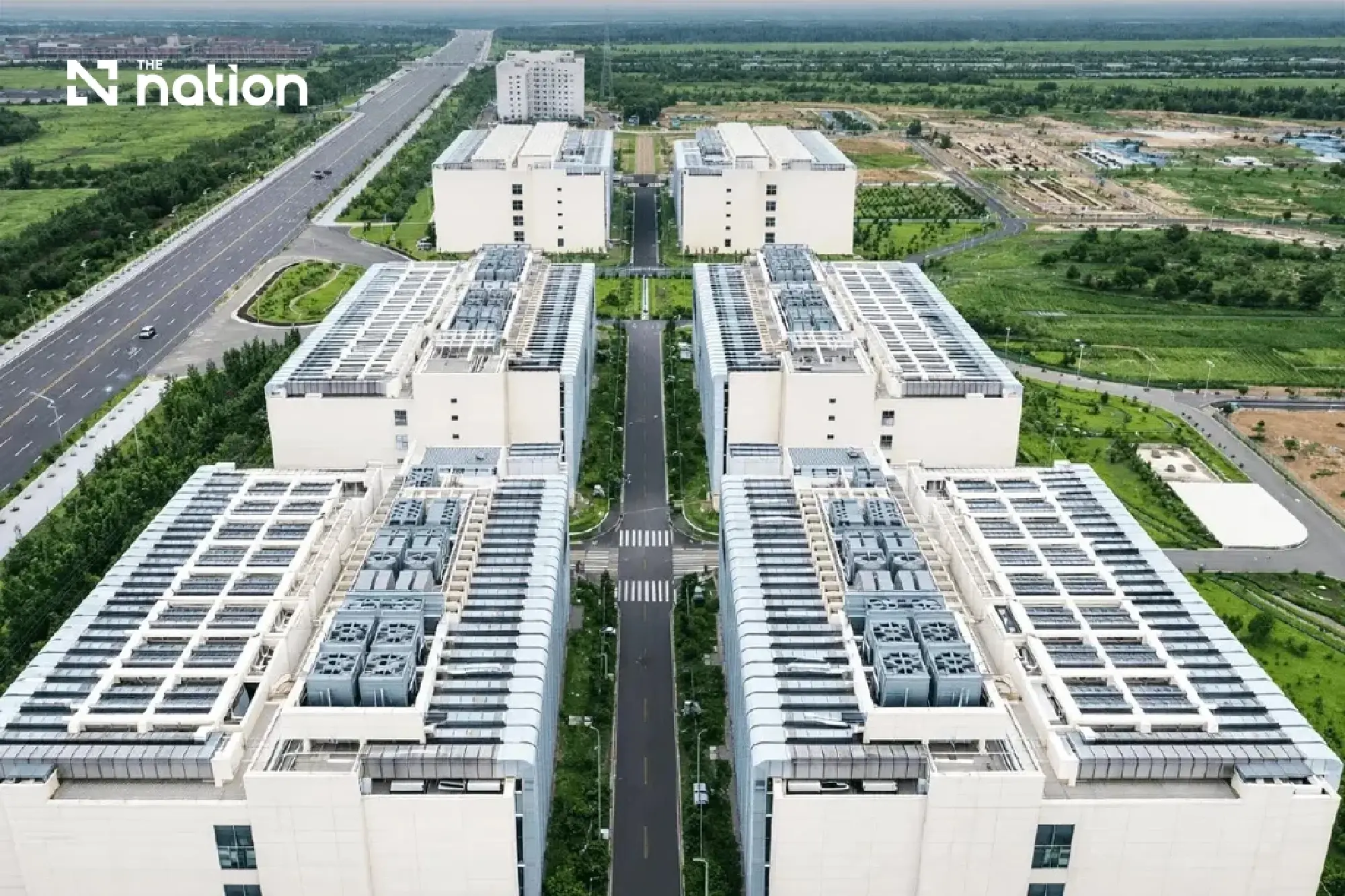

1. China Telecom–Inner Mongolia Information Park
- Location: Hohhot and Ulanqab, Inner Mongolia Autonomous Region, China
- IT capacity: Approximately 3,000 MW or more, combining all hyperscale clusters in the area
- Operators: China Mobile, China Telecom, Alibaba Cloud, ByteDance, Baidu and Tencent
- Status: Operational hyperscale cluster
No other location in the world has as high a concentration of hyperscale IT computing capacity as the Hohhot–Ulanqab economic corridor, comprising Hohhot and Ulanqab in China’s Inner Mongolia Autonomous Region.
The area hosts vast, purpose-built data centres developed by Chinese technology giants.
China Mobile’s Ulanqab hub alone is targeting 500–600 MW at full build-out.
Together with the campuses operated by Alibaba Cloud, ByteDance, Baidu, Tencent and China Telecom, this takes the cluster’s combined computing power capacity above 3,000 MW, more than four times that of the second-ranked entry.
China Telecom–Inner Mongolia Information Park ranks first, with gbc engineers using a figure of about 3,000 MW or more.
It is important to stress that this represents the combined capacity of the Hohhot–Ulanqab data centre cluster, not a single building.
The area is a centrepiece of the “East Data, West Computing” strategy, which shifts data-processing workloads from China’s eastern economic centres to western areas where land and energy are more suitable.
Numerous operators and technology companies have developed infrastructure there, including China Telecom, China Mobile, Alibaba Cloud, ByteDance, Baidu and Tencent.
Inner Mongolia has become a prime location for Chinese data centres because of its cool climate, with an average annual temperature of only 4–6°C.
This allows free-air cooling to be used for more than 8,000 hours a year.
This reduces the burden on cooling systems, while Inner Mongolia also offers competitively priced energy and extensive land.
At the same time, the Chinese government continues to promote computing infrastructure in the region.
Recent information also indicates that expansion is not confined to Hohhot.
Ulanqab is becoming one of China’s fastest-growing AI data centre hubs, with numerous facilities opening or beginning construction and announced or planned capacity totalling several gigawatts.
The distinction is therefore crucial.
In this ranking, “Inner Mongolia Information Park” refers to a cluster, which is why its figure of more than 3,000 MW is several times higher than that of a single data centre building or campus.
More importantly, China is not competing by building just one data centre.
It is developing a regional data centre network under the East Data, West Computing policy, enabling western areas to meet processing demand from eastern economic cities.
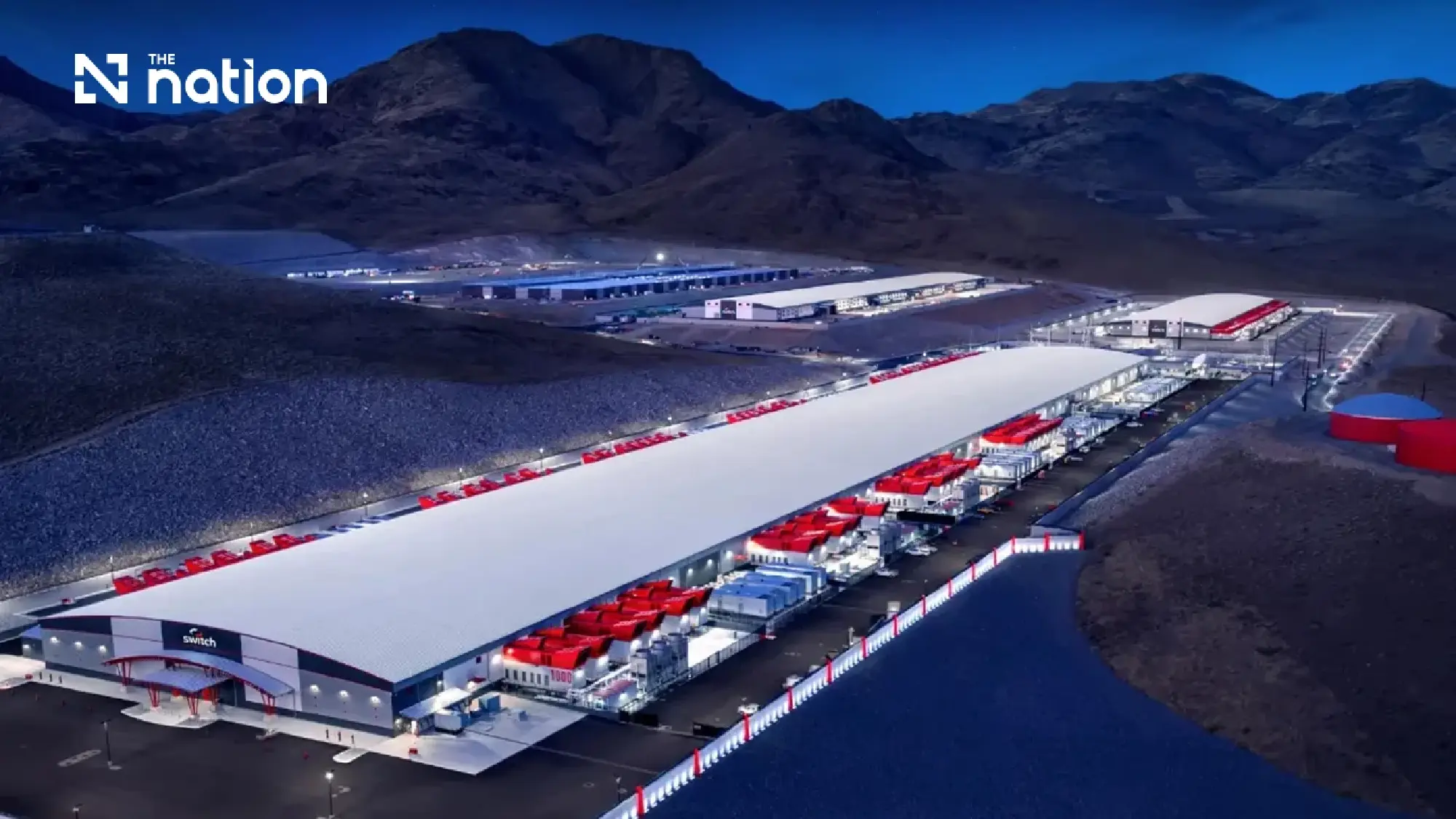

2. The Citadel Campus in Nevada, United States
- Location: Tahoe Reno Industrial Center, Storey County, Nevada, United States
- IT capacity: Approximately 650 MW at full build-out
- Operator: Switch Inc. / DigitalBridge Group
- Status: Partly operational, with phased expansion continuing
The Citadel is the world’s largest single data centre campus for which an official IT power capacity figure of as much as 650 MW has been disclosed.
This has made the project one of the industry’s most credible benchmarks.
DigitalBridge Group’s US$11 billion acquisition of Switch in 2022 was among the largest infrastructure investments in history.
The campus is powered entirely by renewable energy under power purchase agreements (PPAs) covering solar and geothermal energy in Nevada.
Its buildings were designed to Switch’s patented SUPERNAP® standard, which exceeds the Uptime Institute’s Tier IV standard for fault tolerance.
The Citadel’s structural-engineering challenge is supporting the immense weight of its backup-power systems, including several hundred diesel generators rated at 2–4 megavolt-amperes (MVA), each weighing 15,000–30,000 kilograms.
In addition, uninterruptible power supply (UPS) battery rooms, medium-voltage switchgear rooms and transformer yards together impose area loads of 15–25 kilonewtons per square metre (kN/m²).
The design therefore uses a modular pod system to distribute loads and support phased construction, allowing the building structure to be engineered for the capacity actually delivered.
The Citadel matters because it is a clear example of a hyperscale data centre designed to expand capacity in stages rather than being built in its entirety at once.
Switch describes The Citadel as one of the world’s largest data centre campuses, and its website now refers to power potential measured in “gigawatts” when expansion across the Tahoe Reno site is included.
Unlike Inner Mongolia, The Citadel is a campus operated by a single company, whereas the first-ranked entry combines several facilities across one region.
The figures of more than 3,000 MW and 650 MW should therefore not be treated as measurements of buildings of the same type or scale.
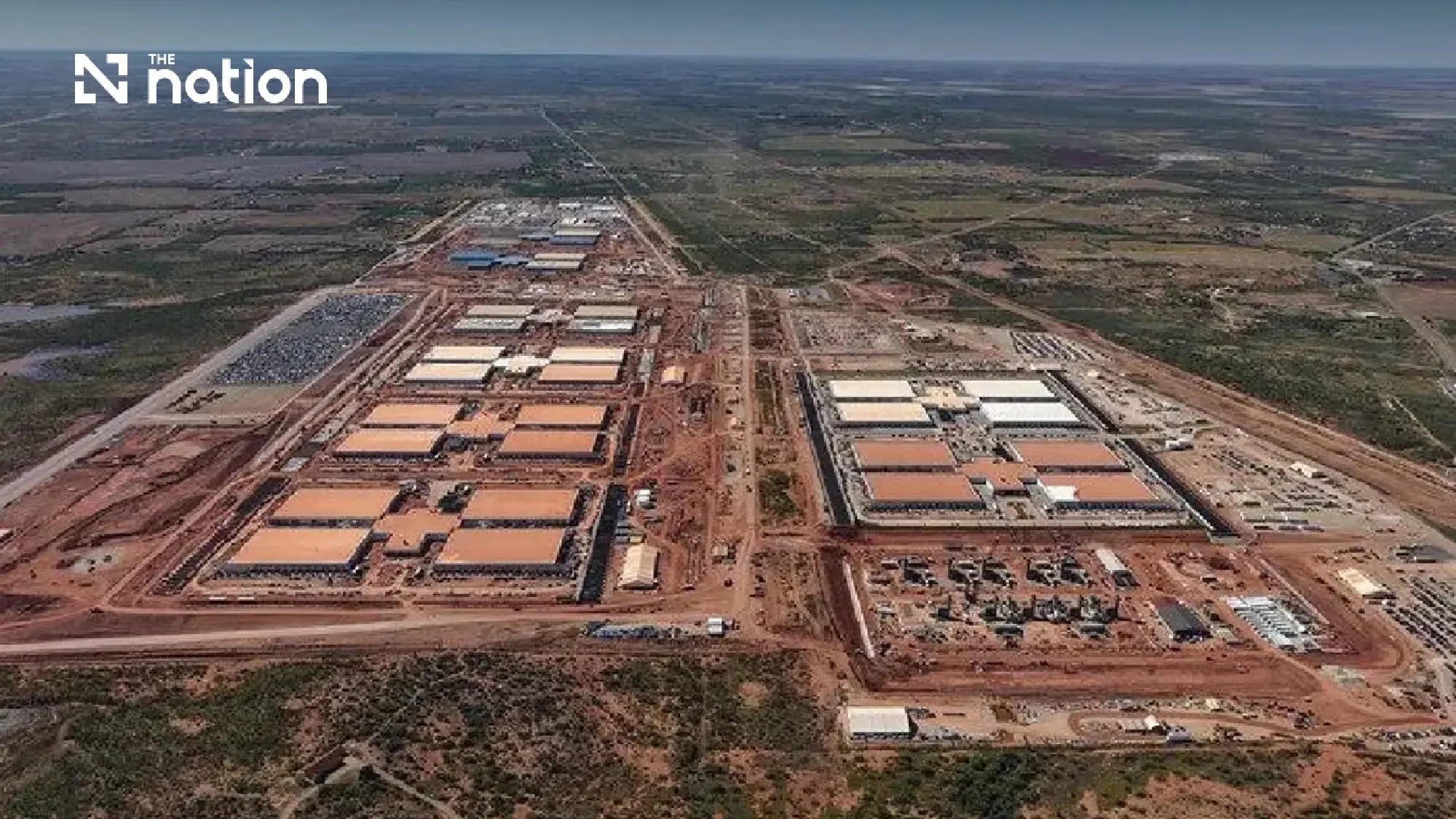

3. Stargate in Abilene, Texas, United States
- Location: Abilene, Taylor County, Texas, United States
- IT capacity: Approximately 400–500 MW in Phase 1
- Operators: OpenAI, Oracle and SoftBank, operating through Stargate LLC
- Status: Under construction, with the first building targeted to open in mid-2025
The Stargate project was officially launched in January 2025 through a collaboration between OpenAI, Oracle and SoftBank.
It is the largest AI infrastructure programme ever undertaken by investment value.
The Abilene campus in Texas is the first flagship site, dedicated specifically to advanced AI processing and the training of frontier AI models.
The data centre is designed to accommodate the powerful NVIDIA GB200 NVL72 system, whose energy density reaches 120 kilowatts (kW) per rack, or six to 12 times that of a conventional enterprise data centre rack.
At the national level, the Stargate project aims to expand total computing capacity to as much as 5 GW across 20 locations in the United States.
From an engineering perspective, power densities of 40–120 kW per rack mean conventional air cooling can no longer handle the load, requiring a shift to direct liquid cooling (DLC).
As a result, floors must support the weight of cooling units and coolant pipes, as well as more concentrated point loads.
Structures must also be designed to limit floor vibration and prevent damage to the operation of advanced processing chips.

4. Maiden NC Cluster in North Carolina, United States
- Location: Maiden, Catawba County, North Carolina, United States
- IT capacity: Approximately 400–500 MW combined across Apple and Google
- Operators: Apple and Google
- Status: Operational, with continuing campus expansion
Although the Maiden NC Cluster rarely attracts widespread media attention, it is one of the most credible entries on the list.
Apple began building its first data centre there in 2012 before Google followed with a large campus, making Catawba County one of the areas with the highest concentrations of hyperscale data centres on the eastern side of the United States.
What makes Maiden particularly notable in data terms is that its power-capacity figures have been independently verified through grid-connection filings with Duke Energy and Catawba County planning records.
These are government documents unrelated to corporate promotion.
In terms of energy, Apple uses 100% renewable power from local solar farms, while Google matches 100% of its electricity use with renewable energy.
Maiden’s structural layout reflects long-term strategic planning for site expansion and power management.
Civil-engineering co-ordination must account for high-voltage electricity infrastructure, drainage and underground transmission cables.
It must also provide a scalable building structure that can be expanded in the future without disrupting existing systems that remain in operation.
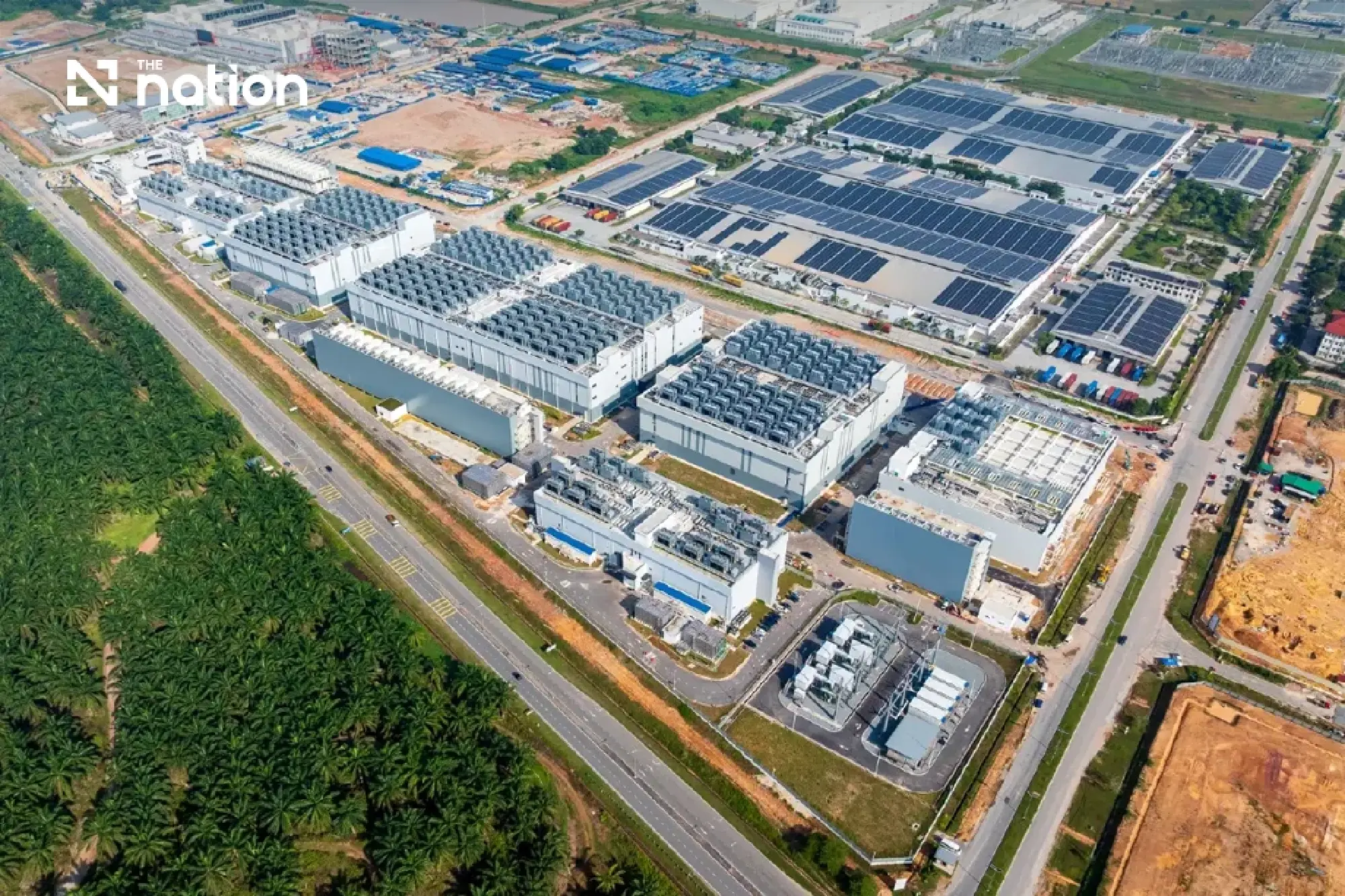

5. Singapore/Johor Cluster in Southeast Asia
- Location: Singapore and Johor Bahru, Malaysia
- IT capacity: Approximately 350–500 MW operational and more than 1,000 MW under construction
- Operators: Amazon Web Services (AWS), Google Cloud, Microsoft Azure, Equinix, Digital Realty, GDS and ST Telemedia
- Status: Operational and the world’s fastest-growing data centre corridor
The Singapore–Johor economic corridor is Southeast Asia’s data centre capital and currently the world’s fastest-growing data centre market.
Singapore acts as an international connectivity hub with more than 20 submarine cable routes, alongside the strictest sustainability standards.
Johor state in Malaysia, located opposite Singapore across the Causeway, provides space for expansion through its extensive land and power capacity.
Since 2023, announced investment in Johor has exceeded US$30 billion, with major companies including Microsoft, Google, Oracle and ByteDance.
Singapore, meanwhile, requires new data centres to have power usage effectiveness (PUE) of no more than 1.3 and to use earthquake-resistant designs under the SS EN 1998:2021 standard.
From an engineering perspective, land constraints in densely populated Singapore force data centres into multi-storey buildings, adding complexity to structural designs for earthquake and wind resistance.
Large-campus development in Johor, meanwhile, requires modular structural planning, assessments of power-grid readiness and constructability reviews to ensure projects are delivered in time to meet market demand.
3 Drivers and trends shaping the next generation of hyperscale data centres
According to an analysis by gbc engineers, a structural-engineering consultancy and design firm from Germany, three main factors are shaping the future direction of large data centres worldwide:
- AI is rewriting the rules
Cloud services and streaming drove data centre expansion over the past decade, but AI is driving the new wave.
Big Tech companies AWS, Microsoft, Google and Meta increased their combined capital expenditure (CapEx) on data centres to more than US$300 billion in 2025 alone.
The use of GPUs with power densities of 40–120 kW per rack has made liquid cooling a mandatory standard rather than an optional addition.
- Southeast Asia is the world’s fastest-growing market
Capital is flowing into Malaysia, particularly Johor, as well as Indonesia, Thailand and the Philippines at unprecedented rates.
Singapore’s PUE standard of no more than 1.3 and its earthquake-resistance engineering requirements have set a new benchmark, raising data centre design standards across Southeast Asia.
- The arrival of nuclear power and small modular reactors
The energy needs of AI data centres are so vast that solar and wind power alone cannot meet demand 24 hours a day.
Leading technology companies, including Oracle, Microsoft and Amazon, have therefore begun negotiating agreements and investing in technologies based on small modular reactors (SMRs) to create stable, genuinely carbon-free sources of clean energy.
Source: gbc engineers
