
Audi to build $4bn Georgia SUV factory as Trump promotes tariffs
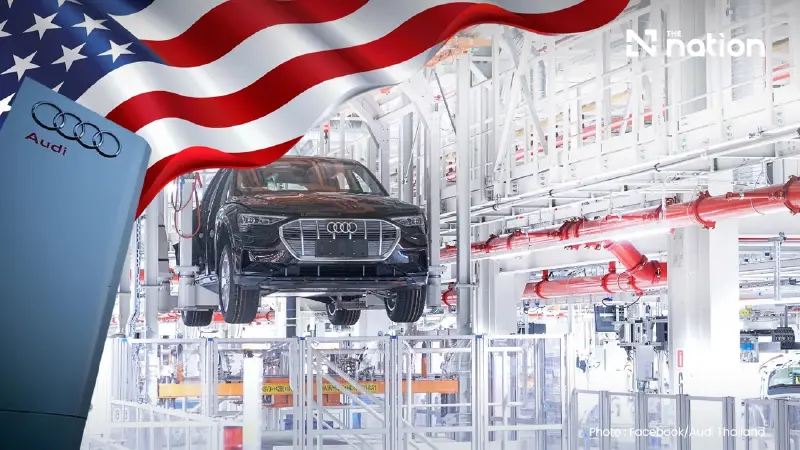


Audi plans to invest US$4bn in its first US factory in Georgia, which is expected to create 4,500 jobs, as President Donald Trump promotes his tariffs ahead of midterm elections.
- German carmaker Audi is to invest approximately $4 billion in its first US manufacturing plant, which will be located in Georgia.
- The factory is expected to create around 4,500 jobs and produce up to 200,000 premium sport utility vehicles (SUVs) annually, with construction starting in 2027.
- US President Donald Trump announced the project, linking the investment directly to his administration's tariff policies designed to encourage domestic manufacturing.
US President Donald Trump has announced that German luxury carmaker Audi plans to invest approximately US$4 billion in its first manufacturing plant in the United States. The Georgia facility is expected to produce up to 200,000 sport utility vehicles (SUVs) annually and create around 4,500 jobs.
Trump unveiled the project at a Republican campaign rally in Perry, central Georgia, on Saturday (October 24), as he sought support for his party ahead of the November 3 midterm elections.
He presented the investment as evidence that his tariff policies were encouraging foreign carmakers to move production to the United States.
Audi plans first US factory with annual capacity of 200,000 SUVs
Audi, the premium car brand owned by Germany's Volkswagen Group, plans to establish the assembly plant near Macon, Georgia. Work on the project is expected to begin in 2027, with production expected to start in the early 2030s.
Audi chief executive Gernot Döllner joined Trump at the rally and outlined the company's plans to manufacture some of its largest premium SUVs in the United States.
"We are planning to bring our biggest and most premium SUVs, and produce them here in Macon, Georgia," Döllner told the audience. He described the project as a long-term investment reflecting Audi's confidence in the American market.
A US official told Reuters that the facility is expected to assemble the Audi Q7, Q8 and Q9 SUVs.
Trump links Audi investment to US tariff policies
The announcement comes as Trump continues to promote higher tariffs on imported vehicles, automotive components, steel and aluminium as part of his efforts to expand domestic manufacturing.
The measures have also imposed substantial costs on foreign carmakers.
According to Reuters, Trump's tariffs cost Audi approximately €1.2 billion, equivalent to US$1.4 billion, in 2025 because the company imported all vehicles sold in the US market from Europe or Mexico.
Georgia is facing closely contested Senate and governor elections, giving Trump an opportunity to present the Audi investment as an economic achievement ahead of the midterm vote.
However, critics argue that the tariffs have increased vehicle prices and created uncertainty over international trade, prompting some manufacturers to delay investment decisions.
Republican US Senator Bernie Moreno of Ohio credited Trump's trade policies with helping secure the investment, arguing that the project would not have gone ahead without tariffs.
Audi faces declining sales and pressure in key markets
The investment comes during a challenging period for the German carmaker.
Audi's global sales have declined for two consecutive years and fell a further 7% in the first half of 2026 as intense competition in China and US tariffs affected demand. Sales in the United States have also fallen by 16% so far this year.
Meanwhile, Audi's factory in Neckarsulm, south-west Germany, is among four Volkswagen Group plants facing the possibility of closure after 2030.
The wider US automotive industry is also experiencing difficulties despite the administration's efforts to encourage domestic manufacturing.
Trump's cuts to government incentives for electric vehicles have contributed to a significant slowdown in US electric vehicle and battery production.
Employment in the country's vehicle manufacturing and automotive parts industries has also declined since Trump returned to office in 2025.
Other carmakers review US production plans
Audi's decision reflects a broader reassessment of manufacturing strategies among international automotive companies operating in North America.
In July, Toyota announced plans to invest US$3.6 billion in expanding pick-up truck production at its manufacturing facility in San Antonio, Texas. The expansion is expected to be completed by 2030, shifting some truck production from Mexico to the United States and creating approximately 2,000 jobs.
Honda Motor is also considering establishing a vehicle assembly plant in the United States. However, the Japanese company has warned that uncertainty over whether the United States-Mexico-Canada Agreement (USMCA) will be extended could delay its investment decision.
South Korean carmaker Hyundai has similarly indicated that greater clarity over the future of the trade agreement could allow the company to proceed with more than US$20 billion in additional American investment.
