
Trump waives key Russia sanctions and tariffs before they take effect
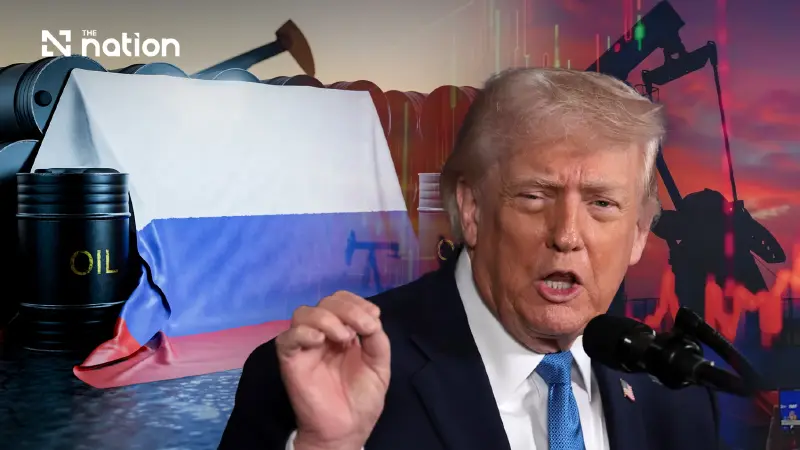


US President Donald Trump has waived sweeping new sanctions and tariffs targeting Russia and buyers of its energy, saying the move serves US national interests.
US President Donald Trump has waived key sanctions and tariffs targeting Russia only days before they were due to take effect under legislation he signed last month, including measures aimed at countries buying Russian oil and gas.
In an executive order released by the White House on Friday (October 16), Trump said granting the waiver was in the national interests of the United States, postponing measures intended to increase economic pressure on Moscow over its war in Ukraine.
The decision comes weeks before the November 3 US midterm elections and amid pressure on American consumers from high energy costs, which analysts say have been aggravated by the US-Israeli conflict with Iran.
Tariffs of up to 100% put on hold
The Lindsey O. Graham Sanctioning Russia and Iran Act of 2026, signed by Trump in mid-September, would have triggered sweeping penalties against countries maintaining significant energy ties with Russia.
Under the legislation, tariffs of up to 100% could have been imposed within 30 days on goods imported into the United States from the five largest buyers of Russian crude oil or natural gas.
The law also targeted countries that knowingly continued purchasing Russian oil or gas after its enactment, as well as major jurisdictions deemed to be helping Moscow evade sanctions.

Trump said in the executive order that he had formally notified Congress of his determination.
“I have submitted to the Congress a certification that the issuance of such a waiver at this time is in the national interests of the United States,” he said.
The waiver will remain in force until Trump or senior administration officials determine that further action is appropriate.
The legislation allows the president to suspend the measures by informing Congress that enforcing them would not be in the US national interest.
China and India had raised concerns
The proposed penalties had drawn particular concern from China and India, two of the largest buyers of Russian oil.
Beijing has opposed what it describes as extraterritorial enforcement of US sanctions without a basis in international law, while New Delhi had warned Washington that additional tariffs could damage bilateral relations.
The legislation was designed to make it more expensive for countries to continue buying Russian energy and thereby reduce revenue available to Moscow.
However, the Trump administration has recently taken steps that ease some restrictions involving Russian energy as it seeks to reduce pressure on fuel prices.
Waiver follows controversial Russian diesel deal
The latest move comes shortly after Trump agreed to temporarily ease sanctions on Russian diesel exports in return for Moscow supplying additional fuel to US and global markets.
That agreement drew criticism from a bipartisan group of senators, including six Republicans, who argued that allowing additional Russian energy exports could provide President Vladimir Putin’s government with more money to finance the war in Ukraine.
Under the diesel arrangement, Russia agreed to immediately supply more than 300,000 metric tonnes of diesel, with further shipments planned. Moscow subsequently indicated that exports could rise beyond the quantities originally announced.
The combination of the diesel agreement and the broader sanctions waiver marks a significant easing of economic pressure on Russian energy exports at a time when Washington’s approach towards Moscow is facing scrutiny in Congress.
Democrat accuses Trump of undermining Congress
US Representative Don Beyer, a Democrat from Virginia, criticised the waiver, accusing Trump of disregarding congressional efforts to punish Russia.
Beyer said the move “defies clear congressional intent” behind legislation designed to impose costs on Moscow for its invasion of Ukraine.
Trump has also faced criticism from some Republican senators over his recent approach to Russian energy.
The dispute comes as his Republican Party seeks to maintain control of both chambers of Congress in the November midterm elections.
Russia welcomes decision
Moscow welcomed Trump’s move.
Kirill Dmitriev, President Vladimir Putin’s investment envoy, described the waiver as a “truly historic moment”, saying on X that implementation of the legislation could effectively have brought US-Russian economic cooperation to a halt.
The decision does not repeal the sanctions legislation itself. Instead, it uses the waiver authority provided under the law, leaving open the possibility that the measures could later be activated if the administration changes course.
For now, however, the suspension removes the immediate threat of sweeping US tariffs against major buyers of Russian energy and gives Moscow relief from another layer of economic pressure just before the measures were due to take effect.
Source: Reuters
