
Russian and Thai firms seek to build shared digital ecosystems
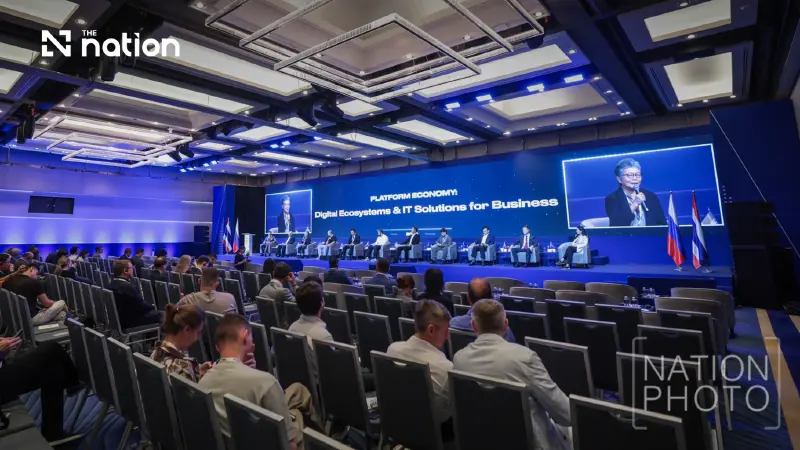


At the Russian-Thai Investment Forum 2026 in Bangkok, firms explored joint digital platforms, IT partnerships and Southeast Asian expansion amid regulatory challenges.
- Russian and Thai technology firms are exploring collaboration to develop joint digital platforms, integrate business IT systems, and expand into Southeast Asian markets.
- Potential areas for cooperation include business-to-business (B2B) solutions, specialised artificial intelligence, digital product traceability systems, and technology transfer for local production.
- The success of these partnerships depends on key factors such as regulatory compatibility, forming local partnerships, and developing a skilled digital workforce.
- A central aim is to combine Russian software expertise with Thai knowledge of local and regional business requirements to jointly commercialise IT solutions.
Russian and Thai technology companies are exploring opportunities to develop joint digital platforms, integrate business IT systems and expand into Southeast Asian markets, with technology transfer, local partnerships and regulatory compatibility among the key considerations for turning these opportunities into commercial projects.
The potential for closer collaboration was discussed during the “Platform Economy: Digital Ecosystems & IT Solutions for Business” session at the Russian-Thai Investment Forum 2026, held at the Royal Orchid Sheraton Riverside Hotel Bangkok on Saturday (October 31).
The discussion examined how both countries could connect their growing digital ecosystems, develop business-to-business (B2B) solutions and establish direct relationships between technology providers and customers.
It also considered how large corporations and small and medium-sized enterprises (SMEs) could participate in each other's digital platforms, creating opportunities for joint product development and expansion into third-country markets.

Building partnerships across digital ecosystems
A central opportunity lies in connecting Russia's software and technology capabilities with Thailand's digital business ecosystem, allowing companies to develop services that meet local commercial requirements while reaching wider regional markets.
Alexey Novikov, head of international business at 1C LLC, discussed the company's range of business software products and the role of local partners in bringing technology to new markets.
Such cooperation could allow Russian software providers to collaborate with Thai companies on adapting and implementing business solutions, while enabling Thai businesses to incorporate additional technologies into their existing systems.
The Thai corporate participants included Sirirat Chotivechkarn, managing director of Network Advisory Team Ltd (NAT); Bhisidh Nadee, head of partnerships and ecosystem growth at True Corporation; and Kulthirath Pakawachkrilers, CEO and co-founder of TeC e-Business Center.
Their participation brought perspectives from business advisory services, telecommunications and e-commerce, illustrating the range of sectors involved in developing interconnected digital ecosystems.
The session also featured Nikolay Shiryaev, director of business development and sales for Southeast Asia at VisionLabs, and Eduard Adamyan, shareholder of Element Group Holdings Company Limited.
Together, these areas of expertise illustrate the potential for cooperation extending beyond individual software products to business platforms that combine different digital capabilities.
Specialised AI creates opportunities for joint solutions
Evgeny Sobolev, co-founder of Scanderm Biotech Studio, presented an example of how specialised artificial intelligence could be developed into commercial digital services.
He described the company's approach to AI-assisted skin analysis, which assesses approximately 35 visual parameters and draws on medical expertise.
Sobolev highlighted the limitations of general-purpose AI models when dealing with uncommon skin conditions, suggesting that specialised systems developed with medical professionals could offer a more targeted approach.
The example illustrates how specialised AI applications could be integrated into broader commercial platforms, opening opportunities for Russian technology developers and Thai businesses to collaborate on industry-specific digital services.
Such cooperation could combine Russian technical expertise with Thai companies' knowledge of local business requirements and customer needs.

Technology transfer and local production
Pavel Bulgakov, founder of Callisto Vision, outlined another potential area of cooperation through digital product identification and traceability systems.
He described track-and-trace technology as a means of connecting manufacturers, regulators and consumers through digital information associated with physical products.
Such systems can support oversight of goods throughout production and distribution while providing businesses and public authorities with access to relevant product data.
Bulgakov reported that the company's technology was deployed on more than 200 high-speed production lines across Russia, Uzbekistan, Kazakhstan and Saudi Arabia.
He emphasised that the company's ambitions extended beyond equipment sales to technology transfer and cooperation with Thai partners on establishing local production facilities for machinery.
However, because national product-tracking systems involve government regulation, their development would require appropriate policy direction and coordination with the authorities.
The proposal illustrates how Russian-Thai technology cooperation could extend from software and equipment supply to local industrial capabilities and longer-term business partnerships.
Regulatory cooperation and digital workforce development
Alongside commercial opportunities, the discussion addressed the institutional conditions needed for closer cooperation between the two countries' technology sectors.
M.L. Luesak Chakrabandhu, director of the Digital Council of Thailand, and Dr. Jakkanit Kananurak, vice president of the Digital Manpower Development and Promotion Department at the Digital Economy Promotion Agency (DEPA), were among the Thai representatives involved.
Their participation also drew attention to the importance of digital workforce capabilities in supporting technology adoption and the development of sustainable business partnerships.
Workforce development could become an important component of future Russian-Thai digital cooperation, particularly as businesses seek personnel capable of adapting, integrating and maintaining increasingly sophisticated IT systems.
Potential areas for collaboration include technical training, knowledge-sharing between Russian and Thai specialists, and opportunities for software developers and IT professionals from both countries to work together on new digital products.
Building these capabilities could help Thai businesses develop the expertise needed to implement and maintain jointly developed technologies, while giving local professionals a greater role in software customisation, technical support and future product development.
Regulatory requirements remain an important consideration for companies seeking to connect digital services across borders. Technology providers must also consider how their products can be adapted to local business systems and deployed through reliable partnerships.
Another key question is how SMEs can participate in digital ecosystems operated by larger companies, allowing smaller businesses to contribute specialised services and technology rather than acting solely as end users.
Improving access to digital skills and technical expertise could also strengthen SMEs' ability to participate in such partnerships, particularly where local implementation and ongoing technical support are required.

Southeast Asia offers wider growth potential
Beyond bilateral trade, cooperation between Russian and Thai companies could create opportunities to jointly develop and commercialise IT solutions across Southeast Asia.
Russian firms could contribute specialised software and industrial technology, while Thai partners could provide local business knowledge, implementation capabilities and connections to regional markets.
This complementary approach could enable companies to develop and adapt digital products for different markets, combining technological capabilities with local expertise and commercial networks.
The discussion highlighted the potential for both countries to build on their existing digital investments through direct corporate partnerships, rather than treating technology cooperation solely as an import-export relationship.
However, translating these opportunities into viable projects will require clear commercial arrangements, compatible regulatory frameworks, technical integration and a workforce equipped to support the adoption of new technologies.
If these challenges can be addressed, Russian-Thai partnerships could provide a foundation for jointly developed digital solutions serving businesses in both countries and potentially expanding across Southeast Asia.
