
Thailand forms 3 task forces against illegal e-waste imports
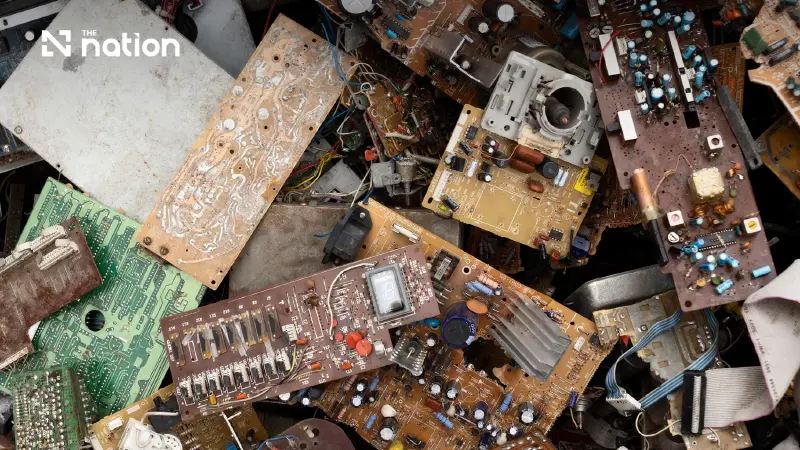


Thailand has formed three e-waste task forces after checks on 915 suspect containers, with tougher penalties and asset seizure powers proposed.
- Thailand has established three distinct task forces to combat illegal electronic waste imports by focusing on enforcement, trade controls, and legal reform.
- The enforcement team will inspect high-risk factories and respond to pollution, while the trade control team will examine cargo movements and close legal loopholes for hazardous waste.
- A third team is tasked with reviewing legislation to propose tougher penalties and new measures, such as seizing assets linked to environmental crimes.
- As part of the crackdown, investigators are already examining 915 suspect shipping containers, targeting smugglers who falsely declare hazardous waste as scrap metal.
Thailand announced three task forces on October 30, 2026, to tackle illegal electronic waste imports and disposal, as investigators reported examining 915 suspect shipping containers.
Deputy Prime Minister and Commerce Minister Suphajee Suthumpun outlined a coordinated response covering factory and port inspections, tighter trade controls and proposed legal changes to strengthen penalties and pursue assets linked to environmental offences.
The crackdown targets the smuggling and illegal landfilling of electronic waste, or e-waste, and industrial waste. Authorities have identified suspected false declarations involving hazardous waste mixed with scrap metal to evade inspection before improper sorting or disposal, posing risks to public health and the environment.
Prime Minister and Interior Minister Anutin Charnvirakul signed an Office of the Prime Minister order on October 27 establishing an e-waste committee chaired by Suphajee. The committee brings together the ministries of Commerce, Finance, Natural Resources and Environment, Interior, and Industry.
Suphajee noted that Thailand had prohibited e-waste imports since 2020 and revised the Commerce Ministry notification in 2025 to strengthen import controls and prevent false declarations.

Three teams to inspect factories and tighten controls
The committee has divided the work among three task forces, covering enforcement, trade controls and legal reform:
1. Enforcement and pollution response: This team has two branches. The Industry Ministry will inspect higher-risk factories, particularly category 105 and 106 facilities involved in sorting, processing and recovering discarded materials. The Natural Resources and Environment Ministry will investigate public complaints and address pollution.
2. Import and export controls: Led by the Customs Department and the Department of Foreign Trade, this team will examine cargo movements and develop rules and legal measures to close loopholes allowing hazardous waste imports.
3. Stronger legal measures: This team will review legislation and propose tougher penalties to deter repeat offences.
Investigators examine 915 suspect containers
Pol Lt Col Anurak Rojnirankit, deputy director-general of the Department of Special Investigation (DSI), reported that its Bureau of Natural Resources and Environment Crime had examined 915 suspect containers. Their cargo weighed more than 13,393 tonnes and had a recorded value exceeding THB338 million.
Investigators found indications of possible false declarations and links to factories and waste-disposal sites in eastern Thailand. The DSI has proposed accepting two special cases covering Rayong, Chonburi, Chachoengsao, Prachin Buri and Sa Kaeo, with investigations extending to others involved in the suspected networks.

The Customs Department is intensifying inspections using intelligence and risk analysis, alongside X-ray screening and physical examinations conducted with the Department of Industrial Works and the Pollution Control Department. X-ray images alone may be insufficient to identify waste concealed among scrap metal.
Asset seizure proposals and a waste-management fund
The Industry Ministry is working with the Anti-Money Laundering Office and other agencies to make environmental offences predicate offences under proposed anti-money-laundering legislation. This would provide additional tools to trace financial transactions and take action against assets connected to wrongdoing.
The proposed provisions would cover offences under laws governing factories, hazardous substances, and the promotion and conservation of national environmental quality. The legislation is expected to take effect in 2027 if the process proceeds as planned.
The Industry Ministry also plans to advance an Industrial Waste Management Bill to establish a waste-management framework and a fund for addressing pollution. Factories found to have broken the law would face strict enforcement, including possible licence revocation.
Scrap-metal declarations and real-time waste tracking
The Pollution Control Department is preparing controls on scrap-metal imports and exports. Under the proposed measures, importers would submit a self-declaration specifying the level of other material mixed into the scrap, the purpose of the import and the destination factory.
The measures aim to prevent operators from importing waste, extracting valuable material for re-export and leaving unwanted residues to be dumped or improperly disposed of in Thailand.
The Department of Industrial Works will accelerate development of a digital system linking industrial-waste transport data for real-time tracking and oversight. Inspections would cover the entire chain, from waste generators and transporters to disposal operators.
The Department of Industrial Works is also coordinating with Customs and the Basel Action Network (BAN) to monitor cross-border hazardous-waste movements made without the consent required under the Basel Convention. A joint working group is planned to exchange information and support civil, criminal and administrative proceedings.
The e-waste committee has assigned a deputy government spokesperson to act as its spokesperson, compile weekly updates from participating agencies and report progress to the public.
