
Customs reports 15 containers held in Laem Chabang waste probe on October 26
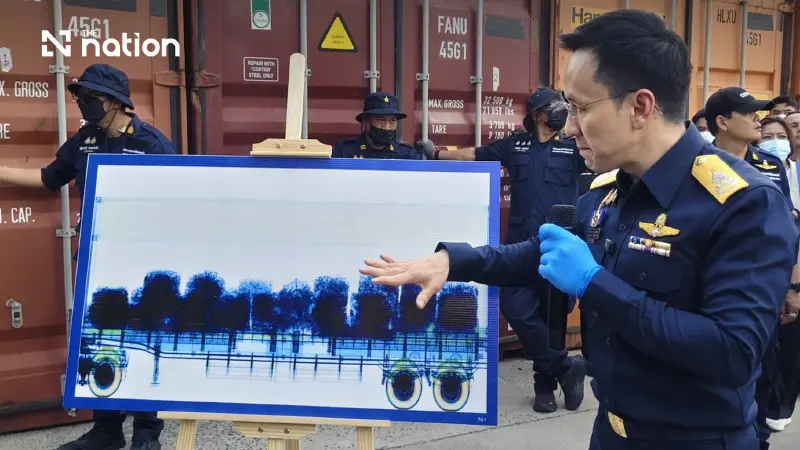


Thai Customs says illegal cargo at Laem Chabang will be returned to its country of origin at importers’ expense if offences are confirmed.
- On October 26, Thailand's Customs Department detained and opened 15 containers at Laem Chabang Port on suspicion of containing illegal electronic waste.
- The probe is part of a government directive to prevent Thailand from becoming a destination for foreign toxic waste, prompting intensified checks involving physical inspections by experts.
- If offenses are found, importers will face legal action and be required to pay for the goods to be returned to their countries of origin.
- As part of the investigation, Customs has shared information on seven companies with investigators, and a committee is examining the potential involvement of government officials.
Thailand’s Customs Department had detained and opened 15 containers at Laem Chabang Port for checks on suspected electronic waste imports, director-general Phantong Loykulnanta said on October 26, 2026.
If inspections establish offences, Customs will take legal action under the Customs Act 2017 and other applicable laws and return the goods to their countries of origin, with importers paying all costs, Phantong said.

Phantong said the intensified checks followed instructions from Prime Minister and Interior Minister Anutin Charnvirakul and Deputy Prime Minister and Finance Minister Dr Ekniti Nitithanprapas to prevent Thailand from becoming a destination for foreign toxic waste.
Problems involving toxic waste and illegal waste-processing factories in Rayong and Prachin Buri had prompted closer cooperation between Customs and environmental regulators, Phantong said, citing impacts on the environment and public health.

Laem Chabang inspections go beyond X-ray screening
Customs is working with experts from the Department of Industrial Works and the Pollution Control Department to physically examine cargo and determine whether it contains prohibited electronic waste or hazardous waste. Phantong said X-ray images alone might be insufficient to distinguish some types of material.
Investigations and intelligence-sharing had led Customs to detain the suspect shipments, Phantong said. If offences were established, the inquiry would extend to earlier imports by businesses considered at risk of violations to prevent repeat offences.

Detailed inspections cannot be carried out on every container, Phantong said. Cooperation with other agencies and checks at destination factories or premises are therefore needed to establish whether imported materials and their uses match the customs declarations.
Customs’ seizures of illegal goods were at their highest level in five years, Phantong said. Officers would follow the relevant procedures when irregularities were found, including returning shipments where the legal conditions were met.

Customs shares details of seven companies with investigators
Customs has supplied agencies handling the waste-import inquiries with information on seven main companies, other businesses whose activities may be connected and all relevant container numbers, Phantong said.
Several companies were undergoing investigation and legal procedures, including a major automotive parts manufacturer that had operated for many years, Phantong said.
An investigation committee had been established to examine allegations that government officials might be involved in wrongdoing, Phantong said. The Department of Special Investigation (DSI) and the National Anti-Corruption Commission had requested information from Customs, which had supplied the requested material.

Import rules allow trading firms as well as manufacturers
Thailand’s import framework over the past 10 years had not required every importer to obtain specific permission or reserved imports exclusively for manufacturers, Phantong said. Trading firms could therefore import goods provided they complied with applicable rules and laws.
Large companies’ use of import intermediaries might partly reflect costs and the intensity of inspections, Phantong said. Businesses blacklisted after previous violations were more likely to face stricter checks on subsequent shipments, adding costs for container handling, X-ray screening, physical inspections, demurrage and storage.
Hundreds of trading firms and manufacturers are involved in importing goods, Phantong said. Customs was ready to provide information to the DSI and other government agencies to establish the facts and support legal action.

Customs presses for scrap metal and rubber import bans
Customs has submitted recommendations to the Commerce Ministry, particularly the Department of Foreign Trade, for a review of importer eligibility and import arrangements, including proposals to prohibit imports of scrap metal and scrap rubber, Phantong said.
The Customs Department enforces laws and notices issued by the responsible agencies and cannot independently ban imports or exports without a legal basis, Phantong said. Any new restrictions would have to follow the procedures and powers of the agencies concerned.
The proposed review aims to prevent imports that could harm the environment, Phantong said. Some recyclable materials are difficult to trace after customs clearance, making it hard to establish whether they are subsequently used or disposed of lawfully.
Phantong said tackling transnational toxic waste required coordination across import rules, business inspections, enforcement and monitoring after customs clearance to prevent prohibited imports and reduce long-term environmental and health impacts.
