
Anutin defends US trade talks on Nov 18 citing 10m farmers
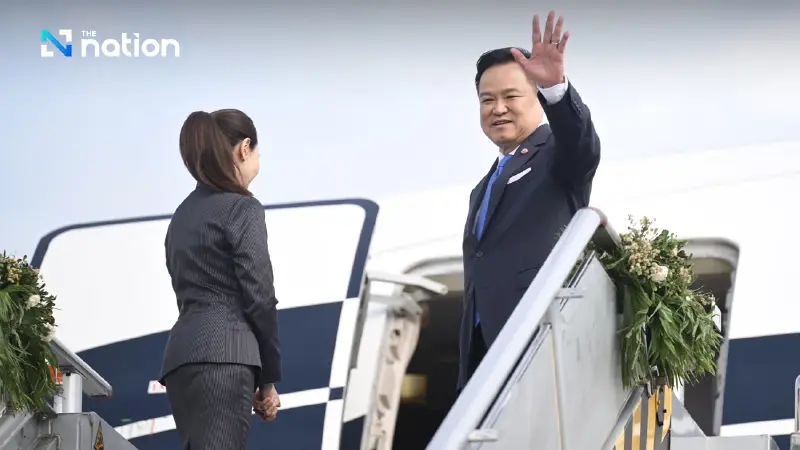


Thailand’s proposed US trade pact could expand farm exports and reduce uncertainty for businesses, Prime Minister Anutin Charnvirakul said in Manila.
- Prime Minister Anutin Charnvirakul defended the proposed US trade agreement, stating that the interests of Thailand's 10 million farmers are a primary consideration.
- He insisted the government's goal is to secure maximum benefits for the nation and would not sign a deal that harms national interests.
- Anutin cited potential advantages for Thailand, including expanded market access for its agricultural exporters in the US and reduced trade uncertainty for businesses.
Prime Minister Anutin Charnvirakul defended Thailand’s proposed trade agreement with the United States in Manila on November 18, 2026, insisting that Thailand would not be disadvantaged. Anutin said the government would give particular consideration to the country’s 10 million farmers.
Thailand and the United States signed a joint statement on November 17 confirming that their negotiations had concluded in substance. The statement said both countries would undertake the necessary domestic procedures to prepare the full agreement for signature and entry into force.
“If Thailand were going to lose out, who would sign it? Please show some respect,” Anutin said, adding that the government would never sign an agreement it believed would harm national interests.

Anutin spoke to reporters in Manila, the Philippines, before departing for Shenzhen, China, to attend the Asia-Pacific Economic Cooperation (APEC) Economic Leaders’ Meeting.
Farmers’ interests take priority in US trade talks
Thai farmers warranted special attention in the US negotiations because of their numbers and the potential direct effects of market opening, Anutin said. The government’s assessment of any international agreement or commitment would also cover businesses, consumers and the wider interests of Thailand and its people.
“In the case of the United States, we must give the greatest consideration to Thailand’s 10 million farmers,” Anutin said.
Selected US imports could widen Thai consumer choice
Opening Thailand’s market to selected American products could give consumers more choice, Anutin said, stressing that this would cover only certain goods rather than amount to a complete market opening.
Thai agricultural and food exporters could expand their presence in the United States, a major trading partner with strong purchasing power, Anutin said. Thailand should use its strengths in agriculture and food production to take advantage of access to that market, he added.
Thailand’s bilateral trade gap with the United States had not narrowed despite efforts to buy more American goods, including aircraft, Anutin said. He argued that this reflected continued strong sales of Thai products in the US market.
Trade pact could reduce uncertainty for Thai exporters
Finalising the proposed Agreement on Reciprocal Trade (ART) with the United States would help Thai businesses and exporters plan with greater certainty, Anutin said.

“If we can finalise the reciprocal trade agreement, we will no longer have to worry about whether they will change the rules, requirements or tariff rates again in the future,” Anutin said, referring to the United States.
Anutin judges US deal by Thailand’s gains
“We are not comparing the benefits for the two countries to determine whether Thailand gains less or more. Our only concern is that Thailand receives the maximum possible benefit. That is the goal and intention behind our decision to sign,” Anutin said of the proposed US–Thailand trade agreement.
Anutin argued that trade negotiations could not give one side everything while leaving the other with nothing.
Thailand already had free trade agreements and similar purchasing and trade arrangements with regional partners and other countries, Anutin said. The discussions with the United States had been under way for some time, he added.
