
Growth of Laos-China Railway offers opportunities for Thai exporters
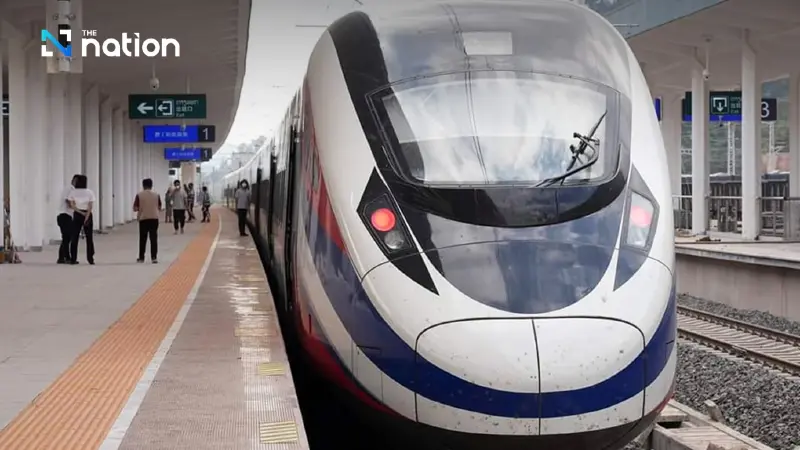


Cross-border customs clearance now takes two to five hours, down from about 40, while priority handling helps keep fresh fruit in good condition.
- The railway provides a new logistics route for Thai exporters to send goods to China, with specific support for the cold chain transport of agricultural produce and fresh fruit.
- Transit times are significantly reduced due to improved customs procedures, with clearance times cut from about 40 hours to as little as 2-5 hours, benefiting perishable exports.
- The railway offers Thai businesses a faster, 15-day route to European markets by connecting with the China-Europe rail network.
- To fully capitalize on the opportunity, Thailand must improve its domestic logistics by better linking its road and rail networks to the new line and developing warehouses and cold storage.
The Laos-China Railway is emerging as a major regional logistics route for trade between China and the Association of Southeast Asian Nations (ASEAN).
It is bringing significant changes to the way goods move across borders.
Thailand in particular could use the line to expand its export opportunities in China.
The railway officially opened on December 3, 2021 and will mark its fifth anniversary in December 2026, according to the Thai Trade Center in Kunming, in the People’s Republic of China.
The 1,035-kilometre line links Kunming in southern China with Vientiane, the capital of the Lao People’s Democratic Republic.
By August 18, 2026, the railway had carried more than 90 million tonnes of freight, including over 21 million tonnes across borders.
Freight trains had made more than 80,000 trips, including over 23,000 cross-border trips.
From the start of 2026 to that date, freight volumes averaged more than 67,000 tonnes a day.
The line had also carried more than 75 million passengers.
Monthly passenger numbers had risen from 600,000 when services began to a peak of 2.25 million.

Freight capacity grows to handle more than 4,000 types of goods
As the Laos-China Railway has grown, the number of cross-border freight trains has risen from two a day to as many as 23.
The weight a train can haul has increased from 2,000 to 2,800 tonnes, and capacity per train has risen by about 40%.
The range of goods the railway handles has expanded from about 10 types to more than 4,000, including electronics, solar power equipment, minerals, motor vehicles and fruit.
Its freight connections extend to 19 countries, including Thailand, Laos, Viet Nam, Malaysia and Singapore, as well as more than 31 locations in China.
This expansion reflects growing demand for rail freight and has created opportunities in warehousing, road haulage, cold storage and cargo handling.
Road hauliers still play an important role in moving goods from production sites to railway stations.
About 50% of freight along the route has shifted from road to rail, so the two modes of transport need to work together.
Thailand-China trade links, shorter transit times and access to European markets
The Laos-China Railway plays an important role in trade between Thailand, Laos and China through the freight transfer station on the Vientiane side and connections to Thailand’s rail network.
The route also supports the cold chain for agricultural produce and fresh fruit, keeping these goods at controlled temperatures during transport.
Connections to the China-Europe rail route give Thailand and Laos another way to send goods to European markets.
The rail journey takes about 15 days.
By the end of 2025, freight trains had made more than 12,000 onward trips from the Laos-China Railway to Central Asia, carrying more than 653,000 twenty-foot equivalent units (TEU) of cargo.
Improvements to customs procedures for cross-border freight have also played an important part.
Clearance now takes two to five hours, down from about 40 hours.
The report describes this as a roughly eightfold gain in efficiency.
The changes include smart freight yards, express rail freight services, advance cargo declarations and coordination between agencies so they can carry out inspections in parallel.
Perishable goods, particularly fresh fruit, receive priority at four stages. Priority applies when goods are handed over, when they are positioned, when they are packed for transport and when customs officers inspect and release them.
This cuts waiting times and helps preserve quality.
In 2026, the Laos-China Railway has carried more than 200,000 tonnes of tropical fruit.
In 2025, it carried more than 160,000 tonnes of durian, an increase of 51.5%.
Faster customs clearance speeds up transport, lowers the cost of complying with regulations, eases the burden of storing goods and reduces the risk of delays.
These gains are particularly important for agricultural produce, where competitiveness depends on freshness and delivery times.
Thailand must move quickly to link road and rail to seize export opportunities
The Thai Trade Center in Kunming sees the growth of the Laos-China Railway over nearly five years as evidence of the potential of rail logistics and the growing role of rail in regional trade.
For Thailand, the line offers an important opportunity to expand exports to China, particularly agricultural produce and fruit for which transit times must be managed and quality maintained.
Thailand does, however, need to develop its logistics infrastructure faster.
That means linking road and rail networks, making freight transfer stations more efficient and developing warehouses and cold storage systems so that goods can move quickly and without interruption from production sites to their final markets.
Thai businesses also need to adapt their production, storage and export plans to the new transport system.
They need to prepare the necessary documents and be ready to meet product standards so they can take advantage of fewer steps in customs clearance and deliver goods more efficiently.
The fifth anniversary of the Laos-China Railway marks the success of the transport project and signals a wider shift in trade and logistics across the region.
Thailand’s opportunity lies in developing these transport links faster and equipping its businesses to compete.
This would allow the country to use the railway to add value to Thai goods and improve access to the Chinese market and other export destinations.
