
Thailand pushes Laos-China rail connections as regional trade expands
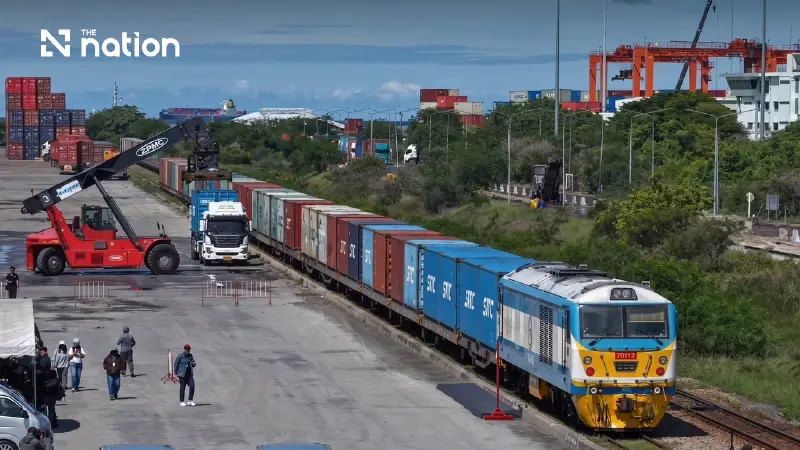


Thailand is advancing rail and logistics projects linking Laos and China, including a new Mekong bridge, as cross-border trade grows and Indonesia plans a 2,772km railway network.
- Thailand is accelerating the development of railway infrastructure, including double-track and high-speed rail projects, to improve connections with Laos and China.
- Key projects include a new railway bridge across the Mekong River and a freight transfer center in Nong Khai to handle increased cargo volumes.
- The primary goals are to reduce transport costs and strengthen Thailand's position as a regional logistics hub amid expanding border and transit trade.
- This infrastructure push aims to connect with the successful Laos-China Railway, which has significantly boosted regional trade and transformed Laos's economy.
Thailand is accelerating the development of railway and logistics infrastructure connecting the country with Laos and China, aiming to reduce transport costs and strengthen regional trade links as neighbouring countries expand their rail networks.
The plans include double-track and high-speed rail projects, a new railway bridge across the Mekong River and a freight transfer centre in Nong Khai, while Indonesia is exploring Chinese investment in a proposed 2,772-kilometre railway network across Kalimantan.
The infrastructure push comes as Thailand's border and transit trade continues to expand. According to the Department of Foreign Trade, total trade reached 1.76 trillion baht during the first nine months of 2026, an increase of 18.8% year on year.
Exports rose by 16.6% to 978.11 billion baht, while imports increased by 21.6% to 786.21 billion baht, leaving Thailand with a trade surplus of 191.90 billion baht.
In September, border trade with four neighbouring countries totalled 80.74 billion baht, up 24.4%. Malaysia accounted for the largest share at 39.97 billion baht, an increase of 49.6%, followed by Laos at 24.54 billion baht, up 1%.
Transit trade with China reached 59.37 billion baht, the highest among third-country markets, highlighting the growing importance of transport connections across mainland Southeast Asia.
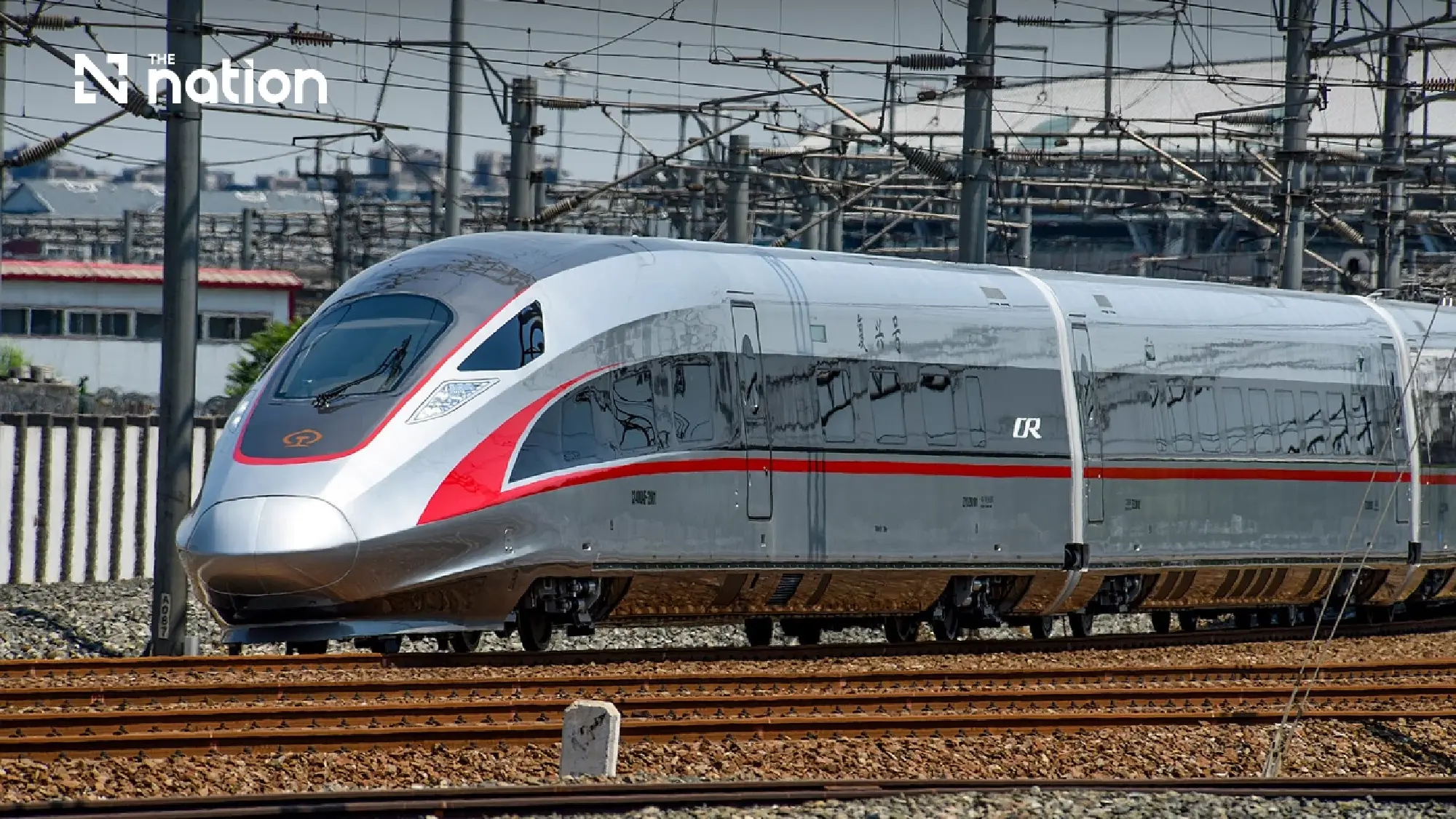

Laos highlights economic benefits of China railway
Laos has pointed to the Laos-China Railway as an example of how improved infrastructure can support trade, investment and economic development.
Saleumxay Kommasith, Laos' then deputy prime minister and chairman of the Investment Promotion and Management Committee, highlighted the railway's contribution to the country's economy at the Belt and Road Summit in Hong Kong in September.
He described China's Belt and Road Initiative (BRI) as an important foundation for Laos' long-term development, particularly in expanding trade, attracting foreign direct investment, modernising infrastructure and strengthening cross-border connections between people.
Since the Laos-China Railway began operating in 2021, it has carried more than 70 million passengers and transported over 90 million tonnes of freight.
Saleumxay said the railway had helped transform Laos' trade structure, expanding its regional export range from 13 categories to more than 4,000 products.
He also noted that trade between Laos and China had surpassed US$9.8 billion, reflecting the economic opportunities created by improved connectivity.
The railway has helped transform Laos from a landlocked country into a regional logistics hub, reducing transport costs and strengthening its integration into regional supply chains, he added.
Thailand advances rail connections through Nong Khai
Deputy Prime Minister and Transport Minister Phiphat Ratchakitprakarn outlined Thailand's plans following an inspection of Nong Khai Railway Station, which is being developed as an important gateway for trade with Laos and southern China.
The Ministry of Transport intends to expand the double-track railway network and Thai-Chinese high-speed rail system alongside freight transfer facilities and a new railway bridge across the Mekong River.
The projects are intended to connect freight movements from Laem Chabang and Map Ta Phut ports through northeastern Thailand to Laos and China, reducing logistics costs and improving the country's trade competitiveness.
Among the major projects is the 167-kilometre Khon Kaen-Nong Khai double-track railway, which is scheduled to begin operations in 2028.
The second phase of the Thai-Chinese high-speed railway, covering 357.12 kilometres between Nakhon Ratchasima and Nong Khai, has received Cabinet approval in principle and is targeted to open in 2033.
Nong Khai Railway Station will also be upgraded to accommodate international passenger connections, while the nearby Na Tha area will be developed into a freight transfer centre and container storage facility.
The facilities are expected to support cargo movements between Thailand's railway system and the Laos-China Railway.

New Mekong railway bridge to support cross-border freight
Another key project is a proposed 735-metre railway bridge across the Mekong River, designed to accommodate four tracks using both metre gauge and 1.435-metre standard gauge.
The State Railway of Thailand (SRT) has completed the detailed design and submitted the environmental impact assessment report to the relevant authorities for consideration.
Phiphat said he had instructed agencies to prepare discussions with their Lao counterparts on joint investment, infrastructure development and cross-border freight management.
These discussions will include the possibility of extending border checkpoint operating hours to accommodate rising train movements and freight demand.
The ministry is also studying the expansion of double-track rail connections towards eastern Thailand, which could allow agricultural products, particularly durian and other fruit from the eastern and southern regions, to reach China more efficiently through Nong Khai.
Permanent Secretary for Transport Piyapong Jiwattanakulpaisan said Thailand and Laos were considering dividing construction responsibilities for the bridge according to the sections located within their respective territories.
The Lao authorities are also considering coordination with Thailand's Neighbouring Countries Economic Development Cooperation Agency (NEDA) on project management and possible financial assistance under existing cooperation arrangements.
However, Laos faces financial constraints and must prioritise several development projects requiring external support.
Piyapong said Thailand would therefore need to continue coordinating with Laos to ensure the railway bridge receives sufficient priority to proceed according to the planned timetable.
Second railway bridge aims to ease existing bottlenecks
The existing rail connection between Nong Khai and Thanaleng, near Vientiane, uses the First Thai-Lao Friendship Bridge, which is approximately 1,050 metres long.
Because the bridge accommodates both road vehicles and trains, its shared use creates limitations for freight transport.
The proposed second Nong Khai-Vientiane railway bridge is intended to address these constraints and provide a more efficient link between Thailand's railway network and the Laos-China Railway.
Earlier discussions between the Thai Department of Rail Transport and Lao railway authorities in October 2025 envisaged constructing the new bridge approximately 30 metres from the existing crossing.
The proposed structure would accommodate both standard-gauge and metre-gauge trains, providing connections towards Vientiane South and Thanaleng stations.
The earlier timetable anticipated construction beginning in 2027 and completion in 2030, subject to the project's progress and necessary approvals.
Rail freight volumes demonstrate trade potential
Thailand is also expanding freight-handling capacity while the larger infrastructure projects are developed.
A freight-loading area of approximately 25,000 square metres at Nong Khai Railway Station is expected to remain operational until September 2027, pending construction of container storage facilities at Na Tha.
A larger freight transfer centre is also planned for Na Tha to accommodate future cargo growth.
Private operators have continued to express interest in transporting various goods by rail, including chemical fertilisers, rubber, electronic equipment, minerals, malt and fruit.
SRT governor Anan Phonimdaeng said northeastern Thailand played an important role in international economic and trade connectivity, prompting the railway authority to prepare for increasing freight volumes.
Between October 2025 and September 2026, cross-border rail freight between Thailand and Laos totalled 11,007 twenty-foot equivalent units (TEUs), transported on 6,108 railway wagons.
The shipments comprised 6,063 TEUs of consumer products and other goods, 3,262 TEUs of fruit, 1,312 TEUs of malt and 370 TEUs of fertiliser.
Rail freight between Nong Khai, Vientiane and China currently takes approximately 30 hours, compared with around 48 hours by road, demonstrating the potential for rail transport to reduce delivery times.
Freight travelling from Laem Chabang Port through Nong Khai to Kunming in China takes approximately 50 hours, providing another route for businesses seeking to manage transport costs and delivery schedules.
Indonesia considers Chinese investment in major railway network
Elsewhere in Southeast Asia, Indonesia is exploring foreign investment to develop a proposed 2,772-kilometre Trans-Kalimantan railway network.
According to the South China Morning Post, the Indonesian government is considering Chinese involvement in the project, which would extend across the resource-rich Kalimantan region.
China and Russia have both expressed interest in the proposed network, although the Indonesian government remains in the exploratory stage.
Analysts have suggested that any future commercial agreements will require careful negotiations because of financing pressures and the challenges associated with major railway infrastructure projects.
The proposal reflects broader efforts across Southeast Asia to improve transport connectivity and support economic development through expanded rail networks.
Thailand positions rail transport as regional logistics backbone
Pichet Kunadhamraks, director-general of the Department of Rail Transport, said strengthening railway connectivity was particularly important for upper northeastern Thailand, where border trade, investment and tourism offered considerable economic potential.
He identified Nong Khai Railway Station as a strategic freight connection with Laos, making further rail development essential to improving regional transport efficiency.
The ministry is focusing on infrastructure across Bueng Kan, Loei, Nong Khai, Nong Bua Lamphu and Udon Thani, with civil works tendering for the Nakhon Ratchasima-Nong Khai high-speed railway section planned by December 2026.
Pichet said rail transport should be developed as the backbone of Thailand's transport network, supported by road services that connect passengers and freight to railway stations.
The strategy also calls for closer integration with maritime and air transport to create a more connected logistics system.
The overall objective is to expand transport options, reduce freight costs and strengthen Thailand's position as a regional transport and logistics hub, while supporting long-term economic development in the Northeast.
Source: Krungthep Turakij
