
Dubai developer plans THB160bn Bangkok mixed-use landmark
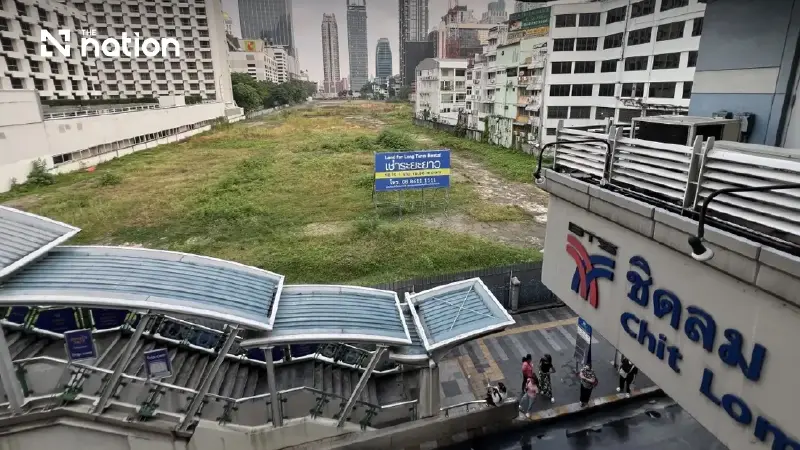


United Arab Emirates investor Mohamed Alabbar has proposed a THB160bn Bangkok mixed-use project. Chit Lom is unconfirmed as the site, and a record-breaking tower is possible.
- Dubai developer Mohamed Alabbar is proposing a THB160 billion investment to build a major mixed-use landmark in Bangkok.
- The development is planned to feature four main components: high-end residential properties, retail centres, offices, and hotels.
- A key part of the proposal is a landmark skyscraper that could potentially become the world's tallest building, subject to feasibility and regulatory approval.
- The project is being pursued through Alabbar's company, Eagle Hills, likely with a Thai joint-venture partner, though a final location has not been confirmed.
A proposed THB160 billion property development in Bangkok by United Arab Emirates (UAE) billionaire Mohamed Alabbar has sparked speculation over a prime site near Chit Lom Skytrain station, although the project's location remains unconfirmed.
Alabbar, founder of Emaar Properties and Eagle Hills, is pursuing a large mixed-use development in the Thai capital through Eagle Hills and a potential Thai joint-venture partner. The proposal includes a landmark skyscraper that could become the world's tallest building, subject to feasibility and regulatory approval.
The investor is best known for his involvement in developing Dubai's Burj Khalifa, currently the world's tallest completed building.

Chit Lom land attracts attention as potential site
The site, formerly occupied by telecommunications company TOT, covers more than 18 rai (approximately 2.9 hectares) along Phloen Chit Road. Its central location, proximity to public transport and substantial setback from the road have made it a potential candidate for a major property development.
However, there has been no official confirmation that this land has been selected for Alabbar's project.
Surachet Kongcheep, a property analyst, noted that information disclosed by Alabbar indicated a land requirement of approximately 20–30 rai (3.2–4.8 hectares). He added that the project would not necessarily require freehold land ownership, as a long-term lease could also be considered.
This would broaden the range of potential locations in Bangkok, including large plots available on long-term leases with suitable transport access and development potential.
The final choice would therefore depend not only on location but also on securing appropriate land rights and agreeing on development conditions.
THB160bn development to combine four property sectors
Alabbar's preliminary proposal involves developing a large mixed-use complex from the ground up, bringing residential, commercial and hospitality facilities together.
The project would comprise four main components:
- Residential: High-end housing designed to serve the luxury property market.
- Retail: Shopping centres and commercial spaces catering to residents and visitors.
- Offices: Office buildings for businesses and corporate tenants.
- Hotels: Accommodation targeting international tourists and business travellers.
Eagle Hills would initially lead the development, while Emaar Properties could join later to develop the retail and hotel components.
The concept aims to create an integrated urban destination where people can live, work, shop and stay within the same development.
If realised, the project could represent one of Thailand's largest property investments, with the potential to establish a new commercial and tourism landmark in Bangkok.

World's tallest building remains a possibility
The prospect of constructing a skyscraper capable of breaking global height records is among the proposal's most prominent features.
Dubai's Burj Khalifa, developed by Emaar Properties, currently holds the record for the world's tallest completed building at 828 metres.
However, Saudi Arabia's Jeddah Tower is under construction and is designed to exceed 1,000 metres, with completion currently targeted for 2028.
A future Bangkok skyscraper would therefore need to surpass Jeddah Tower's eventual height to claim the world record.
Alabbar has nevertheless acknowledged that the proposed Bangkok landmark might not become the world's tallest building, emphasising the importance of creating an architectural symbol for the city.
Any attempt to establish a new height record would depend on whether Thai authorities permit construction on such a scale.
Beyond the investment required, a skyscraper exceeding one kilometre would present major challenges involving:
- Structural engineering and construction technology.
- Transport infrastructure and accessibility.
- Fire safety and building management.
- Urban planning and land-use restrictions.
- Compliance with Thai building-control legislation.
Consequently, the possibility of developing a record-breaking tower remains an initial concept rather than an approved construction project.
Foreign investment faces legal and land ownership challenges
Thailand's restrictions on foreign land ownership represent another major consideration for the proposed development. Foreign investors generally face limitations on directly owning land, making the project's legal and ownership structure particularly important.
Alabbar's plan to work with a Thai partner would require agreements covering investment responsibilities, shareholding arrangements and land-use rights.
Depending on the eventual structure, the project could involve a long-term lease, a joint venture or other arrangements permitted under Thai law.
Securing the necessary approvals would also require detailed consideration of building height restrictions, environmental requirements, infrastructure and urban planning regulations.
Even substantial financial backing would not guarantee that construction could proceed without the necessary agreements and regulatory approvals.
Mohamed Alabbar's business background
Dubai-born Mohamed Alabbar, 70, is one of the UAE's most prominent property entrepreneurs. The son of a traditional trading vessel captain, he received a scholarship to study finance and business administration at Seattle University in the United States.
He subsequently became the founding director-general of Dubai's Department of Economic Development and served as an economic adviser to the emirate's ruler.
His business career includes several major ventures:
- Emaar Properties: Founded in 1997, the developer is responsible for major Dubai landmarks, including Burj Khalifa and The Dubai Mall.
- Eagle Hills: Established in 2014 to develop major international property projects, including residential, hospitality and mixed-use developments.
- Americana Group: Alabbar is chairman of the group and holds a major investment in its restaurant business, which operates international franchises including KFC and Pizza Hut across the Middle East.
- Noon.com: He is a founder of the Middle Eastern e-commerce platform.
- Zand Bank: He serves as chairman of the UAE-based digital bank.
Forbes Middle East ranked Alabbar 14th among the world's richest Arabs in 2026, estimating his net worth at approximately US$3 billion.

Previous investment discussions produced no project
Alabbar's interest in Thailand is not entirely new. He visited Bangkok in 2024 to discuss potential property investment opportunities with the government at the time, including the possibility of developing a major real estate project.
Those discussions did not subsequently produce a publicly confirmed development.
The latest proposal has revived interest in Alabbar's investment plans, although several important steps remain before the THB160 billion project can move forward.
These include identifying a suitable site, finalising an agreement with a Thai partner, establishing the project's legal structure and securing construction approvals.
It remains uncertain whether the latest proposal will advance to construction or, like the earlier investment discussions, end without a development.
Source: Bangkokbiznews
