
Thailand targets global medical technology investors to strengthen healthcare industry
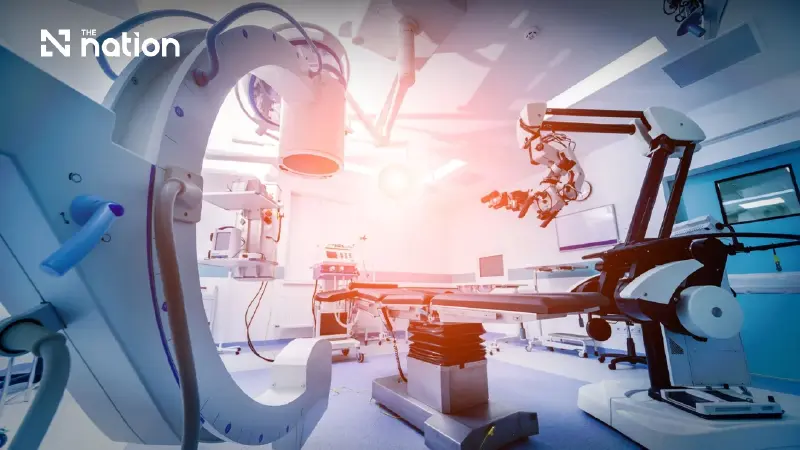


Thailand is seeking investment from global medical technology companies GE and Siemens, while targeting Chinese and Indian manufacturers of disposable medical products under its Medical Investment Hub strategy.
Thailand is seeking investment from global medical technology companies GE and Siemens to establish manufacturing bases in the country, while also targeting disposable medical product manufacturers from China and India as part of efforts to develop the healthcare sector into a new engine of economic growth.
Public Health Minister Pattana Promphat said the ministry was expanding its Medical Investment Hub strategy to attract international investment, encourage technology transfers, create greater economic value and strengthen Thailand's competitiveness in the global healthcare industry.
The initiative aims to attract more than 68 billion baht in new investment, generate an economic contribution of at least 0.5% of gross domestic product (GDP) and improve Thailand's competitiveness ranking in health and the environment from 56th to 50th.

The strategy is built around three main areas: medical and healthcare services, research and development (R&D), and health products and medical technology manufacturing.
The Service Hub is targeting investment of more than 25 billion baht, with an expected contribution of at least 0.2% of GDP.
The Research and Development Hub aims to attract more than 5 billion baht, contributing at least 0.05% of GDP.
The Product and Health Manufacturing Hub is targeting investment exceeding 37 billion baht through technology transfers and the development of the pharmaceutical industry, with an expected economic contribution of at least 0.25% of GDP.
Five global healthcare companies involved
The ministry has been developing partnerships with 10 leading international pharmaceutical and healthcare companies. Cooperation with five companies has generated investment commitments and proposals worth at least 6.8 billion baht.
They include:
- MSD: A proposed investment of 2.5 billion baht to improve access to vaccines and expand clinical research.
- Sandoz: More than 1.2 billion baht in economic value and investment through improved access to biosimilar medicines, technology transfers and stronger pharmaceutical security.
- GSK: An additional 1.5 billion baht in proposed clinical research investment, focusing on malaria, alongside training for medical personnel, improvements to research hospitals and vaccine manufacturing to strengthen Thailand's vaccine industry.
- Roche: A proposed 1.5-billion-baht investment by 2029 in clinical trials for liver and breast cancer, together with upgrades to research facilities, better access to innovative cancer treatments and studies into expanding domestic pharmaceutical production.
- Bayer: An initial clinical research investment proposal worth approximately 153 million baht, alongside efforts to improve access to innovative medicines and introduce artificial intelligence (AI)-based retinal disease screening. The programme aims to increase screening coverage from 2 million to 4 million people.
GE and Siemens targeted for local manufacturing
Pattana said the ministry remained open to investment in pharmaceuticals, medical supplies, medical equipment and disposable medical products.
Its investment framework combines three vertical pillars, covering R&D, healthcare services and product manufacturing, with three horizontal industry groups: pharmaceuticals, medical equipment and disposable medical products.
The five companies already involved in cooperation arrangements are concentrated mainly in pharmaceuticals, with much of the work focused on research and development.
The ministry's next priority is to expand into medical equipment manufacturing.
Pattana said he had met executives from GE and Siemens during a meeting on the sidelines of the United Nations General Assembly (UNGA) in September, identifying both companies as potential partners in the medical equipment sector.
The government intends to encourage them to establish manufacturing bases in Thailand, with an emphasis on sourcing raw materials and components locally and building production facilities.
The approach would follow a model similar to the relocation of manufacturing bases seen in the automotive industry, helping to develop domestic supply chains and increase local content.
China and India eyed for disposable medical products
For disposable medical products, the ministry is looking towards manufacturers in China and India as potential sources of investment.
The Food and Drug Administration (FDA) has been instructed to review relevant standards and regulations to ensure Thailand can accommodate investment from companies in different countries.
Russia has also shown considerable interest in Thailand as an investment destination. Pattana said he had held discussions with Russian pharmaceutical companies the previous week.
He said Thailand's strategic advantages included its neutral position and strong tourism industry, which made the country attractive to international businesses and investors.
"Thailand has strategic advantages, including its neutrality and a strong tourism industry that makes foreigners interested in visiting and investing here. The government must therefore establish clear and consistent policies and acceptable standards without compromising public safety," Pattana said.
He added that the investment strategy was intended to strengthen the country's security in medicines and medical supplies while supporting broader economic development.
