
Japanese companies 'must do more for workers'


Play
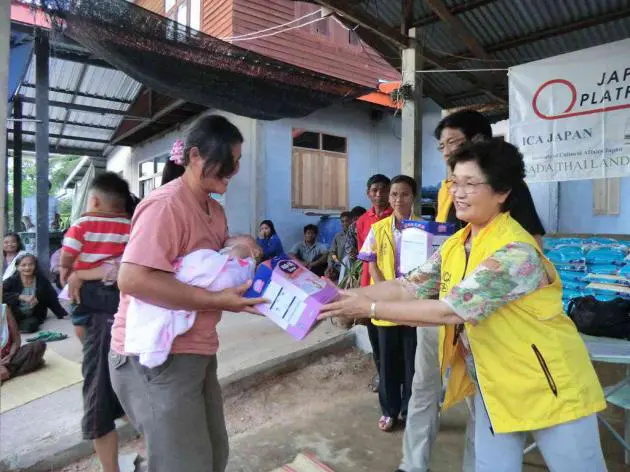
The hundreds of plastic flood-relief bags in the room contained an inspiring message written in Thai on a piece of paper that partly read, "Both Thais and Japanese are brothers and sisters sharing the same world. May the moral support be shared and becom
Shizuyo Sata, a serious-looking, 63-year-old Japanese woman and executive director of the Tokyo-based, not-for-profit Institute of Cultural Affairs, is a key person behind the effort, which is jointly organised with some Thai NGOs.
She has been in town since the middle of this month and said her work and the organisation’s Bt3 million-plus commitment so far are not just about giving and assisting Thais affected by the flood.
“I’m doing it for myself, to make life meaningful. If I respect Thailand, Thailand will respect Japan. The flood gives a chance for people to help each other.”
Sato said what goes around comes around and some Japanese have been touched by Thais’ assistance to the Japanese affected by the tsunami, earthquakes and partial nuclear meltdown in Fukushima earlier this year, so it’s only natural to be returning the favour.
She hopes more Thais, especially well-to-do Bangkokians who have not been directly affected by the flood, can also help contribute more as the flood in many areas north and west of Bangkok are expected to linger on for two months.
Another lesson to be learned is that national and economic development should also be about giving to and respecting the environment. Many swamps and water retention areas have been filled up by Thais and so this is partly the wrath of nature that Thais are experiencing now.
Over the past few days, Sato noticed that some factory workers have little protection as many affected factories have no trade union while migrant workers from Burma and Laos suffer doubly hard.
“I found that out of 34 million workers in Thailand, only 9 million are registered, so 25 million are not protected,” she said in English and sometimes Japanese, referring to those working in the non-formal sector of the Thai economy with little or no social welfare and safety net. “Of these, 3 million from Burma and Laos are really struggling.”
Sato makes it a point that her organisation will seek to assist not just Thais but also migrant workers affected by the flooding and has coordinated the effort with local NGOs working with migrant workers.
Many Japanese factories were also affected by the flood, which was one of the reasons why her organisation chose to come here to help, but she thinks more can be done by some of these Japanese firms.
Sato urges Japanese investors to “trust” Thailand more and afford their workers better rights and benefits. The employment situation also can still be “improved” on.
Not knowing for sure if such a message to Japanese expats would be too “impolite” for her to make, Sato asked the interviewer if that’s fine. She stopped short of retracting her words, however, and her request to her countrymen stands.
Economic development cannot be sustainable without “human development” and it’s incumbent on Japanese and other employers to ensure that.
It’s unclear how many workers will eventually end up becoming unemployed at this stage, as the disaster is still unfolding, but Sato is certain that the issue merits serious attention.
“This country needs to discuss about social justice for workers.”
