
There's 'no climate for reconciliation'


Play
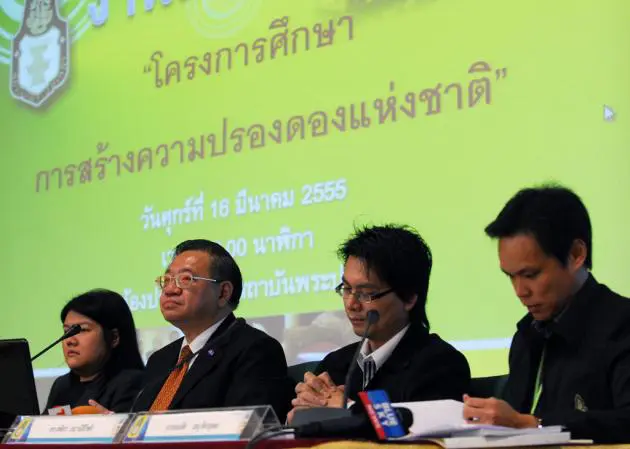
Despite so much talk about the need to achieve national reconciliation, Thailand still needs to create a climate for understanding, Wutisarn Tanchai, King Prajadhipok's Institute (KPI) deputy secretary-general, said.
Wutisarn, who led the study on “sustainable reconciliation”, said compromise was tough, because both camps were seeking to defeat one another.
The study, commissioned by the parliamentary subcommittee on national reconciliation, concludes that there is a need to not just discuss the legal and judicial aspects of the conflict, but also to discuss its root causes, including a “reflection on power relations in Thai society”.
The researchers said they do not support discussion about the role of the monarchy and politics over the past 50 years, though they are urging people to stop posting defamatory remarks online. They also do not recommend granting amnesty to those charged under the lese majeste law.
Wutisarn said the other recommendations were comprehensive and that the government should accept them as a package if they are committed to working toward reconciliation.
The report included four short-term solutions: finding out the truth about the past; granting amnesty to protesters; restoring confidence in the judicial process, particularly in relation to cases initiated by the junta-appointed Asset Examination Committee against Thaksin Shinawatra; and finding common rules to be agreed upon by all parties. The report also cited two long-term issues that need public debate – a future Thai “democratic” regime with His Majesty as head of state and laying the foundations for social justice.
“We can avoid dealing with the truth [about the April-May 2010 crackdown],” he said, adding that it was debatable as to when and how much information should be released to the public and even researchers do not have a recommended position on that. Besides, issues like this take a long time to resolve even in other countries, he said.
He urged people to “abandon the idea” of punishing the 2006 coup-makers and also slammed the media for providing one-sided information, which he says is only fanning hatred and exacerbating the political rift.
Meanwhile, Methas Anuwat-udom, a member of the research team, warned that it would be dangerous for society if people did not have the space to express their political dissatisfaction.
