
Record marijuana haul seized in Saraburi
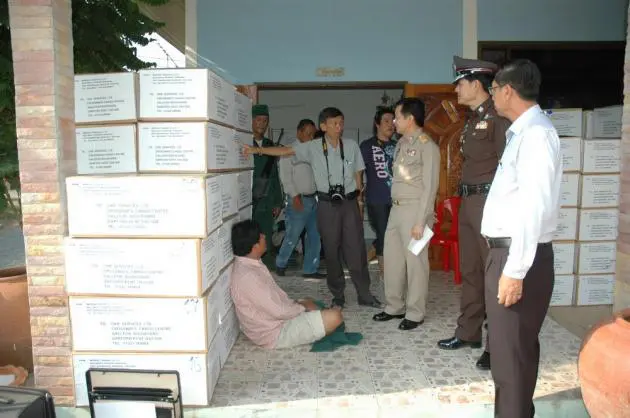


Police yesterday seized the Kingdom's biggest-ever haul of marijuana, weighing about 3.45 tonnes, at a house in Saraburi. Officials estimated it to be worth about Bt51 million.
The marijuana was packaged in boxes with a British address listed as their destination.
Police arrested Nipon “Yap” Mopad, 43, for possession of the illicit drug. His arrest was announced at a press conference.
Saraburi police chief Maj-General Chalit Preechaharn said Nipon confessed that he had been paid Bt100,000 to deliver the drug to the Bangkok Port, from where it was to be sent to an overseas destination.
“He has done it a few times before. He said the illicit drug came from the Northeast,” Chalit said.
The suspect has implicated two other men, Chalit said. However, these accomplices were identified only as “Tos” and “Tong”. Nipon’s pickup truck and gun were seized and his bank accounts frozen, the officer said.
“We will investigate the case further,” Chalit said.
At the same press conference, Highway Police Commander Maj-General Noraboon Naenna said Saraburi Highway Police officers intercepted a pickup truck on Phaholyothin Road in Saraburi’s Nong Khae district yesterday morning and found 648 kilograms of marijuana bars in the vehicle.
“The pickup driver, Achariya Pomyukon, tried to flee the scene, but the Highway Police officers managed to arrest him,” Noraboon said.
According to Noraboon, the suspect later confessed that he had picked up the illicit drug from Amorn Khamlah at a Tesco Lotus outlet in Nakhon Phanom and was preparing to take it to the Min Buri market in Bangkok. Achariya said he was paid Bt35,000 per delivery.
Meanwhile, Corrections Department director-general Suchat Wong-ananchai announced that his department had found nearly 60,000 methamphetamine tablets, 9,513 cell phones, and 5,834 SIM cards in prisons across the country during the past six months.
“We have dismissed 28 prison officials for allowing these banned items in the correctional facilities,” Suchat said.
Sources said that apart from the assistance gained from corrupt prison officials, wealthy inmates had received outside help from people in their circles, including engineers who had been assigned to complete tasks inside the prisons, and gang members who married local women so their wives could gain easy access to the correctional facilities.
