
Children 'must learn life skills, good school marks aren't everything'


Play
Many parents believe that academic knowledge will lead their children to success - particularly those with academically strong, talented or gifted kids - and allow them to study for most of their time, with few other responsibilities.
But doing this “will not help them as much as parents expect – academic knowledge and a high intelligence quotient or IQ can only account for 20 per cent of their success,” Chitra Wongboonsin, a paediatrician of Bangpakok 1 Hospital said at a recent conference.
“Instead, work competence and encouragement can contribute to 40 per cent of their success in the real world – as well as an emotional quotient or EQ which can also add 40 per cent in their progress to sweet success,” she said.
Chitra cited Renzuli’s concept – a system designed to match student interests, learning and expression styles with educational resources and activities.
She said many parents arranged everything for their beloved kids. And that left the children with nothing to do but study. “They treat their children as if they’re disabled. They’ve done almost everything for them and the kids can do nothing else. So, they will not learn to help the people surrounding them and they become selfish.”
Chitra said teachers were also culprits when they encouraged students to compete for awards to generate a good reputation for their schools.
“Parents should not let them feel pleased about awards only, without learning life skills,” she said.
The paediatrician urged parents to train children to be responsible for helping themselves to do things that relate to their living, like doing housework. They should not admire them only when they win academic awards or achievements, but should praise them for doing things by themselves and when they help others.
This would help them develop life skills that are necessary for living and working in the real world. “It is useless when your excellent kids grow up but can’t work happily with their colleagues.”
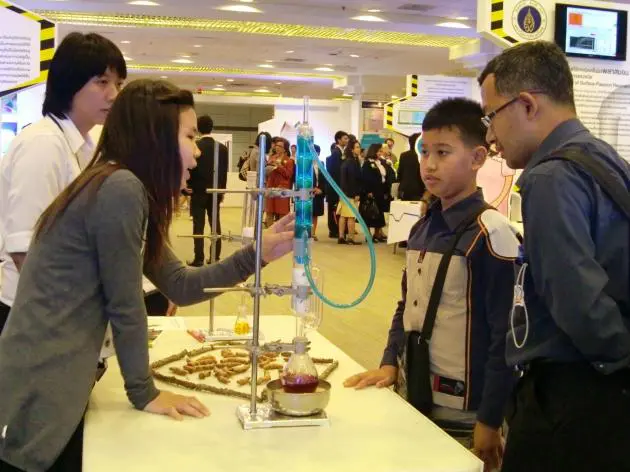
Her lecture was part of the 7th Conference on Science and Technology for Young People held at the Bangkok International Trade and Exhibition Centre last week.
Chitra shared the way she had taken care of her own daughter and son. Her son Janewit Wongboonsin was a gold medallist with the highest scores at the International Biology Olympiad in 2007.
Chitra recommended parents with gifted kids to nurture them the way she told other parents to look after their children with life skills – so they would be happy and enjoy energy filled lives.
She encouraged parents to do this nurturing by themselves as children aged 1-5 tend to imitate people surrounding them. They should behave as role models for them. The most important thing parents should do was to create integrity. “You should keep your word and sense of honour when talking to them. If you cannot do what you have promised them, you must apologise and try again. Then, they will copy you and do the same.”
