
Police entrance exam cancelled over scandal


Play
Provincial Police Region 3 chief Pol Lt-General Panu Kerdlarppol said yesterday that officials were possibly behind the leakage of police entrance examination papers after a scam was recently uncovered in which civilians wishing to get into a police const
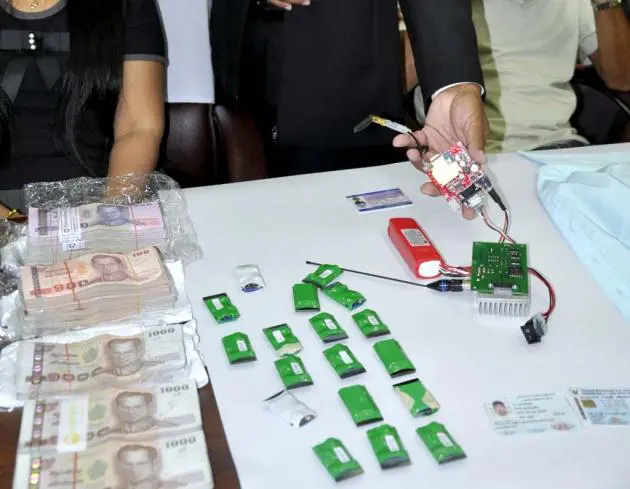
This week applicants in Nakhon Ratchasima were found with a vibrating device that was used to indicate answers to multiple-choice questions. This led to the arrest of six people who were allegedly given Bt10.5 million in cash from 30 applicants.
Police spokesman Piya Uthayo said yesterday that the police had decided to cancel entrance exams across the country because officials had found convincing evidence of cheating. It has not been decided when the new test will be held, he said, adding that four panels had been set up to further investigate the case and find ways to prevent cheating in the future.
Panu said suspects implicated Lampang provincial administrative organisation president-hopeful Dachai Uchukosonkan in their testimony, which led to his arrest. Police are also on the hunt for a key accomplice. It is believed that other people were also involved because those sending signals to the vibrating devices would have had to be within a 300-metre radius. Also, police suspect that the gang knew the answers because an insider leaked the exam paper, he said.
However, National Police Chief General Priewpan Damapong yesterday insisted that the exam papers had not been leaked, but that a member of the gang was inside the exam room and had signalled the correct answers to people outside who then passed it on to other applicants.
He said a large network, based in the vicinity of Bangkok’s Ramkhamhaeng University, was behind this case and that some police officials might be involved. Priewpan added that this gang had made a lot of money from this scam and that police would gather evidence to punish wrongdoers.
A source from the police investigation team said the network covered the entire nation and might have had something to do with such cases in other provinces, after five suspects testified that the network had been operating for a long time and had leaked exam papers at other state agencies. An investigation found that the ringleader bought a master copy of examination papers at Bt3 million per set for a few hours before copies were printed hours before the examination.
Although exam papers were divided into eight separate sets to prevent cheating, the gang set different codes to identify which set they were sending answers for, the source said.
This was more plausible instead of having someone take the test and send signals to an outsider to re-send the answers to other applicants.
Investigators also found a list of names of civil servants who had paid to pass tests and been given work in state agencies, the source added.
Pol Maj-General Jakthip Holasutsakul, deputy chief of the Provincial Police Region 3, said that in the Nakhon Ratchasima case, the 30 applicants had been trained on the vibration signal one day before the exam.
