
Addicts tell peers: Sign up and get straight


Play
Kaew, 17, could hardly speak coherently after she started smoking crystal methamphetamine, or "ice", two months ago. But she repeated, "I didn't want to try it. My friends pushed me into it." Her uncle took her to a drug-treatment facility where she
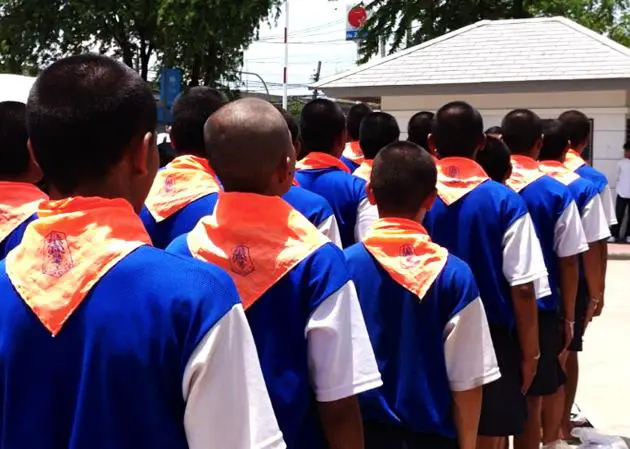
Developed by the Army’s 9th Infantry Division and the Narcotics Control Board’s Bangkok branch, the programme is designed to help addicts kick the habit and start new lives.
The schedule is divided into three days for orientation activities, nine days for behavioural change and three days for preparing the participants for their return to society as good citizens.
“We are telling all participants that they are good people,” Captain Tanapong Paetpittaya, the chief trainer, said last week.
“No matter what other people say about them, they must appreciate the value of their lives and stick to it.”
A 15-year-old boy said the programme had rehabilitated him physically and mentally.
“We do a lot of exercises. We learn a lot,” he said. “I will never abuse illicit drugs again.” He started taking methamphetamine last year because his friend gave him some yaba pills.
A 14-year-old girl said she was kicked out of her school last year because she was hooked on “ice”.
“My mum was heartbroken. I volunteered for the drug treatment. I’m determined to not touch that stuff again,” she said.
Pornpan Singruang, a trainer, said the programme offered advice on how to live one’s life well and where to find motivation in life. “We also provide vocational training to ensure that the participants can earn a living later on,” she said. “And if they return to their lives and come across any problem, they can come back to us to seek more help.”
Even if the project cannot guarantee that all graduates can give up drugs, it will definitely teach them that there is more to life than what they used to think.
“We are showing that there are other paths of life that they can choose,” she said. “With our treatment programme, they don’t have any criminal record. They won’t be prosecuted.”
Aey, 17, said she decided to join the programme because she believed she had hurt her mother too much already.
“I was dismissed from school six months ago. I have consumed and sold drugs,” she said. At the urging of her friends and out of her own curiosity, she had tried both yaba and “ice”.
“Now, I would like to tell others that the illicit drugs are no good. Think twice before you try. You’re not going to look more beautiful with illicit drugs. They will just make your life worse,” she said.
A 12-year-old girl said she used to think she was getting slimmer and her face was getting more shapely after taking drugs.
“But after completing the drug treatment programme, I’m determined to never turn back to drugs. I will say ‘no’ even if my friends push me,” she said. She lives with her parents, who both supported her effort to give up drugs.
Tanapong hopes drug abusers and their parents would have the courage to bite the bullet and seek treatment.
“If you’re afraid to send your children to a drug-treatment programme, you’re misleading them,” he said.
Suwan, surname withheld, a 42-year-old mother, said she hopes the programme would reform her daughter.
“I want her to be good,” she said. “Drug abusers hurt not only themselves but also their families.”
And the regime appears to have worked.
“My daughter seems to |be much more mature after completing this programme.”
