
National water plan based on zoning


Zoning will play a key role in the country's water-management plan, according to the Office of the National Water and Flood Management Policy.
ONWFMP secretary-general Supoj Towichukchaikul yesterday said the zoning would help determine the goals and necessary preparations for each zone.
In addition to the country’s floodplains, flood-prone areas and headwater zones, a total of 10 million rai (1.6 million hectares) of land has complete irrigation systems, 22 million rai has nearly complete irrigation systems and 68 million rai is without irrigation, Supoj said.
“The key strategies are to prepare dams or retention areas to accommodate water, and create waterways to facilitate the flow of water,” Supoj said.
He added that people would be asked to take care of community and industrial areas too.
Supoj said people in water-retention areas would receive fair and appropriate treatment.
“We have both urgent measures and long-term measures for zoning,” he said, adding that he believed town-planning principles could be applied.
The government plans to spend Bt300 billion to improve water management in eight river basins: the Ping, Wang, Yom, Nan, Sakae Krang, Pasak, Chao Phraya and Tha Chin.
Supoj said 17 other river basins in the country would receive a budget of about Bt40 billion.
Regarding some academics’ concerns about drought in the Northeast, Supoj said water levels in dams across the country ranged between 76 and 80 per cent of their total capacity.
“This amount is higher than in 2005, when Thailand faced serious drought,” Supoj said.
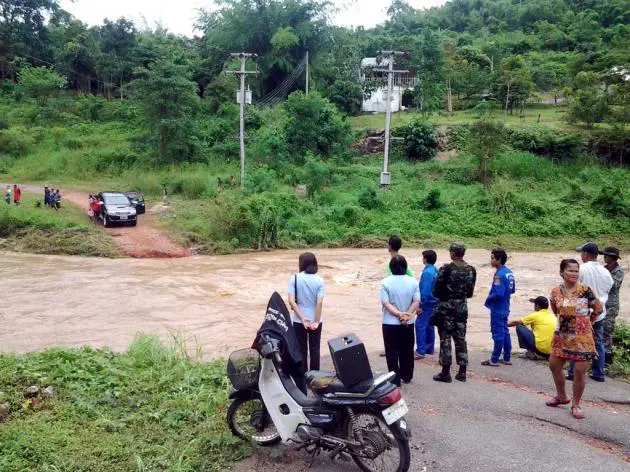
Meanwhile, many roads in Kanchanaburi were still under water and impassable by small vehicles yesterday, but the situation had stabilised. Governor Chaiwat Limpawantha distributed relief supplies to flood victims in Dan Makham Tia district, which was declared a disaster zone.
Water was receding in some areas after part of the province was hit by flash flooding on Monday night. However, one creek overflowed, inundating 1,600 hectares of farmland and at least 500 houses.
The situation is expected to return to normal in the next two or three days if there is no more flash flooding from nearby mountains.
