
Website gives ordinary people power to change society


Play
No matter what you think about yourself, one of the most influential people of the year - as proclaimed by Time magazine - insists that everyone has the power to change the world.
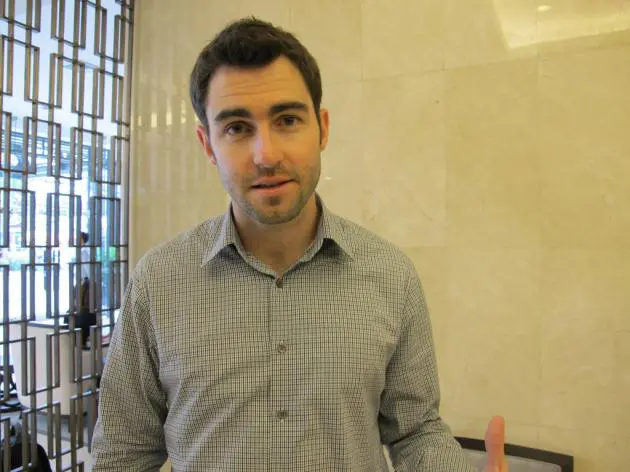
“We didn’t think a 22-year-old nanny without a full time job could actually help to change the policy of one of the biggest companies in the country. But since [that occurred], this happens all the time,” said Ben Rattray, founder and CEO of Change.org. Rattray was on Time’s list of the 100 most influential people this year, and is often compared to Facebook founder Mark Zuckerberg.
Last year, Bank of America decided to drop the plan to charge users of its debit card US$5 (about Bt150) a month after a campaign started online by part-time nanny Molly Katchpole.
Her online petition received 300,000 signatures of support, and thousands of people offline protested by pulling their money out of the major bank. Katchpole and her supporters achieved their goal about a month after starting the campaign and were able to stop other banks from charging their customers too.
Change.org provides a free online platform that allows anyone to start a petition and spread it via social media. It sends e-mails to responsible agencies each time it gets a new supporter.
Nowadays there are 25 million members globally. In Thailand, the number of members has grown to 150,000 from 4,500 when it started in late June – a faster rate than in the US, said the 32-year-old CEO during his visit to Bangkok on Friday.
Change.org’s director in Bangkok, Tul Pinkaew, said that about 40 new campaigns are launched weekly. In less than half a year, the office in Thailand has celebrated three success.
Transport Co Ltd stopped showing violent films on its buses after a petition started by 32-year-old mother Sajin Prachason garnered 397 supporters.
This was followed by Bangkok Metropolitan Administration’s promise to fix potholes and manhole covers on the capital’s roads – as it was supposed to do over a year ago – to prevent damage to bicycle tyres and danger to bike riders. Not only did Nonlany Ung get 1,617 supporters online, but groups of cyclists have gathered to follow up and report spots to be repaired.
Another success was a campaign to get authorities to do more to stop the cross-border dog-meat trade.
Apart from these successes, another notable petition called for the International Amateur Boxing Association (IABA) to boost transparency and initiate live scoring after the scandalous loss by Thai fighter Kaeo Pongprayoon in his London Olympics’ light flyweight gold medal bout against China’s Shiming Zou. The petition received a record number of over 77,000 signatures. Although the AIBA has insisted on maintaining its way of scoring, an Olympic boxer in India also has a plan to launch a similar campaign, after being inspired by the Thai effort, according to Tul.
Change.org was launched as Rattray’s response to the pain experienced by his brother, who suffered discrimination because he is gay. Rattray, a graduate of Stanford University and the London School of Economics, originally wanted to be a banker, but changed his career path out of distress that nobody stood up to support his brother.
He is particularly happy that one of the successful campaigns was an effort in South Africa that has saved women from the practice of “corrective rape” claimed to make homosexual women straight.
“What’s exciting is we are certainly seeing people become more assertive, feel[ing] like they have the power in a way that they didn’t before and want to stand up for their rights. It’s a kind of campaign that … would bring lots of people together on basic issues that seem to be unjust,” he said.
While some of the campaigns are small in size, their impact can turn out to be huge, Rattray said. For example, an engineering student in India received support from 440 people who saw recordings of an officer calling for a bribe. Aside from the fact that more powerful local officials took action against the corrupt person, it warned officials that they are in danger of being embarrassed each time they call for a bribe.
“You can start petitions on personal issues, but they are unlikely to get a lot of support,” Rattray said, adding that there is no censorship on the site, but users can monitor and “flag” inappropriate petitions.
In general, violent or provocative petitions will be removed. However, the agency also respects local laws, he said.
Visiting Thailand as part of the trip to the agency’s offices in Asia including Indonesia, the Philippines and Japan, Rattray said Change.org is planning to develop better tools and technology to make it easier to organise activities offline, to reach the media and to go mobile. More importantly, it will build up its staff and network in Thailand. He expected to see 1,000,000 members in the next few months.
While people are often sceptical at first, a successful petition gives moral support to an ordinary person. Once that person gains a victory by speaking out for justice, he or she will start or support more campaigns and expand the network, Rattray said.
A video of this interview can be viewed on nationmultimedia.com.
