
Doctors 'already quitting'


Play
Rural hospitals fear exodus over P4P plan; staff in urban areas not sympathetic
Some rural hospitals that have adopted the Pay for Performance (P4P) system have already lost some doctors, and more are expected to quit when the system is rolled out in hospitals nationwide on April 1.
“At least two doctors have told me they would quit and move to an urban location if affected by the P4P system. One of them says he would take the opportunity to go back to medical school to further his education,” said Dr Dusit Khumchaiyaphum, a director of Chaiyaphum province’s Ban Thaen hospital. “Both are worried about receiving lower allowances under the system.”
Ban Thaen is among some 10 provincial and rural hospitals that have been using P4P since 2006. It receives about Bt40 million annually from the three national health schemes – the National Health Security, Social Security, and Civil Servant Medical Benefit schemes. Ban Thaen spends about Bt2 million of this budget on the P4P allowance.

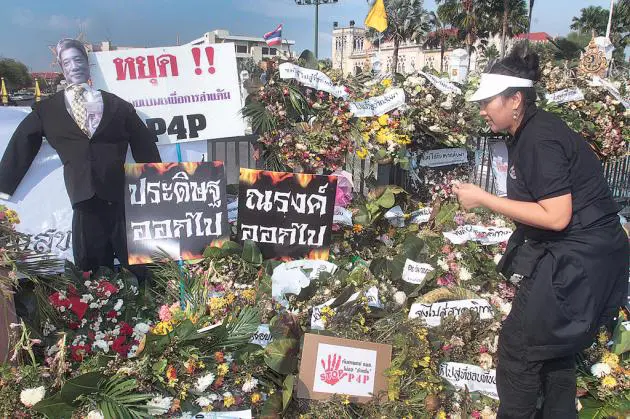
Yesterday, rural doctors protested at Government House, demanding the abolition of the new pay system, and the resignation of Public Health Minister Pradit Sinthawanarong, who plans to enforce the system, which was conceived under the previous Democrat-led administration.
At present, the size of the rural doctors’ monthly allowance is based on the remoteness of their location and their number of years in the job. But from April 1 the remoteness allowance that now covers 736 rural hospitals will shrink to cover just 122 hospitals. Meanwhile, under the new system, the allowance will expand to cover dentists, nurses and pharmacists, as well as doctors. Doctors not on duty would also be deprived of the “currently-automatic” allowance.
Pradit responds
Pradit said he would talk today with relevant parties on zoning and extra pay-rates based on principles approved by the Cabinet yesterday. According to the principle, the extra pay will be awarded in lien with the remoteness of medical workers’ workplace as well as their performance.
“If representatives of relevant parties do not come, then there will be no negotiation because they have refused my invitation to the negotiation table.”
He said he needed to present the conclusion on the new extra pay-rate to a vetting committee, which is chaired by Deputy Premier Kittiratt na Ranong by Friday.
“We will present it to Cabinet on March 31,” he added.
Pradit said he at first planned to meet with demonstrators in front of the Government House yesterday but changed his mind. “Some demonstrators have told me that they can’t guarantee my safety,” he said.
Asked why a number of doctors turned up against him, Pradit said: “I don’t know whether they have any ulterior motive. I think even though this pay-rate issue doesn’t come up, they will still find something else to attack me.”
Each year, Thailand spends Bt3 billion on the allowance for rural hospitals. At present, just three of over 2,000 doctors working at rural hospitals earn an allowance of Bt70,000. Thailand currently has about 8,000 doctors.
Health workers split
Doctors and health workers appear to be split over the move. Some in urban areas oppose the rural doctors’ grievance.
Dr Prachumporn Booncharoen, president of the Thai Federation of General and Central Hospital Doctors, said: “Rural doctors have resigned all the time, many for further study and many for jobs at state hospitals. That happens regardless of the new pay-calculation system.”
Dusit from Ban Thaen Hospital was one of 2,000 medical workers who joined the protest yesterday. He said Ban Thaen’s 30-bed hospital only has four doctors providing medical treatment for about 200 patient a day. With two resigning, the remaining doctors’ workload will double.
“We will shoulder more workload if these two doctors quit,” he said.
Kanjanadit Hospital in Surat Thani faces a similar situation, as medical staff are now starting to say they will resign and go to work in the city. For five years, this hospital had only five doctors but since the number of doctors and medical workers increased when it started providing the allowance based on remoteness and working years. Now, 11 doctors work at the hospital, but they fear that changes to the allowance will make their quality of life worse.
Hospital director Dr Akachai Mukdapitak said: “Under the new concept of allowance, they don’t know how much work they should do to get the same amount of allowance they are being paid. This new rate of allowance has really discouraged our medical workers.”
The new pay system is part of Minister Pradit’s plan to revamp the national health system, in light of increasing burden to come from health policies and the ageing population.
The Cabinet yesterday approved a budget of Bt190 billion for the National Health Security Office (NHSO), which operates the universal healthcare scheme. Bt125 billion of this goes to the scheme.
