
NSC agrees to extend south emergency decree
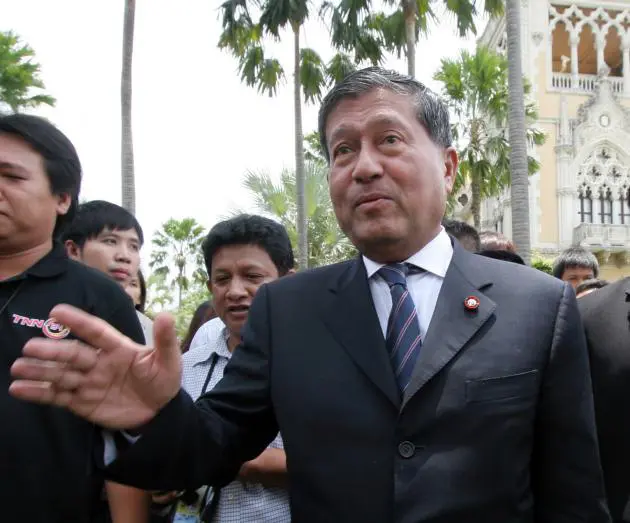


The Crisis Management Committee yesterday discussed the southern unrest but didn't touch on the framework for the National Security Council (NSC)'s peace dialogue with separatists, Deputy Prime Minister Chalerm Yoobamrung said.
The NSC agreed to extend the Emergency Decree in the deep South for three months to September and assigned NSC secretary-general Paradorn Pattanatabutr to be in charge of the peace talks. The proposal to renew the decree would be presented to the Cabinet for approval next week, he said.
If the meetings in Malaysia with Hassan Toyib, a leading member of the Barisan Revolusi Nasional (BRN) weren’t productive, Thailand would shift to talking with other groups after touching base with the Army, the responsible agency that knew the details of the rebel movement the best, Chalerm said.
Chalerm confirmed that he gave full authority to deputy Army chief General Dapong Rattanasuwan to solve the southern problem in coordination with other agencies.
The deputy prime minister also laid down a policy to allow those who are suffering from injustice to complain, to help cancel arrest warrants that weren’t issued fairly and to consider lifting the Emergency Decree if that would restore peace to the deep South.
Defence Minister Sukampol Suwannathat said the BRN was asking too much with their five conditions for the peace process.
The situation in the region should improve by year-end because the dialogue and ground operations were being carried out in parallel. So far the Army had access to all areas in the deep South but hasn’t been able to station troops there for very long due to personnel shortages despite reinforcements from the recent deployment of 1,700 police and the existing security volunteers.
The insurgents who were launching attacks more frequently in the region seemed to be inexperienced youths who often missed the target.
What authorities were still worried about was that the militants seemed to be able to plant roadside bombs quickly and to know beforehand the routines of security officials.
The public should try to understand the difficulties facing security officials in their work and not just scold them, because the Army was losing manpower on a daily basis in the attacks, he added.
Sakol Cheunsakul, commander-general of the Fourth Army Area, presided over the opening of a disaster mitigation centre run by the Hilal Ahmar Foundation in Yala’s Raman district.
